




Keep Reading! 21 Fleet Leaders Nominated for the 2025 Edward J. Bobit Fleet Manager of the Year Award
Inside NAFA’s First Certificate Symposium
A safety-first symposium in Austin, TX incorporated leaders to discuss the future of fleet safety.
by Judie Nuskey
July 8, 2025
NAFA hosted a Certificate Symposium where industry leaders discussed the future of fleet safety.
Photo: Judie Nuskey
4 min to read
This year’s NAFA Safety Symposium, held June 2–3 in Austin, TX, marked a turning point in NAFA’s approach to advancing fleet safety. With over a day and a half of expert-led education, interactive discussion, and networking, the event laid the groundwork for an evolving culture of safety in fleet operations. More importantly, it served as the official launch of NAFA’s Fleet Safety Certificate Program, establishing a structured path to formal safety education and industry recognition.
A New Era for Fleet Safety
Fleetworthy Account Executive Corey Woinarowicz explained that the 2025 Symposium was sparked by a conversation two years ago at NAFA I&E in Baltimore. At the time, safety was noticeably absent from the agenda. Recognizing this critical gap, Corey and Phillip Wigginton, Risk Control Leader at HUB International, with expertise in loss control/transportation, collaborated with NAFA leadership to develop a formal safety module. That effort ultimately evolved into the Fleet Safety Certificate Program and shaped the foundation for this year’s Symposium.
As Corey noted: "This year’s Safety Symposium is the jumping off point for a true NAFA Safety program. The next step is to take this on the road and eventually incorporate safety into the CAFM curriculum by 2027. Nobody gets safer, by doing nothing."
Opening Remarks & Foundation of Safety
The event opened with remarks from NAFA CEO Bill Schankel, who reinforced NAFA’s commitment to elevating safety as a strategic priority across the fleet industry. The first session, “Foundation of True Safety in Fleets,” explored how safety must go beyond compliance to become embedded into daily operations and leadership strategy.
Robust Curriculum, Practical Insights
The two-day program featured 12 structured learning modules, including:
How Safety is Measured
Data-driven approaches to evaluating fleet safety
Safety Technology
A breakdown of tools like ADAS, telematics, and dash cams
Safety Policy & Culture
Real-world strategies for crafting and enforcing policies, and a candid panel discussion on how to drive cultural adoption.
Driver Engagement & Training - Interactive segments focused on communication, behavioral accountability, mental health, and practical training routines.
Driver Scorecards & Safety Planning
Tactics to track performance, reinforce habits, and build a sustainable safety calendar
With decades of hands-on fleet experience and a reputation as a strategic safety leader, Theresa Belding brought incredible depth to every session she led. Her expertise was especially impactful during “How Safety is Measured”, where she broke down industry KPIs and revealed how performance data, when interpreted correctly, can drive behavior change and identify preventable crash trends. She emphasized that numbers only become meaningful when they’re paired with human context and used to improve, not just report, driver performance.
Theresa also guided participants through the importance of comprehensive safety policies and
led discussions on driver scorecards and creating proactive safety calendars, tools many
attendees plan to implement immediately.
Fresh into retirement from Syneos Health, Mark Petersen brought an unmatched level of
authenticity and relatability to the symposium. His real-life stories, ranging from challenging
field decisions to navigating policy enforcement, captured the human side of safety leadership.
His session on “Safety Technology” explored the practical realities of implementing systems like
ADAS, telematics, and event recorders. More than just features and functions, Mark framed
these tools through the lens of driver trust, legal protection, and long-term ROI.
Mark’s anecdotes provided an invaluable reminder: the best safety plans are those that meet
drivers where they are, reinforce shared accountability, and adapt to change, especially when
budgets, culture, and operations collide.
Judie Nuskey delivered sessions that emphasized drivers’ roles in creating a safety culture, from accountability to training and communication. In one of the most engaging portions of the event, Judie presented crash reconstruction and driving behavior videos from Advanced Driver Training Services (ADTS). These real-world scenarios sparked dynamic audience participation and grounded the educational content in everyday fleet risks. The visual demonstrations underscored the human cost of unsafe decisions and prompted attendees to reflect on how policy, training, and technology intersect in high-risk moments. The symposium ended with a strong call-to-action: safety must be integrated across every level of an organization, not treated as a separate function. “Training is not expensive, it is PRICELESS.”
A Full Agenda With Real Impact
The curriculum covered 12 modules across both days, with standouts including:
Fleet Safety Foundations
Defining proactive safety culture and integrating it into daily operations.
Driver Health & Mental Wellness
Addressing the often-overlooked factors that impact driver performance.
Communication Between Office and Drivers
Practical strategies to ensure clarity, compliance, and connection across roles.
Driver Training & Routine
Building safety into daily habits through pre-trip checklists, ride-alongs, and ongoing coaching.
Looking Ahead
As Bill Schankel noted in his closing remarks, this event is just the beginning. The new certificate program provides the structure, and this year’s speakers provided the momentum. Plans are in motion to replicate this symposium in other regions, expand its reach, and weave safety into NAFA’s broader CAFM® educational offerings by 2027. In Bill’s words: “Safety is no longer optional—it’s strategic. And together, we’re building the blueprint to make it standard across the industry.”
More Safety

Sponsored•October 1, 2026
Fleet Manager’s Ultimate Playbook: Navigating the New Standard in OEM Connectivity
Rising operating costs, driver safety concerns, and unplanned downtime are putting unprecedented pressure on modern fleets. Discover how fleet managers use embedded OEM connectivity and real-time vehicle data to cut TCO, prevent downtime, and protect drivers without aftermarket telematics hardware.
Read More →
From Driver Well-Being to EV Charging | AF News Recap
Mental health belongs in the fleet safety conversation. This week, we’re looking at five ways fleets can support employee well-being before a crisis, plus Holman’s expansion in Mexico, new one-day Fleet Forward passes, and why EV charging demand is outpacing infrastructure growth.
Read More →
Nexar-Nauto Merger Aims to Give Fleets Better Safety Intelligence Through Larger Driving Dataset
Stefan Heck tells Automotive Fleet that combining more than 10 billion miles of driving history with Nexar's AI models will give fleets deeper insights into driver risk and roadway conditions than either company could provide independently.
Read More →
Don't Wait for a Crisis: 5 Ways to Build Mental Health Into Your Fleet Safety Program
For Suicide Prevention Month, fleet and safety leaders have an opportunity to put mental health where it belongs: at the center of workplace safety.
Read More →
How Camera Data Can Strengthen a Fleet’s Insurance Renewal
Insights from a commercial insurance carrier and a broker show how fleets can turn video telematic data, driver coaching, and improved claims results into a stronger case at insurance renewal.
Read More →
The Safest Fleets Aren’t the Ones with the Most Technology
You’ve made the telematics investment. Here’s how to capture the other half of its value and build the safest fleet on the road.
Read More →
Sponsored•August 7, 2026
Hidden in Plain Sight: Fleet Compliance Risks
Fleet compliance isn't just about having policies — it's about consistently enforcing them. This practical guide reveals six hidden compliance risks common in public sector and shared fleet operations and outlines proven strategies to improve visibility, accountability, and audit readiness
Read More →
NETS Sets 2026 Fleet Safety Benchmark Conference for Indianapolis
The Sept. 15–17 program will feature fleet benchmarking data, case studies, emerging technologies, and implementation strategies while running alongside the NSC Safety Congress & Expo.
Read More →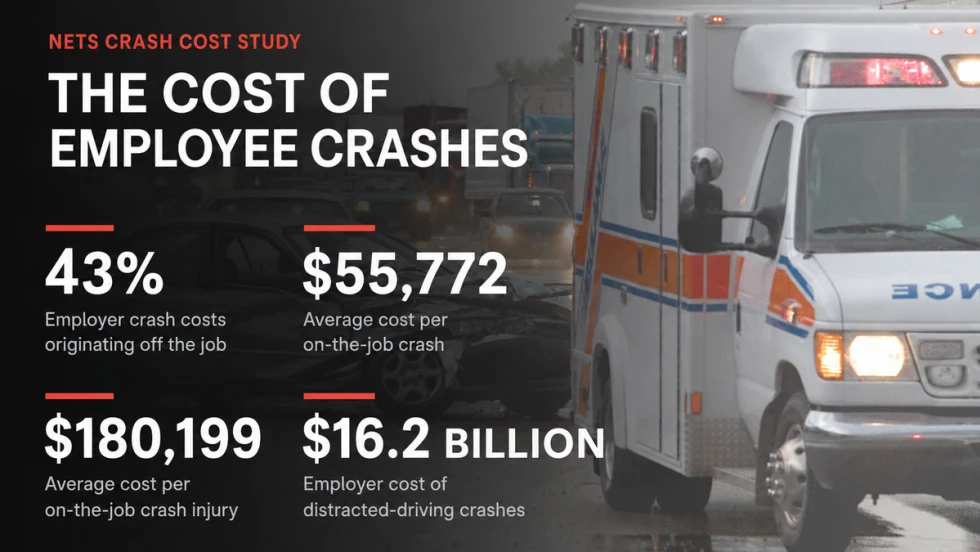
Off-the-Job Crashes Account for 43% of Employers’ $61.7 Billion Crash Burden
NETS quantifies costs dispersed across fleet, risk, HR, and other departments while providing new per-crash benchmarks for employers.
Read More →
Ram Recalls More Than 1.27 Million 1500 Pickups for Seat Belt Anchor Issue
The recall affects certain 2019-2026 Ram 1500 pickups that may have improperly attached second-row seat belt buckle anchors.
Read More →