




NYC Congestion Pricing Killed, Now What?
With Gov. Hochul’s postponement of congestion pricing, fleet operators won’t have to pay to enter Manhattan’s Central Business District — for now. Policy expert Matt Daus connects with Automotive Fleet on what’s next.

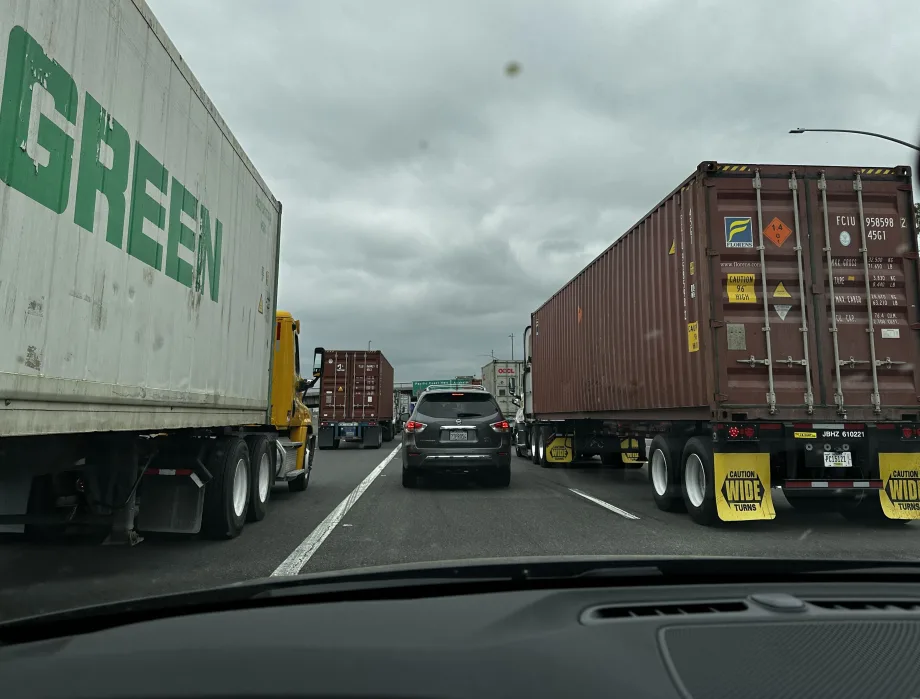
Would congestion pricing make it easier for fleet trucks to get around, or just increase expenses for operators?
Photo: Chris Brown
On June 5, New York Gov. Kathy Hochul directed the Metropolitan Transportation Authority (MTA) to postpone implementing congestion pricing in New York City indefinitely.
The MTA planned to implement congestion pricing on June 30, 2024. Under the planned program, most vehicles would have been charged to enter Manhattan below 60th Street (the Central Business District, or CBD).
The fees in the plan are substantial: Personal vehicles and small commercial vehicles would have been charged up to $15 once per day. Small trucks and charter buses would have been charged up to $24 for each entry and larger trucks and tour buses would have been charged up to $36 for each entry. Yellow taxis, green taxis, and black cars licensed by the New York City TLC would have been charged $1.25 per ride to, from, and within the CBD, while Uber and Lyft passengers would have been charged $2.50 per ride.
Transit and commuter buses, commuter vans licensed by the TLC, and school buses contracted by the NYC Department of Education, would have been exempt.
The benefits would be substantial too, though not as easy to measure, at least initially: The goal of congestion pricing plans is to get more vehicles off the road, reduce carbon emissions, improve public transit, and make navigating the city easier for those living and working there.
New York follows congestion pricing plans in other parts of the world, such as London, Stockholm, Milan, and Singapore. In the U.S., Seattle, San Francisco, Los Angeles, and Portland, Oregon have analyzed similar schemes, though no plans are eminent in those cities.
Why Did Hochul Kill Congestion Pricing?
As the reason for the postponement, Gov. Hochul cited that New York City and its inhabitants have not recovered economically from the pandemic. Hochul said she does not want to impose an additional financial burden on working-class New Yorkers and reaffirmed her commitment to improving New York’s transportation infrastructure.
Another potential reason for halting the plan is that Democrats are being challenged in House races in New York City suburbs where Republicans have used congestion pricing as a political talking point.
Congestion pricing is also facing lawsuits from the State of New Jersey, Fort Lee, NJ, and groups from New York City including city residents, local politicians, the United Federation of Teachers, Rockland County in the Hudson Valley, the Town of Hempstead in Long Island, and the Trucking Association of New York.
These lawsuits claim that congestion pricing would unfairly burden communities where congestion might worsen, would unfairly burden those who must drive into Manhattan with an extra toll, or unfairly impact industries like trucking.
Congestion pricing revenue was meant to finance $15 billion in capital funding to improve the City’s transit system through subway extensions, station accessibility improvements, new subway car purchases, and system-wide modernization. Hochul said the state has set aside funding to backstop the MTA capital plan and is exploring other funding sources.
Advocates of the plan have suggested suing to challenge Hochul’s decision. Others have criticized Hochul for effectively “killing” congestion pricing after all the effort advocates and agencies have poured into the program’s rollout. Advocates are also questioning whether Gov. Hochul’s action is even legal and whether she has the power to override tolls passed by the legislature in 2019.
Future of NYC Congestion Pricing
Despite the current delay, it is possible that congestion pricing will be implemented once political pressures have subsided after the November 2024 election, but the timing would have been speculation in light of Gov. Hochul’s statement.

New York Governor Kathy Hochul poses with former NYC Taxi & Limousine Commission TLC Commissioner and International Association of Transportation Regulators (IATR) President Matt Daus.
Former NYC Taxi & Limousine Commission TLC Commissioner and International Association of Transportation Regulators (IATR) President Matt Daus has been involved in the congestion pricing movement since its inception.
Daus shared with Automotive Fleet some thoughts on how the policy can be potentially revised to see its enactment:
It is my hope that Governor Hochul hitting the congestion pricing pause button allows for the opportunity to retool the policy when it is actually implemented, to make it less about a monetary goal and more about actually reducing pollution and mitigating vehicle traffic congestion in Manhattan next time around.
The legislature should consider removing the $1 billion annual money goal, and instead put in place metrics or targets to reduce pollution. Whatever revenue is associated with that or would be an added benefit, as long as it is used wisely.
Exemptions should be put in place to support sustainable mobility policies — such as shared rides, carsharing, taxis, for-hire vehicles (TNCs), and electric vehicles.
Also, all of the money collected from the TLC-regulated industries should be put into a lockbox to subsidize first- and last-mile services and to make public paratransit on demand and free for people with disabilities.
The IATR has long said in its congestion mitigation principles that congestion pricing alone cannot solve this problem, and must be synced with other clean air policies. Let’s return to the drawing board and see how we can do this better.
More Operations

How Fleets Can Recruit and Train Veterans for Technician Roles
Here's how the technician shortage has affected uptime for fleets, and what to do about it.
Read More →
Avis Budget Group Deploys Neology Toll Management Technology Across Major Brands
Neology’s neoFleet platform will manage toll transactions and toll-authority operations for vehicles across Avis, Budget, Payless, Budget Truck and Zipcar.
Read More →
Fleet Personal-Use Charges Edge Higher in 2026
Nearly eight in 10 surveyed fleets allow personal use of company vehicles, while just over half of respondents report charging employees for the privilege.
Read More →
The Future of Fleet + What’s Changing Right Now | AF News Recap
Could developments overseas offer a preview of what’s coming for U.S. fleets? This week, we’re looking at the future of AI, autonomy, and electrification, plus Ford Pro’s new certified pre-owned program, smarter vehicle offboarding, and a new way for fleets to manage toll expenses.
Read More →
How to Handle Vehicle Offboarding
What do fleet managers need to do when a driver leaves?
Read More →
Fleet Manager’s Ultimate Playbook: Navigating the New Standard in OEM Connectivity
Rising operating costs, driver safety concerns, and unplanned downtime are putting unprecedented pressure on modern fleets. Discover how fleet managers use embedded OEM connectivity and real-time vehicle data to cut TCO, prevent downtime, and protect drivers without aftermarket telematics hardware.
Read More →
U.S. Bank Adds Verra Mobility Toll Management to Voyager Fleet Platform
The integration allows U.S. Bank Voyager fleet customers to manage toll payments and violations alongside fuel, EV charging and maintenance expenses.
Read More →
ADAS Prevents Crashes. But Repairs Cost More | AF News Recap
ADAS-equipped vehicles may crash less often, but they can cost more when they do. This week, we’re breaking down what that tradeoff means for fleets, plus Subaru’s first Forester Wilderness Hybrid, Nissan’s new e-POWER Rogue, and why Calstart has become Catalyst Mobility.
Read More →
Moventum Fleet Management Names Mark Iorillo Head of Sales
Iorillo brings nearly 20 years of fleet management and sales experience to the role, including previous positions at Element Fleet Management, CEI, Donlen and Ryder.
Read More →
Fleet Has a Talent Pipeline Problem. What Comes Next? | AF News Recap
Where will fleet’s next generation of leaders come from? This week, we’re looking at the industry’s talent pipeline, what certification can add to a fleet career, how to build an award-worthy track record, and the return of Automotive Fleet’s Personal Use Survey.
Read More →