





For More Info: The International Parking & Mobility Institute offers resources on electrified parking facilities.
Lessons for Fleet Managers on EV Parking and Charging
Fleet operations are finding out that charging electric vehicles is a bigger hurdle than anticipated. It raises many questions and choices a fleet manager must navigate.
April 5, 2023
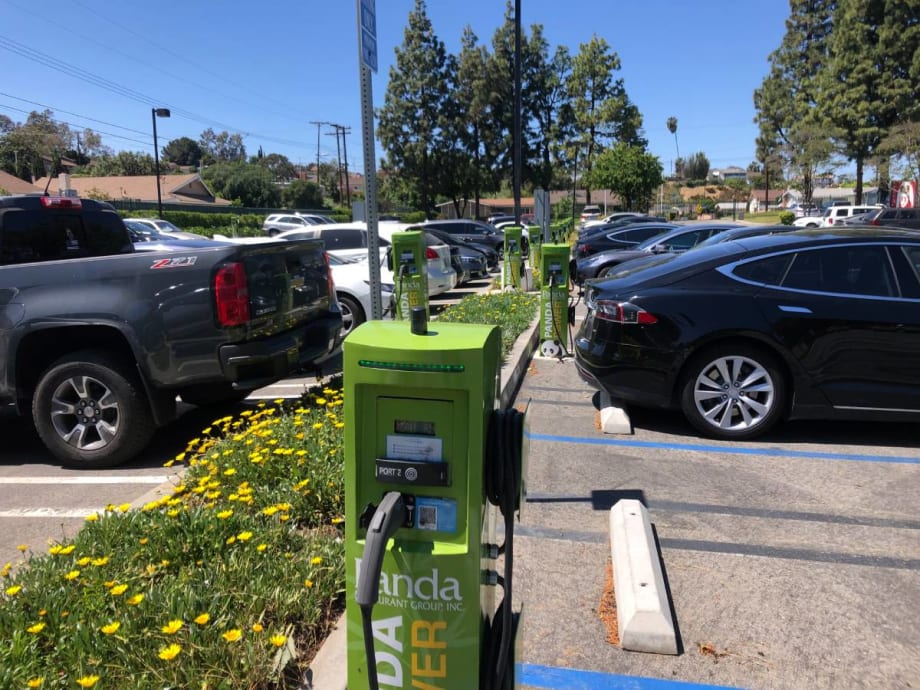
Fleet parking and charging facilities must match and scale to the infrastructure and power sources to provide optimal charging service.
Photo: EV Connect
8 min to read
A fleet can invest a lot of time and planning in picking the right electric vehicles, the preferred charging equipment, and a detailed plan to deploy the EVs across multiple duty cycles and daily schedules.
None of it will come together without a parking facility matched and scaled to charging infrastructure and power sources. Do you go with a parking deck, a big garage or warehouse, or an open parking lot, and should it be new or existing?
Alex Argudin, CEO of the Miami Parking Authority, talked with Charged Fleet in February about her agency’s experience with setting up their first phase of EV charging infrastructure.
An EV Parking Plan Overview
The Miami Parking Authority started looking at options for its EV charging infrastructure in 2016 as it aimed be at the forefront of the coming electric vehicle transition, Argudin said.
“We decided let's just be the first ones to implement something. We just didn't know what that something was going to be. And I can tell you that seven years ago, I would never have imagined that we would be here.”
The authority started designating green spaces at its public facilities for EVs and hybrid vehicles. At first, the space did not attract many takers, but once the agency installed a few charging stations near a residential building, it gradually gained regular usage.
“The charging stations were very expensive at the time,” Argudin said. “When we started seeing some usage, we thought we were onto something. And one of our neighboring cities, Miami Beach, was installing them as well because they also house a lot of their residents near some of their facilities.”
Now, the authority manages about 20 EV charging parking spaces across six garages, and it has a fleet of 92 EVs. The spaces are shared for public access when available.
“Although it doesn't seem like quite a lot, we turn over the spaces quite a bit,” she said.
With the spaces and equipment in place, EV owners are asking for more as Miami takes in more residents from out of state. As a result, the authority is building a 700-space parking deck that will have 140 EV spaces.
“So that changes the dynamic of what we need to implement in our facilities,” Argudin said. “We are looking at the city mandate for our new developments to have 20% of spaces electrified and be ready in the future.”
4 Steps to Choose an EV Capable Parking Lot, Building, or Deck
Argudin outlined key steps for finding the right home for charging stations:
First, assess the demand, access, and convenience of the considered facility.
Is it more feasible to retrofit an older or existing facility or couple the chargers with plans to build a new parking structure or lot?
Look at the costs for installation and retrofitting as well as projected electric power needed to supply the stations.
Focus on a long-term strategy, anticipating future demand, fleet needs, overall costs, and access management.
6 Questions to Ask: Adapting a Parking Facility to Chargers
Once a fleet operation has identified an existing parking lot or structure that they want to electrify, there are some primary questions fleet managers should ask in adapting them to EV chargers:
Look at the ability to increase electric power over time. Is there enough capacity in the electric boxes to run the power and the right equipment?
Are the EV spaces secure and suitable enough for overnight parking and charging, and easy for drivers to retrieve when reporting for work?
What level chargers — 1, 2 or 3 — are best suited for a fleet operation? How many Level 3 chargers can a fleet operation afford, relative to capacity and electricity rates?
What is the local and regional capacity of the utility’s power grid to meet the needs of an EV fleet?
What programs or incentives do utilities offer for electrification?
What are your future power demands and the future capacities of the utility?
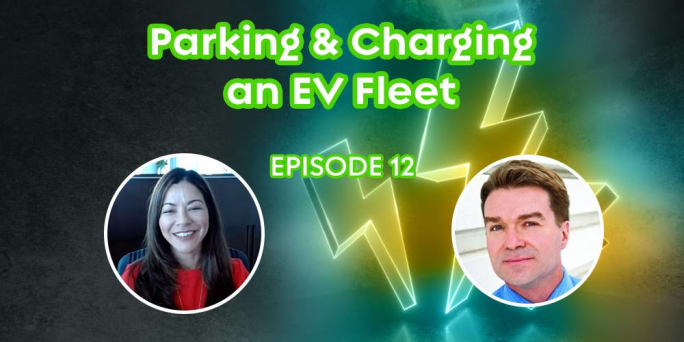
Miami Parking Authority CEO Alex Argudin outlines her agency's journey toward parking-based electrification.
Image: Bobit
Installing Versus Outsourcing a Charging Network
The EV service industry includes a growing number of EV charging depots where fleets can lease or rent access to charging stations.
What are some of the pros and cons for a fleet operation as to whether they should contract with outside charging facilities or go about installing an in-house charging network?
One of the pros of in-house charging, Argudin said, is being able to accurately record and control charging schedules and times with duty cycles and scheduled maintenance. A municipal fleet, for example, has high usage and rarely sits idle. That requires a constant flow of battery recharging.
A con of in-house charging is the cost of development and infrastructure. Electric bills are higher, and the operation must set aside real estate for parking and charging. That raises the question, is it easier and/or cheaper to lease charging access from another location or facility?
A pro of in-house charging is proximity to the overall operation. Repeatedly accessing a local charging depot could involve some mileage back and forth between the fleet base and chargers.
One solution for either option is to develop partnerships with other entities to collectivize costs for in-house charging infrastructure as well as to arrange bulk contracts with local charging depots that lower the charging costs per fleet vehicle.
Keeping EV Chargers Reliable
A leading complaint about public access chargers is the overall unreliability, given some studies that show 50% could be offline or undergoing repairs on any day.
Argudin recommends using apps that track the performance status of chargers as well as their availability throughout the day. Alerts can immediately inform fleet managers of any problems, whether the chargers are centralized or distributed among an operation’s facilities.
“Maintenance must be done on a regular basis and it's your responsibility to audit that and make sure it’s happening because you're providing a service that drivers are relying on. We have a way for us to know how the systems are working and if they're ever down.”
The apps also can notify drivers via text when their EVs are fully charged in case they leave the vehicle to work on other tasks or take a break. Matching the parking time at a charger to the actual charging time allows for the most efficient use of chargers to accommodate multiple fleet shifts and duty cycles.
“I think everybody needs to be responsible. I think you have to educate your staff and the people using EVs on what it takes to maintain them.”
How To Work with Utilities for Power
A critical aspect to working with utilities is to communicate the precise details of an EV fleet, from types of vehicles, duty cycles, expected plug-in demand, future fleet growth and acquisitions, in addition to ensuring adequate power lines, transformers and routers needed for power sourcing.
Argudin said fleets can encounter a bit of a power struggle with utility vendors, since they also want to be a player in the EV charging space.
Fleet operations should communicate about their budgets with utility representatives as well as public officials and invite them to a meeting to discuss plans and projects, she said. They must be brought in from the start to ensure a fleet electrification plan will succeed, especially if it will require Level 3 fast chargers that draw more power.
“Every city is trying to reduce its carbon footprint,” Argudin said. “Every city is trying to put its best foot forward to engage with the public on doing good things for the community and environment. And if we all don’t all play in the same sandbox, we’re not going to be very successful. No matter how much I plan, I need to bring in the utilities ahead of time.”
Valuable EV Lessons Learned
Like any operation that electrifies fleets and facilities, the Miami Parking Authority gained helpful knowledge along the way and dealt with unforeseen challenges when installing EV chargers. Argudin shared some insights for fleet managers who are about to start the parking and charging journey for electric fleet vehicles.
Lesson No. 1: Setting up chargers is not as easy as it seems. Know what it takes and then allow for more time than planned.
Lesson No. 2: You will learn what you do know and what you do well, and then you learn what you don't do well and what you don't know. When a fleet operation installs charging stations, it needs to understand how to maintain and troubleshoot them, answer complaints about defects or failures, and install upgrades. Consider sending out an RFP to retain a vendor that can directly manage, monitor, and maintain the chargers.
Lesson No. 3: Look for additional ways to generate revenue off your EV chargers if you share them with other fleet organizations and/or the public, such as installing screens at stations for paid advertising like those at fuel pump.
Lesson No. 4: Fleet operations may acquire EVs at a slower pace than expected due to rising demand and supply chain issues, but don’t let that delay the next phases of adding charging infrastructure. Plan parking spaces and chargers for the long-term based on targeted EV fleet sizes.
Lesson No. 5: Look for government-funding and incentives for infrastructure projects to offset operational costs and consider allowing partial public access to chargers to help boost electrification for other fleets and the public.
“We got to prepare for the future,” Argudin said. “I'm seeing it more and more in our facilities. The usage of these spaces has increased twofold and it's crazy how it will increase by 2050.”
Topics:fleet managementFleet electrificationcharging infrastructureEV Charging StationsGreen FleetFleet Forward
Originally posted on Charged Fleet
Subscribe to Our Newsletter
More Green Fleet
Sponsored•October 1, 2026
New Propane Autogas Program Offers Fleet Compensation
Qualified commercial fleets can receive $7,500 per eligible propane autogas vehicle and up to $10,000 for new refueling site prep. Learn how the program works and see whether your fleet qualifies.
Read More →
EV Charging Use Is Outpacing Infrastructure Growth
ChargePoint’s 2026 Charging Forward Report points to rising charger use, higher-powered charging, commercial vehicle electrification, and energy-management technology. Here’s what fleets should know.
Read More →
Merchants Fleet Reports 290M EV Miles as Fleets Navigate Changing Electrification Market
From millions in operating savings to hundreds of millions of EV miles, Merchants Fleet’s latest report reveals what’s working and what’s changing in fleet electrification.
Read More →

The EV Breakdown Nobody's Talking About: Why Most Electric Vehicle Roadside Calls Aren't Mechanical Failures
Here's why EV breakdowns are widely misunderstood.
Read More →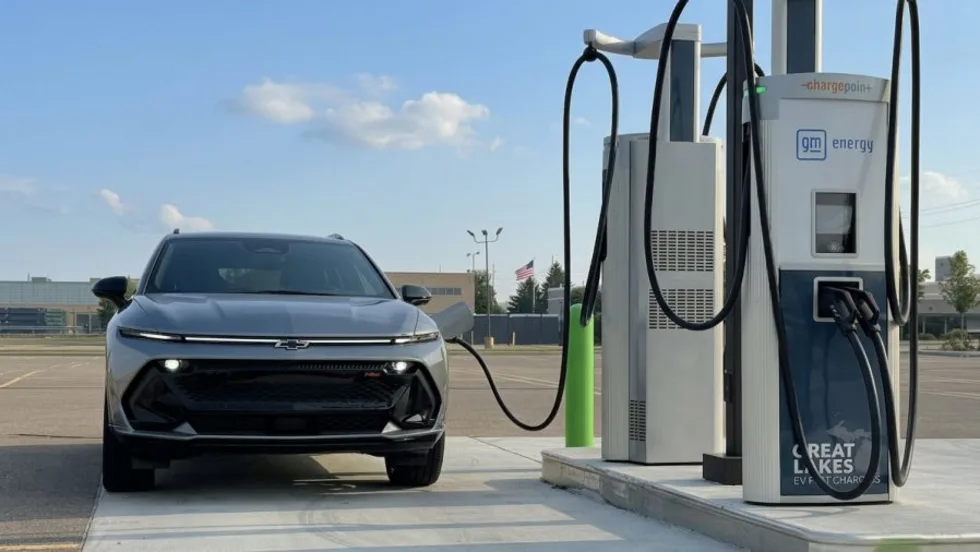
ChargePoint Now Available in Energy Pass
ChargePoint and additional planned charging network integrations were added to GM's Energy Pass.
Read More →

First Look: Slate Auto's Electric Fleet Pickup
Could an affordable, modular EV pickup make electrification more practical for fleets?
Read More →
Slate Debuts Colorful, Unique EV Models
A recent media and client event, studded with electric vehicles dressed up on platforms, planted a new position for the manufacturer in the wider EV market. Fleets will find cost-saving advantages.
Read More →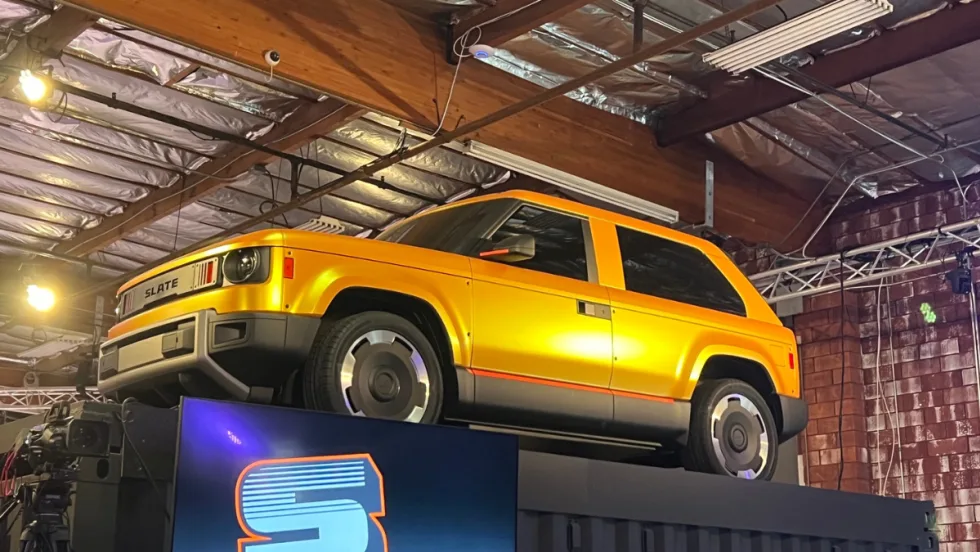
Slate Electric SUV, Pickup Switchable Model Aims For Light-Duty Fleets
Everything about this EV is counterintuitive and understated, making it stand out from the crowd.
Read More →
Inspiration Mobility Acquires Key Electrada Assets
Inspiration Mobility Group has acquired select assets of Electrada, adding the fleet electrification provider's team, technology, and charging infrastructure development capabilities to its energy management business.
Read More →