




How a Texas Fleet Reduced At-Fault Accidents by 83%
With 100 cars in its fleet, True MHS took its safety program to the next level by implementing video telematics. In one year, it saw a major reduction in at-fault accidents and gained context around incidents, collisions, and driver behavior.

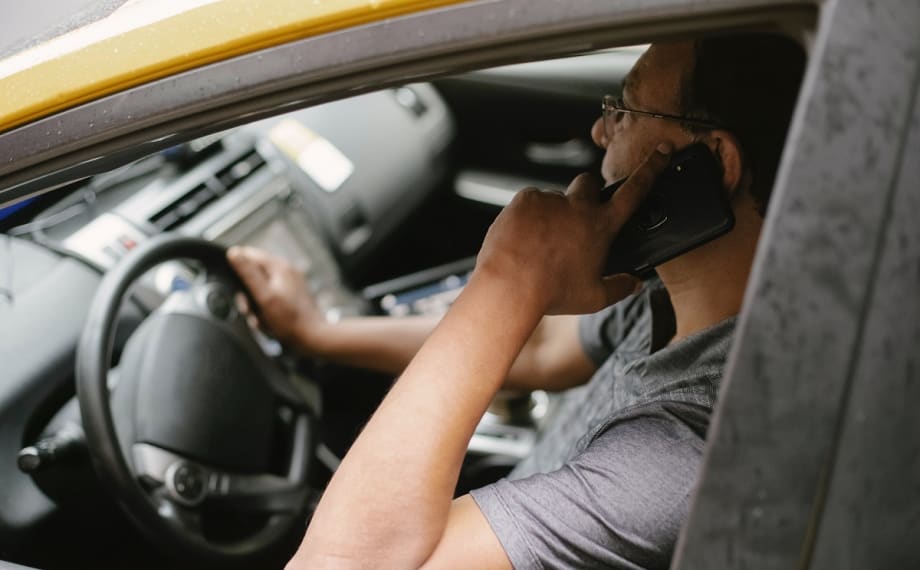
Video telematics solutions are helping fleets to identify and address risky distracted driving behaviors.
Photo: pexels.com/Tim Samuel
The statistics aren’t pretty. In 2020, some 3,142 people lost their lives on U.S. roads and another 400,000 suffered injuries due to distracted driving, according to the National Highway Traffic Safety Administration. As a fleet owner or operator, you’re probably already aware that your employees could wind up being one of those statistics. Equally worrisome, any one of your drivers could be the catalyst of one of those statistics, opening your organization to liability.
In a video episode of Fleet Tech That Works, Automotive Fleet talked with Tanner Ambs of True MHS and Tyler Mortensen of GPS Insight about how video telematics can help fleets reduce overall collisions, liability, and distracted driving.
With four locations throughout Texas, True MHS specializes in community-based services for people diagnosed with a serious mental illness. As the organization’s information guru, Tanner Ambs is responsible for multiple data-driven projects including managing a 100-car fleet and overseeing the fleet safety program.
While True MHS formerly relied on traditional telematics, Ambs and team wanted to take safety to the next level and so they implemented a video telematics solution from GPS Insight.
“We were looking into videos specifically to be more safe. And the metrics that we were getting (from our former telematics), didn't give us the whole picture,” said Ambs. “We found that looking at video, we get a more full picture of what’s going on, surrounding an incident. …Is it my driver being an idiot? Or is it somebody else? I can tell that by watching the video. I can't tell that if telematics just tells me there was a harsh braking moment.”
That’s called context, says GPS Insight’s Mortensen. Telematics created visibility for fleets. Managers knew where their vehicles were in real time and they got data on behaviors like speeding, harsh braking, and even scorecards to better understand drivers.
“But what telematics did not provide is context. What actually happened, why was there harsh braking, and was my guy doing something unsafe like distracted driving?” said Mortensen. “What we are seeing today is that companies want context. They want complete visibility.”
Why? Because context around incidents and collisions is what allows a fleet operator to truly manage safety and foster a dialogue with drivers that will lead to the specific improvements they need.
Fewer Collisions, Easier Management
Ambs says installing the video solution has made a huge difference on his job as well as on results. By being able to focus in more on dangerous driving behaviors, True MHS has reduced at-fault accidents by 83%.
“We were down from 30 to five at-fault accidents last year. So that's a significant portion that I can safely assume were due to distracted driving prior to us having the videos and the video capability installed.”
Managing his fleet is much easier, too. After all, there is no way one can constantly look over their shoulder at some 130 drivers. But that doesn’t mean Ambs is constantly watching video. On the contrary, because he only needs to view video when a driver performs outside of the company’s safety parameters.
“If they are practicing unsafe driving habits, that's the only time that I see a video. It's a minute clip that gives that context. And I'm able to see what was going on. Was there something that precipitated this? Is there some sort of mitigating factor I need to take into account?”
Safety is much more manageable thanks to video telematics. Even with over 100 cars, Ambs says he’s able to monitor everything — and only those things — that need monitoring to keep his drivers safe.
Impact on Drivers
Although the new cameras have been working well for Ambs, not everyone was in favor of them. “It was like a 50-50 split,” says Ambs. “Some of our drivers were okay with the video cameras and others were not.”
However, Ambs discovered that when he convinced the team of the camera’s real value and that he was “not just looking in on what you’re doing on a day-to-day basis,” their comfort level expanded.
He explained to his team — and to new hires — that the videos are only viewed when absolutely necessary. “I’m not interested in what you’re doing inside the cars as long as it’s safe. …I don't care what Taylor Swift song you’re singing to …I won't see it!” said Ambs.
That message calmed down many fears, and most of his drivers do not see the video cameras as an invasion of privacy. In fact, most drivers understand how the cameras can help identify areas where they can improve.
Thanks to the GPS Insight solution, Ambs is better positioned to coach individual drivers and integrate key learnings into training for new hires. For example, when training new hires, he points out the three most common problems areas he has consistently noted from viewing video incidents. These include following distance, stop signs, and distracted driving.
With the video data at the ready, Ambs is armed to caution new drivers about avoiding these specific potential risky driving behaviors.
Mortensen says another way to get drivers to accept video cameras and to use them to boost fleet safety is to seek out cameras that can spotlight positive data — not just negative events. There are video cameras available that offer opportunities to focus on what your drivers do well, and that helps fleet operators drive positively focused safety programs. Mortensen urges fleet operators to seek out smart camera solutions that can help them do just that.
“I think it's incredibly important to factor in positive driving behavior. Ask yourself, is that something that this camera can capture?” says Mortensen.
He uses a Walter Payton analogy. “If you only based his performance off of fumbles, he would not be in the discussion for top running backs in NFL history,” said Mortensen. “But when you look at positive data, and you look at everything that he did, it's hard to argue that he's not in the top five if not the top running backs. The same goes for your drivers.”
Watch the full video interview here:
More Safety
IIHS Crash Avoidance Tests Reveal Safety Gaps in Cargo Vans and Work Trucks
New crash-avoidance ratings from the Insurance Institute for Highway Safety reveal inconsistent performance among commercial vehicles, with several popular cargo vans and heavy-duty pickups struggling to avoid collisions with other vehicles and pedestrians.
Read More →
What’s Next for Fleet? Safety, AI & Industry Recognition | AF News Recap
Could your company's culture be encouraging distracted driving? This week, we're exploring how workplace expectations affect driver safety, what AI, EVs, and autonomous vehicles could mean for the future of fleet management, and how fleet professionals can strengthen their award nominations.
Read More →
Does Your Fleet's Culture Encourage Distracted Driving?
What happens when the people responsible for enforcing safety rules are the ones setting the wrong example? The answer may reveal why some of the biggest risks to fleet drivers have little to do with what's written in the employee handbook.
Read More →
Fleet Manager’s Ultimate Playbook: Navigating the New Standard in OEM Connectivity
Rising operating costs, driver safety concerns, and unplanned downtime are putting unprecedented pressure on modern fleets. Discover how fleet managers use embedded OEM connectivity and real-time vehicle data to cut TCO, prevent downtime, and protect drivers without aftermarket telematics hardware.
Read More →
From Driver Well-Being to EV Charging | AF News Recap
Mental health belongs in the fleet safety conversation. This week, we’re looking at five ways fleets can support employee well-being before a crisis, plus Holman’s expansion in Mexico, new one-day Fleet Forward passes, and why EV charging demand is outpacing infrastructure growth.
Read More →
Nexar-Nauto Merger Aims to Give Fleets Better Safety Intelligence Through Larger Driving Dataset
Stefan Heck tells Automotive Fleet that combining more than 10 billion miles of driving history with Nexar's AI models will give fleets deeper insights into driver risk and roadway conditions than either company could provide independently.
Read More →
Don't Wait for a Crisis: 5 Ways to Build Mental Health Into Your Fleet Safety Program
For Suicide Prevention Month, fleet and safety leaders have an opportunity to put mental health where it belongs: at the center of workplace safety.
Read More →
How Camera Data Can Strengthen a Fleet’s Insurance Renewal
Insights from a commercial insurance carrier and a broker show how fleets can turn video telematic data, driver coaching, and improved claims results into a stronger case at insurance renewal.
Read More →
The Safest Fleets Aren’t the Ones with the Most Technology
You’ve made the telematics investment. Here’s how to capture the other half of its value and build the safest fleet on the road.
Read More →
Hidden in Plain Sight: Fleet Compliance Risks
Fleet compliance isn't just about having policies — it's about consistently enforcing them. This practical guide reveals six hidden compliance risks common in public sector and shared fleet operations and outlines proven strategies to improve visibility, accountability, and audit readiness
Read More →