





Do you know your stopping distance? Learn more!
Drivers Using Adaptive Cruise Control are More Likely to Speed
Adaptive Cruise Control is a more advanced version of traditional cruise control that uses sensors to calculate and maintain a preselected following distance from the vehicle ahead, eliminating the need for the driver to repeatedly brake and reset the system.
March 15, 2021
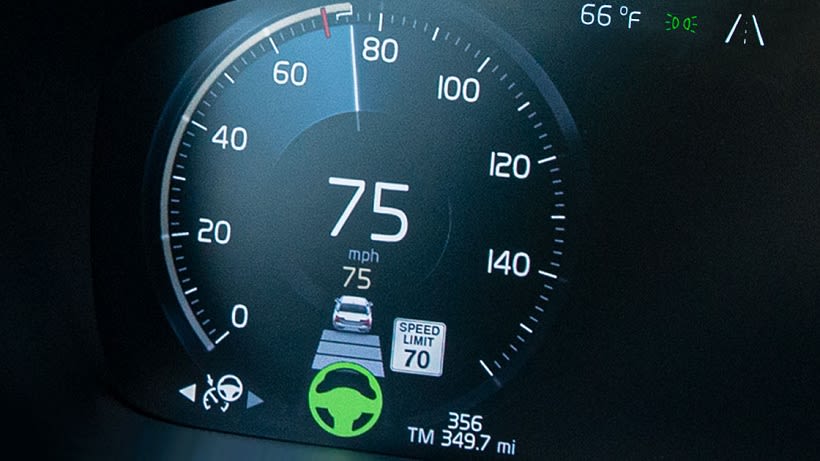
Adaptive Cruise Control is a more advanced version of traditional cruise control that uses sensors to calculate and maintain a preselected following distance from the vehicle ahead, eliminating the need for the driver to repeatedly brake and reset the system.
Photo: IIHS
3 min to read
Drivers using adaptive cruise control (ACC) are substantially more likely to speed when using ACC - or a partial automation that combines that feature with lane centering - a new study from the Insurance Institute for Highway Safety (IIHS) found.
Drivers were found speeding more so when using the technology than when not using either solution, the study found. The study also found that drivers when selecting a speed to automatically follow, many drivers choose one that’s over the limit.
“ACC does have some safety benefits, but it’s important to consider how drivers might cancel out these benefits by misusing the system,” says IIHS Statistician Sam Monfort, the lead author of the study. “Speed at impact is among the most important factors in whether or not a crash turns out to be fatal.”
ACC is a more advanced version of traditional cruise control that uses sensors to calculate and maintain a preselected following distance from the vehicle ahead, eliminating the need for the driver to repeatedly brake and reset the system, IIHS said. With the addition of lane centering, the vehicle also maintains its position within the travel lane automatically.
Despite this, analysis of insurance claims data by the IIHS-affiliated Highway Loss Data Institute and other research indicate that ACC may lower crash risk. Other studies have shown that these systems maintain a greater following distance at their default settings than most human drivers and suggested that they reduce the frequency of passing and other lane changes.
To find out the impact ACC and lane centering technologies have on speeding, IIHS researchers analyzed the behavior of 40 drivers from the Boston metro area over a four-week period using data collected by the Massachusetts Institute of Technology’s Advanced Vehicle Technology Consortium.
Data from the study found that drivers were 24% more likely to drive over the speed limit on limited-access highways when those systems were turned on. IIHS said. The amount by which they exceeded the speed limit when they did speed was also greater when they were using the driver assistance features compared with driving manually.
ACC also had the largest impact on how much drivers exceeded the limit in zones where it was 55 mph. In these slower zones, they averaged a little more than 1 mph higher over the limit when using ACC or Pilot Assist than they did driving manually, said IIHS. ACC and partial automation users are at about 10% higher risk of a fatal crash, according to a common formula for calculating probable crash outcomes.
The study did not account for several other factors that have been shown to reduce crash frequency and severity, IIHS said. For instance, it’s possible that drivers who set their systems at higher speeds also selected a greater following distance.
More Safety

From Driver Well-Being to EV Charging | AF News Recap
Mental health belongs in the fleet safety conversation. This week, we’re looking at five ways fleets can support employee well-being before a crisis, plus Holman’s expansion in Mexico, new one-day Fleet Forward passes, and why EV charging demand is outpacing infrastructure growth.
Read More →
Nexar-Nauto Merger Aims to Give Fleets Better Safety Intelligence Through Larger Driving Dataset
Stefan Heck tells Automotive Fleet that combining more than 10 billion miles of driving history with Nexar's AI models will give fleets deeper insights into driver risk and roadway conditions than either company could provide independently.
Read More →
Don't Wait for a Crisis: 5 Ways to Build Mental Health Into Your Fleet Safety Program
For Suicide Prevention Month, fleet and safety leaders have an opportunity to put mental health where it belongs: at the center of workplace safety.
Read More →
How Camera Data Can Strengthen a Fleet’s Insurance Renewal
Insights from a commercial insurance carrier and a broker show how fleets can turn video telematic data, driver coaching, and improved claims results into a stronger case at insurance renewal.
Read More →
The Safest Fleets Aren’t the Ones with the Most Technology
You’ve made the telematics investment. Here’s how to capture the other half of its value and build the safest fleet on the road.
Read More →
Sponsored•August 7, 2026
Hidden in Plain Sight: Fleet Compliance Risks
Fleet compliance isn't just about having policies — it's about consistently enforcing them. This practical guide reveals six hidden compliance risks common in public sector and shared fleet operations and outlines proven strategies to improve visibility, accountability, and audit readiness
Read More →
NETS Sets 2026 Fleet Safety Benchmark Conference for Indianapolis
The Sept. 15–17 program will feature fleet benchmarking data, case studies, emerging technologies, and implementation strategies while running alongside the NSC Safety Congress & Expo.
Read More →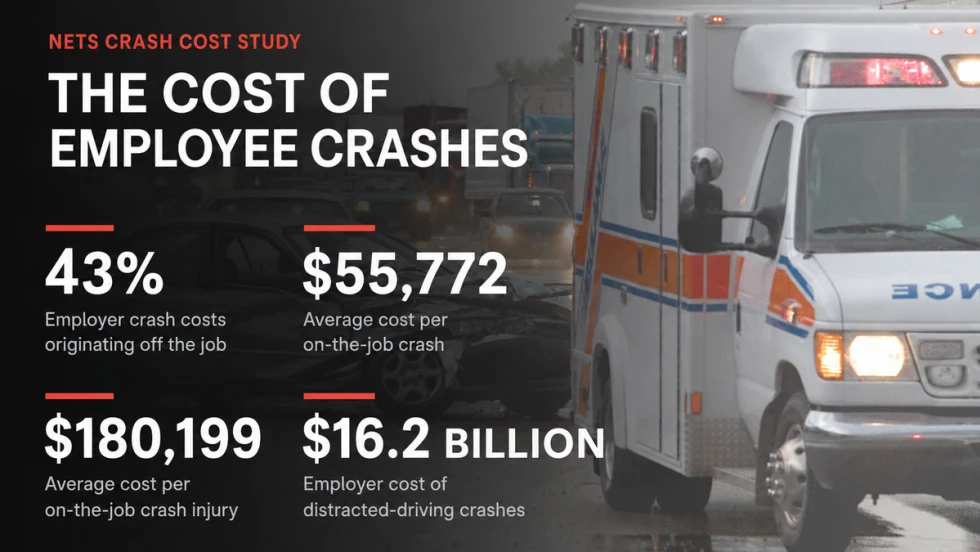
Off-the-Job Crashes Account for 43% of Employers’ $61.7 Billion Crash Burden
NETS quantifies costs dispersed across fleet, risk, HR, and other departments while providing new per-crash benchmarks for employers.
Read More →
Ram Recalls More Than 1.27 Million 1500 Pickups for Seat Belt Anchor Issue
The recall affects certain 2019-2026 Ram 1500 pickups that may have improperly attached second-row seat belt buckle anchors.
Read More →
Operation Safe Driver Week: Why the Industry's Oldest Safety Campaign Still Matters to Fleets
A look at how a 2007 enforcement initiative became one of the most consequential weeks on the fleet safety calendar, and what it means for your drivers in 2026.
Read More →