




Yale Considers Carbon Tax for Fleet
Yale University launched a self-imposed carbon tax program earlier this year that levies charges against a number of its departments regarding the amount of carbon used, which is something the university is considering applying to its fleet.
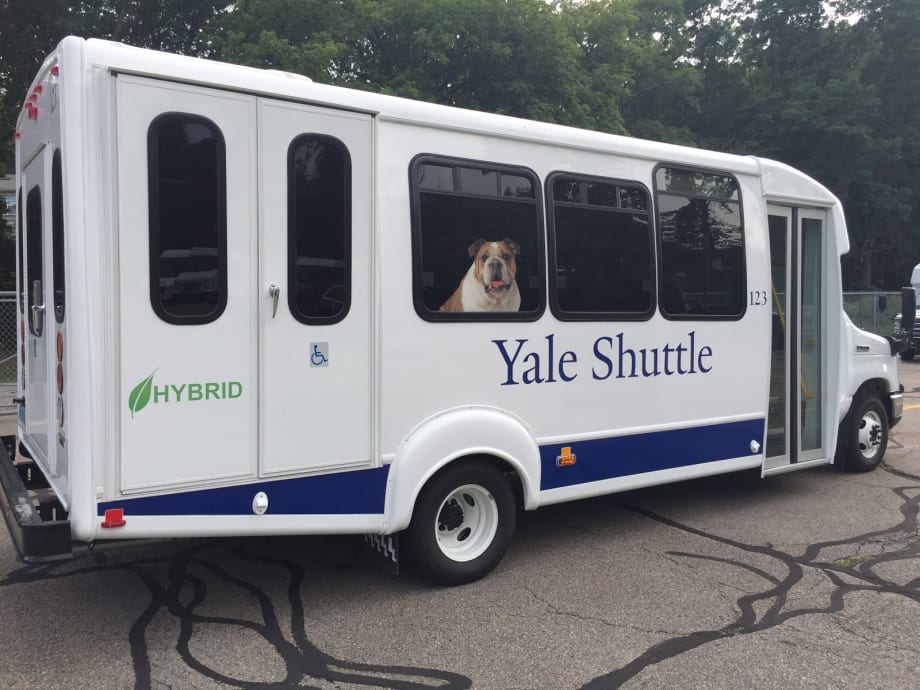
Photo of Yale University Shuttle courtesy of XL Hybrids.
Photo of Yale University Shuttle courtesy of XL Hybrids.
Yale University is considering applying its self-imposed carbon tax program to its fleet to measure emissions and penalize heavier users, its fleet manager said. Yale launched the program earlier this year to levy charges against several departments.
The self-imposed tax program, which is still in the trial stage, was created to calculate the amount of carbon used and apply a charge of $40 per metric ton of emissions. Twenty Yale buildings are taking part in the new carbon charge pilot program.
“At the current time the Carbon tax is in a pilot test and is focusing primarily on electricity and building usage," said George E. Longyear, Jr., director of Yale Housing and Fleet Management. "As it is implemented campus-wide, we expect the carbon tax initiative will affect the fleet, and as such we are working to reduce the carbon footprint."
The $40 is the current figure the federal government uses to estimate the social cost of carbon. The tax would rise 3% annually and be indexed to inflation, reports E&E Publishing.
Yale, which has 475 vehicles in its fleet, is looking to add more alternative-fuel vehicles, as well as utilize technology that ensures drivers are driving in an eco-friendly manner, including using telematics to monitor idling.
“To implement fleet into the carbon tax, Yale is continuously reviewing its fleet size, alternative fuel vehicles, as well as, fuel efficiency and incorporating these factors into vehicle selection,” said Longyear, Jr.
Yale has a transit operation that has approximately 47 vehicles that customarily operate on a 24/7 basis. These vehicles include a number of Goshen Coaches, Thomas Transits, and MV-1 mobility paratransit vehicles. These vehicles have been the primary focus for Yale’s fleet to explore alternative fuel and technology vehicles, according to Longyear, Jr.
"In 2012 we began implementing CNG as a fuel option in new shuttles and Transits," said Longyear, Jr. "As a result we have seen a reduction in the carbon footprint by 80 metric tons over the past three to four years. In 2015 we started adding the XL Hybrid upfit to the shuttle fleet and will be increasing the numbers in 2016."
XL Hybrids initiated a pilot program of three shuttle buses at Yale. The vehicles saved more than 40 metric tons of carbon-dioxide in about a six-month time frame, thanks to a 23% improvement in miles-per-gallon, said David Breault, business development executive, XL Hybrids. The data was gathered from the feedback of XL Hybrids' connectivity system, XL Link, and Yale’s own analysis.
More Green Fleet

Merchants Fleet Reports 290M EV Miles as Fleets Navigate Changing Electrification Market
From millions in operating savings to hundreds of millions of EV miles, Merchants Fleet’s latest report reveals what’s working and what’s changing in fleet electrification.
Read More →
The EV Breakdown Nobody's Talking About: Why Most Electric Vehicle Roadside Calls Aren't Mechanical Failures
Here's why EV breakdowns are widely misunderstood.
Read More →
ChargePoint Now Available in Energy Pass
ChargePoint and additional planned charging network integrations were added to GM's Energy Pass.
Read More →

First Look: Slate Auto's Electric Fleet Pickup
Could an affordable, modular EV pickup make electrification more practical for fleets?
Read More →
Slate Debuts Colorful, Unique EV Models
A recent media and client event, studded with electric vehicles dressed up on platforms, planted a new position for the manufacturer in the wider EV market. Fleets will find cost-saving advantages.
Read More →
Slate Electric SUV, Pickup Switchable Model Aims For Light-Duty Fleets
Everything about this EV is counterintuitive and understated, making it stand out from the crowd.
Read More →
Inspiration Mobility Acquires Key Electrada Assets
Inspiration Mobility Group has acquired select assets of Electrada, adding the fleet electrification provider's team, technology, and charging infrastructure development capabilities to its energy management business.
Read More →
Turning Connected Vehicle Data Into Decisions That Matter
Fleet leaders have more data than ever, but turning that data into clear, actionable decisions remains a challenge. This white paper shows how leading organizations are using connected vehicle data to improve safety, reduce costs, and optimize fleet performance. Learn how to turn insight into action across your fleet.
Read More →
Are You Tracking Your Fleet's True Total Cost of Ownership?
Bobit Business Media surveyed 190 fleet professionals and found that while most fleets are tracking costs, fragmented systems and data gaps are keeping true TCO visibility out of reach. With rising pressure to control spend in an increasingly volatile environment, the gap between what fleets think they know and what the data actually shows is wider than you might expect. See how your peers are managing costs today and where the industry still has room to improve.
Read More →