





Related: SoCalGas to Test Tech That Could Transform Hydrogen Distribution
Worthington Industries Introduces Solution For Transporting, Storing Hydrogen Gas
ThermaGuard hydrogen cylinders are developed with advanced composite materials and are warranted for their service life at 250 degrees Fahrenheit operating temperature.
February 11, 2021
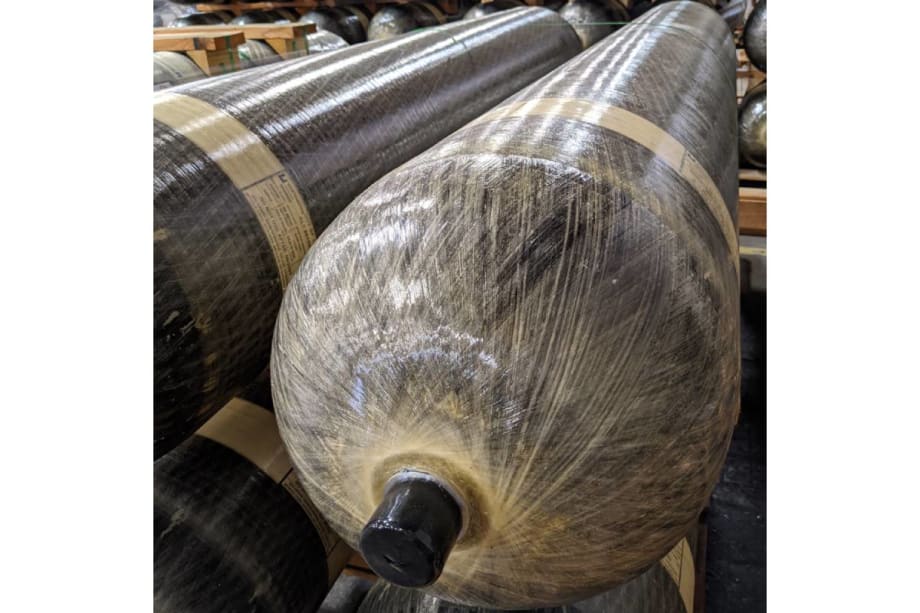
ThermaGuard hydrogen cylinders are developed with advanced composite materials and are warranted for their service life at 250 degrees Fahrenheit operating temperature.
2 min to read
Worthington Industries announced Feb. 3 the release of ThermaGuard hydrogen cylinders, a new product optimized to meet the needs of hydrogen fuel. Developed using Worthington’s aerospace-grade standards, ThermaGuard hydrogen cylinders are proven to be a more efficient means of transporting and storing high-pressure hydrogen gas.
ThermaGuard hydrogen cylinders are developed with advanced composite materials and are warranted for their service life at 250 degrees Fahrenheit operating temperature. This eliminates the need for hydrogen pre-chilling, and cylinder replacement is not necessary when chilling equipment malfunctions or otherwise goes out of calibration. Older composite cylinder designs are limited to operating temperatures of 185 degrees Fahrenheit, requiring hydrogen to be pre-chilled to protect cylinders from overheating. Chilling hydrogen is expensive and slows the filling process.
ThermaGuard cylinders will help fuel cell and hydrogen powertrain developers and hydrogen refueling stations with:
Faster filling: ThermaGuard hydrogen cylinders make for faster filling by using aerospace-grade composite materials that have a higher temperature rating and an aluminum liner to prevent significant cylinder temperature increases. Without hydrogen pre-chilling, heavy-duty vehicles, like Class 8 trucks and transit buses equipped with ThermaGuard hydrogen cylinders, can be filled in 10-15 minutes versus 25-45 minutes.
Reduced fuel costs: Hydrogen pre-chilling increases the dispensed cost of hydrogen by $0.22 to $2 per kilogram depending on the filling parameters. ThermaGuard hydrogen cylinders can eliminate this extra operating cost.
Reduced capital expenditure: Hydrogen chilling equipment can have a capital cost of $250,000 to $500,000 depending on the fill station operating parameters. ThermaGuard hydrogen cylinders eliminate these capital expenses.
Reduced range anxiety: ThermaGuard hydrogen cylinders can meet or exceed SAE J2601 objectives for completeness of fill, without hydrogen pre-chilling.
Extended life cylinders: Chilling equipment and temperature sensors are prone to failure and are difficult to keep running continuously. Should chilling equipment fail, ThermaGuard hydrogen cylinders do not need replaced after being exposed to high temperatures. ThermaGuard hydrogen cylinders have passed 10,000-cycle fill and vent testing.
ThermaGuard hydrogen cylinders are designed to capture, contain, and use hydrogen with service pressures ranging from 248–700 bar (3,600–10,150 psi) for usage as motor vehicle fuel containers and in mobile pipeline applications for zero-emission and sustainable mobility solutions.
Originally posted on Work Truck Online
More Global Fleet

GeoFencing Adds to Your Truck Security Arsenal
Geofencing is a familiar fleet tool today, but its early adoption marked a major shift in vehicle tracking, route monitoring, and the debate over employee privacy.
Read More →
Holman Takes Full Ownership of ARIZA in Mexico
Holman is bringing its Mexican fleet management operation fully under its own brand after more than 30 years as a joint venture. The change gives multinational fleet customers a single Holman operation across the U.S., Canada, and Mexico.
Read More →
5 Tire Maintenance Tips to Help Prevent Work Truck Downtime
Regular tire checks can do more than extend tread life. These five maintenance practices can help work truck fleets catch problems early, reduce costs, and prevent downtime.
Read More →

Proven Ways to Reduce Work Truck Downtime
The age-old problem of downtime will always be a reality, but with new strategies at hand, fleets have more ways to keep trucks on the road longer.
Read More →


Cameras, Safety and Insurance: From Reactive Claims to Real-Time Prevention (Part 2 of 2)
Part Two: Commercial auto remains one of the most challenging and costly lines of coverage for fleet operators and insurers alike. Continue learning more about how to effectively address these issues from Onur Aksan, Enterprise Business Development Executive, Geotab
Read More →
Cameras, Safety and Insurance: From Reactive Claims to Real-time Prevention
Commercial auto remains one of the most challenging and costly lines of coverage for fleet operators and insurers alike. Learn more about how to effectively address these issues from Onur Aksan, Enterprise Business Development Executive, Geotab.
Read More →
Fleet Costs Are Rising: Here’s How Leaders Are Responding
Fleet leaders are under pressure to reduce costs, adapt to economic uncertainty, and make smarter decisions. See how peers across North America are responding with real data, proven strategies, and forward-looking insights. Download the 2026 Market Pulse Report to benchmark your strategy and uncover where you can gain an edge.
Read More →
Enterprise Fleet Management Surpasses 900,000 Vehicles in U.S. & Canada
Enterprise Mobility connects with mobility solutions around the globe
Read More →