





Talking Safety: Why Won't My Drivers Do What I Need Them to Do?
Which States are the Worst for Drunk Driving?
Every day, nearly 40 people die due to drunk driving in America, accounting for 32% of all traffic fatalities. See which states had the highest rate of drunk driving-involved fatalities, and which had the lowest.
July 19, 2024
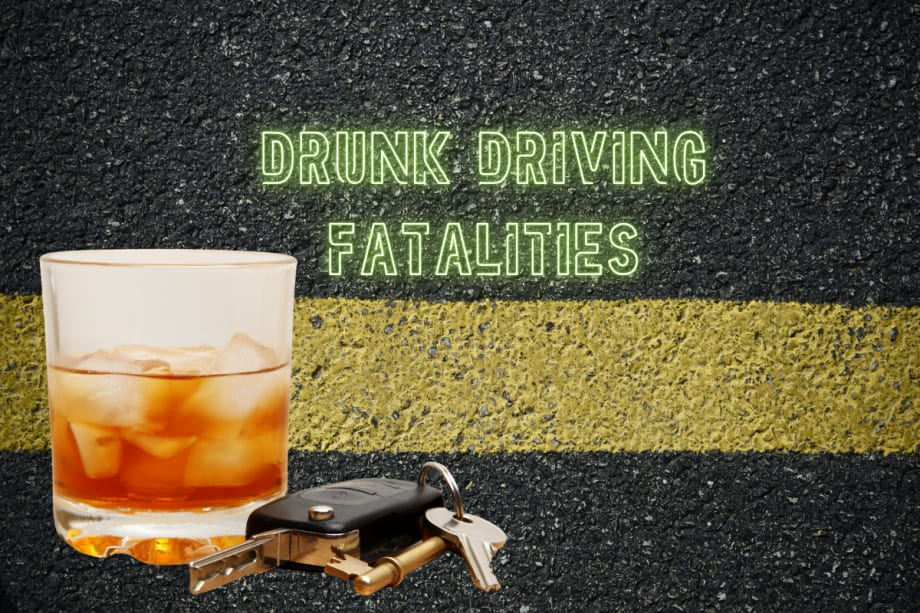
States were ranked using a score based on metrics including drunk drivers involved in fatal crashes per 100,000 licensed drivers, fatalities per 100,000 residents, and the percentage of traffic deaths caused by drivers with a BAC of 0.08 or higher.
Photo: Automotive Fleet
3 min to read
Driving while intoxicated not only puts your own life at risk; it also puts others' lives at risk. A recent study by Simmrin Law Group ranked the 10 states with the highest rates of fatalities caused by drunk drivers.
Every day, nearly 40 people die due to drunk driving in America, accounting for 32% of all traffic fatalities.
Drunk driving is an issue commercial fleet managers may face, as their drivers engage in after-hours events or make a toast to a successful week in the breakroom on Friday afternoon before hopping in their work vehicles.
Which States Have the Most Drunk Driving-Related Road Fatalities?
The study's authors gathered data from the National Highway Traffic Safety Administration's (NHTSA) latest available data on drunk driving fatalities, drunk driver involvement in fatal crashes, and the percentage of traffic deaths involving alcohol. The data is from 2022.
In 2022, more than 13,500 lives were lost to drunk driving.
The states were given a score based on metrics including drunk drivers involved in fatal crashes per 100,000 licensed drivers (40% of the score), fatalities per 100,000 residents (35%), and the percentage of traffic deaths caused by drivers with a BAC of 0.08 or higher (25%).
Data sources for these numbers include NHTSA, the U.S. Census Bureau, and Statista. Each state received a weighted score out of 100 and was ranked accordingly.
States with the Highest Rates of Drunk Driving-Related Deaths
Southern states are overrepresented in the top 10. South Carolina tops the list, with nearly half of fatal crashes involving alcohol.
Rank | State | Total Score |
1 | South Carolina | 100.00 |
2 | Texas | 83.65 |
3 | New Mexico | 80.77 |
4 | Wyoming | 74.39 |
5 | Montana | 71.72 |
6 | Arizona | 70.31 |
7 | Oregon | 70.25 |
8 | Louisiana | 65.11 |
9 | Mississippi | 63.55 |
10 | Alabama | 60.96 |
States with the Lowest Rates of Drunk Driving-Related Deaths
Northeastern states consistently rank among the states with the lowest drunk driving-related fatality rates. The authors attribute greater access to public transportation and stricter DUI laws as possible reasons for this.
Rank | State | Total Score |
1 | Utah | 31.39 |
2 | New Jersey | 31.79 |
3 | Massachusetts | 31.80 |
4 | Minnesota | 36.22 |
5 | New York | 36.68 |
6 | Alaska | 36.78 |
7 | Pennsylvania | 39.31 |
8 | Michigan | 40.64 |
9 | Wisconsin | 41.03 |
10 | Hawaii | 41.47 |
Curbing Drunk Driving with Technology
In December 2023, NHTSA announced an Advance Notice of Proposed Rulemaking (ANPR) geared toward laying the groundwork for potential alcohol-impairment detection technology standards in all new passenger vehicles when the technology is mature, according to a news release from the agency.
The Bipartisan Infrastructure Law directed NHTSA to issue a final rule establishing a Federal Motor Vehicle Safety Standard that requires new passenger vehicles to have “advanced drunk and impaired driving prevention technology.”
The legislation said that NHTSA should issue a new regulation only if it meets the requirements of the National Traffic and Motor Vehicle Safety Act, which states that a proposed standard must be reasonable, practicable, and reduce traffic crashes and associated deaths, among other factors.
Advocacy groups voiced both support and opposition for the proposal. Consumer Reports said the technology has immense potential to make roadways safer, while the Center for Democracy & Technology pointed to potential privacy concerns.
More Safety

Sponsored•October 1, 2026
Fleet Manager’s Ultimate Playbook: Navigating the New Standard in OEM Connectivity
Rising operating costs, driver safety concerns, and unplanned downtime are putting unprecedented pressure on modern fleets. Discover how fleet managers use embedded OEM connectivity and real-time vehicle data to cut TCO, prevent downtime, and protect drivers without aftermarket telematics hardware.
Read More →
From Driver Well-Being to EV Charging | AF News Recap
Mental health belongs in the fleet safety conversation. This week, we’re looking at five ways fleets can support employee well-being before a crisis, plus Holman’s expansion in Mexico, new one-day Fleet Forward passes, and why EV charging demand is outpacing infrastructure growth.
Read More →
Nexar-Nauto Merger Aims to Give Fleets Better Safety Intelligence Through Larger Driving Dataset
Stefan Heck tells Automotive Fleet that combining more than 10 billion miles of driving history with Nexar's AI models will give fleets deeper insights into driver risk and roadway conditions than either company could provide independently.
Read More →
Don't Wait for a Crisis: 5 Ways to Build Mental Health Into Your Fleet Safety Program
For Suicide Prevention Month, fleet and safety leaders have an opportunity to put mental health where it belongs: at the center of workplace safety.
Read More →
How Camera Data Can Strengthen a Fleet’s Insurance Renewal
Insights from a commercial insurance carrier and a broker show how fleets can turn video telematic data, driver coaching, and improved claims results into a stronger case at insurance renewal.
Read More →
The Safest Fleets Aren’t the Ones with the Most Technology
You’ve made the telematics investment. Here’s how to capture the other half of its value and build the safest fleet on the road.
Read More →
Sponsored•August 7, 2026
Hidden in Plain Sight: Fleet Compliance Risks
Fleet compliance isn't just about having policies — it's about consistently enforcing them. This practical guide reveals six hidden compliance risks common in public sector and shared fleet operations and outlines proven strategies to improve visibility, accountability, and audit readiness
Read More →
NETS Sets 2026 Fleet Safety Benchmark Conference for Indianapolis
The Sept. 15–17 program will feature fleet benchmarking data, case studies, emerging technologies, and implementation strategies while running alongside the NSC Safety Congress & Expo.
Read More →
Off-the-Job Crashes Account for 43% of Employers’ $61.7 Billion Crash Burden
NETS quantifies costs dispersed across fleet, risk, HR, and other departments while providing new per-crash benchmarks for employers.
Read More →
Ram Recalls More Than 1.27 Million 1500 Pickups for Seat Belt Anchor Issue
The recall affects certain 2019-2026 Ram 1500 pickups that may have improperly attached second-row seat belt buckle anchors.
Read More →