




Waste Pro Transitions to New Hydraulic Fluid
Waste Pro USA, Inc. has approved RSC Bio Solutions’ EnviroLogic hydraulic fluids in its fleet of 1,500 solid waste vehicles, following a year-long test program.
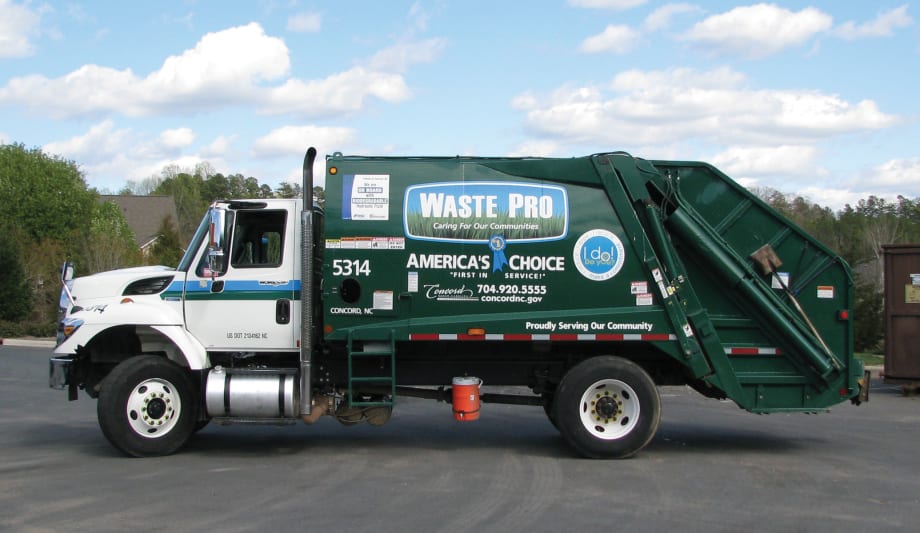
The testing program was modeled for a fleet size of 40 trucks with hydraulic fluid reservoirs of approximately 30 gallons each.
The testing program was modeled for a fleet size of 40 trucks with hydraulic fluid reservoirs of approximately 30 gallons each.
Waste Pro USA, Inc. has approved RSC Bio Solutions’ EnviroLogic hydraulic fluids in its fleet of 1,500 solid waste vehicles, following a year-long test program.
The two companies announced in May that RSC Bio Solutions had begun supplying Waste Pro with its EnviroLogic fluids on a limited basis at the close of a 12-month testing program. After reviewing the test outcome and the subsequent performance on a fleet, Waste Pro has made the decision to transition readily biodegradable, biobased EnviroLogic fluids across its organization.
RSC Bio Solutions’ fluid delivers approximately 50-percent longer oil life, resulting in fewer oil changes and leaving original equipment manufacturer (OEM) warranties intact, according to the manufacturer. Along with the operation savings, Waste Pro considers the EnviroLogic fluid to be a differentiator against the competition in municipal and commercial opportunities from an operational and corporate image perspective.
EnviroLogic hydraulic fluids are also viewed more favorably by regulatory authorities when spills occur because they are readily biodegradable —meaning greater than 60 percent biodegradation of the fluid components occur within 28 days or less according to ASTM 5864 and D7373 test standards. With the readily biodegradable, biobased solution commonly negative public events are transformed into positive public image opportunities.
The testing program was modeled for a fleet size of 40 trucks with hydraulic fluid reservoirs of approximately 30 gallons each. The results caused Waste Pro to estimate it would gain efficiency in equipment uptime while lowering its related service labor and disposal costs by 33 percent per fleet of 40 trucks. Any remediation costs would decrease by as much as 68 percent for the test fleet because spill risks, impact and clean-up costs can be significantly lower than with petroleum-based fluid spills.
The EnviroLogic 100 series of hydraulic fluids can perform in temperatures of -40° to 200° F and pressures up to 5000 psi. With the ability to work in extreme temperatures, downtime from winter lows and summer highs can be diminished. The EnviroLogic 100 series, including EnviroLogic 168, are ideal for mobile hydraulic systems operating in environmentally sensitive areas, like neighborhoods and municipalities. The hydraulic fluid is approved by or meets the specifications of more than 50 major OEMs.
RELATED CONTENT:
More Green Fleet
EV Charging Use Is Outpacing Infrastructure Growth
ChargePoint’s 2026 Charging Forward Report points to rising charger use, higher-powered charging, commercial vehicle electrification, and energy-management technology. Here’s what fleets should know.
Read More →
Merchants Fleet Reports 290M EV Miles as Fleets Navigate Changing Electrification Market
From millions in operating savings to hundreds of millions of EV miles, Merchants Fleet’s latest report reveals what’s working and what’s changing in fleet electrification.
Read More →
The EV Breakdown Nobody's Talking About: Why Most Electric Vehicle Roadside Calls Aren't Mechanical Failures
Here's why EV breakdowns are widely misunderstood.
Read More →
ChargePoint Now Available in Energy Pass
ChargePoint and additional planned charging network integrations were added to GM's Energy Pass.
Read More →
First Look: Slate Auto's Electric Fleet Pickup
Could an affordable, modular EV pickup make electrification more practical for fleets?
Read More →
Slate Debuts Colorful, Unique EV Models
A recent media and client event, studded with electric vehicles dressed up on platforms, planted a new position for the manufacturer in the wider EV market. Fleets will find cost-saving advantages.
Read More →
Slate Electric SUV, Pickup Switchable Model Aims For Light-Duty Fleets
Everything about this EV is counterintuitive and understated, making it stand out from the crowd.
Read More →
Inspiration Mobility Acquires Key Electrada Assets
Inspiration Mobility Group has acquired select assets of Electrada, adding the fleet electrification provider's team, technology, and charging infrastructure development capabilities to its energy management business.
Read More →
Turning Connected Vehicle Data Into Decisions That Matter
Fleet leaders have more data than ever, but turning that data into clear, actionable decisions remains a challenge. This white paper shows how leading organizations are using connected vehicle data to improve safety, reduce costs, and optimize fleet performance. Learn how to turn insight into action across your fleet.
Read More →