




Volvo Trucks' Hybrid Technology Used for Trash Collection in Sweden
GOTHENBURG, Sweden --- Volvo Trucks is taking a major step toward commercialization of its hybrid technology for heavy vehicles by launching two hybrid garbage trucks that will be tested in Sweden by trash-collection firms Renova and Ragn-Sells.
GOTHENBURG, Sweden --- Volvo Trucks is taking a major step toward commercialization of its hybrid technology for heavy vehicles by launching two hybrid garbage trucks that will be tested in Sweden by trash-collection firms Renova and Ragn-Sells.
"This test phase is the last stage in the evaluation of our hybrid solution ahead of production launch," said Staffan Jufors, president and CEO of the Volvo Truck Corp. "Since we presented our first concept vehicle in 2006, we have seen considerably heightened market interest in this technology."
Commercial production of the hybrid trucks is set for 2009. Volvo's hybrid solution combines a diesel engine with an electric motor. The electric motor is used for moving off from standstill and for acceleration up to 20 km/h. At higher speeds, the diesel engine is activated. When the truck stops, the diesel engine automatically switches off, thus avoiding unnecessary idling.
The batteries are recharged using the power generated during braking, making this system highly suitable for operating cycles involving repeated stops and starts, such as trash-collection duties. The hybrid garbage trucks are expected to use up to 20 percent less fuel and thus cut carbon dioxide emissions by a corresponding amount, Volvo said.
One of the trucks is also equipped with an extra battery pack that drives the trash compactor, and this is charged via the main electrical system when the truck is parked overnight. The truck's total reduction in carbon dioxide emissions is expected to be as much as 30 percent.
Electric power has the added advantage of being entirely exhaust-free and emitting low noise, important considerations for garbage-collection vehicles that often operate in urban areas early in the morning.
"Hybrid technology will play a major role in the future as the climate issue and oil dependency come into ever-sharper focus," said Mats Franzen, engine manager of product strategy and planning at Volvo Trucks. "No matter which fuels dominate in the future, their supply will be limited. Technology that leads to lower fuel consumption will be of immense interest to our customers, irrespective of the type of haulage operation with which they work."
For distribution trucks, fuel consumption may be able to be cut by 20 to 30 percent, Franzen said. In long-haul operations, the percentage reduction will not be as great but since these trucks cover long distances, the total fuel saving will nonetheless be considerable.
More Green Fleet
EV Charging Use Is Outpacing Infrastructure Growth
ChargePoint’s 2026 Charging Forward Report points to rising charger use, higher-powered charging, commercial vehicle electrification, and energy-management technology. Here’s what fleets should know.
Read More →
Merchants Fleet Reports 290M EV Miles as Fleets Navigate Changing Electrification Market
From millions in operating savings to hundreds of millions of EV miles, Merchants Fleet’s latest report reveals what’s working and what’s changing in fleet electrification.
Read More →
The EV Breakdown Nobody's Talking About: Why Most Electric Vehicle Roadside Calls Aren't Mechanical Failures
Here's why EV breakdowns are widely misunderstood.
Read More →
ChargePoint Now Available in Energy Pass
ChargePoint and additional planned charging network integrations were added to GM's Energy Pass.
Read More →
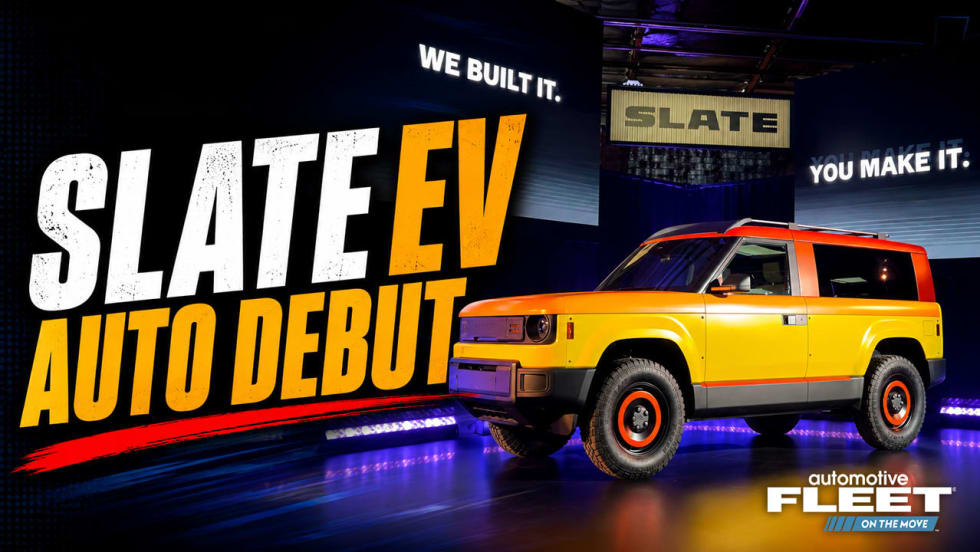
First Look: Slate Auto's Electric Fleet Pickup
Could an affordable, modular EV pickup make electrification more practical for fleets?
Read More →
Slate Debuts Colorful, Unique EV Models
A recent media and client event, studded with electric vehicles dressed up on platforms, planted a new position for the manufacturer in the wider EV market. Fleets will find cost-saving advantages.
Read More →
Slate Electric SUV, Pickup Switchable Model Aims For Light-Duty Fleets
Everything about this EV is counterintuitive and understated, making it stand out from the crowd.
Read More →
Inspiration Mobility Acquires Key Electrada Assets
Inspiration Mobility Group has acquired select assets of Electrada, adding the fleet electrification provider's team, technology, and charging infrastructure development capabilities to its energy management business.
Read More →
Turning Connected Vehicle Data Into Decisions That Matter
Fleet leaders have more data than ever, but turning that data into clear, actionable decisions remains a challenge. This white paper shows how leading organizations are using connected vehicle data to improve safety, reduce costs, and optimize fleet performance. Learn how to turn insight into action across your fleet.
Read More →