




Volvo Cars Turns to Locust Swarms for Future Safety Solutions
GOTHENBURG, SWEDEN – For Volvo Cars, nature is a wonderful laboratory. The manufacturer recently learned of Dr. Claire Rind´s, Newcastle University, UK, studies into the migratory locust, the African Locust, which tend to avoid bumping into each other during flights.

Locust Swarm
GOTHENBURG, SWEDEN – For Volvo Cars, nature is a wonderful laboratory. The manufacturer recently learned of Dr. Claire Rind´s, Newcastle University, UK, studies into the migratory locust, the African Locust, which tend to avoid bumping into each other during flights.
“Our original thoughts centered on pedestrian safety,” said Jonas Ekmark, preventive safety leader at Volvo Car Corporation. “If we could trace how the locust is able to avoid each other maybe we could program our cars not to hit pedestrians.”
During the study, Dr. Rind learned that visual input is instantly transmitted to the insect’s wing nerve cells, seemingly bypassing the brain. Dr. Rind calls this the Locust Principle.
“Locusts are quick reacting and have reliable circuits, they do their computations against lots of background chatter, much like driving around town,” said Rind.
Volvo wanted to learn if locust sensory-input routing methodologies could be built into a vehicle pedestrian safety system. The goal was to avoid hitting pedestrians. Primary to this research was to synthesize a locust algorithm that could be applied to a car.

“As it turns out, the locust processing system is much more sophisticated than the hardware/software currently available. In the end, technology was no match for nature,” Ekmark said. “What we learned was very encouraging. However, rather than wait for technology to catch up to Dr. Rind’s Locust Principle, Volvo created a pedestrian alert feature that will be introduced in the near future.”When we started in late 2002, sensing and computational systems were rather weak.”
Volvo City Safety has been launched as standard in the new Volvo XC60. At low speeds, City Safety is smart enough to bring the XC60 to a complete stop should the vehicle in front suddenly stop.
“Beyond City Safety our next step will be our first pedestrian avoidance feature,” said Jonas Ekmark. “Although City Safety is not related to our Locust research, we are confident that our first pedestrian auto brake feature will be very good at taking actions to help avoid hitting pedestrians.”
While some interesting ideas came from the “locust” study, Volvo still has many more years of research ahead to bring that small locust brain into its cars.
“We have found a lowly locust has man beat, at least for now,” Ekmark concluded.
More Safety

Nexar-Nauto Merger Aims to Give Fleets Better Safety Intelligence Through Larger Driving Dataset
Stefan Heck tells Automotive Fleet that combining more than 10 billion miles of driving history with Nexar's AI models will give fleets deeper insights into driver risk and roadway conditions than either company could provide independently.
Read More →
Don't Wait for a Crisis: 5 Ways to Build Mental Health Into Your Fleet Safety Program
For Suicide Prevention Month, fleet and safety leaders have an opportunity to put mental health where it belongs: at the center of workplace safety.
Read More →
How Camera Data Can Strengthen a Fleet’s Insurance Renewal
Insights from a commercial insurance carrier and a broker show how fleets can turn video telematic data, driver coaching, and improved claims results into a stronger case at insurance renewal.
Read More →
The Safest Fleets Aren’t the Ones with the Most Technology
You’ve made the telematics investment. Here’s how to capture the other half of its value and build the safest fleet on the road.
Read More →
Hidden in Plain Sight: Fleet Compliance Risks
Fleet compliance isn't just about having policies — it's about consistently enforcing them. This practical guide reveals six hidden compliance risks common in public sector and shared fleet operations and outlines proven strategies to improve visibility, accountability, and audit readiness
Read More →
NETS Sets 2026 Fleet Safety Benchmark Conference for Indianapolis
The Sept. 15–17 program will feature fleet benchmarking data, case studies, emerging technologies, and implementation strategies while running alongside the NSC Safety Congress & Expo.
Read More →
Off-the-Job Crashes Account for 43% of Employers’ $61.7 Billion Crash Burden
NETS quantifies costs dispersed across fleet, risk, HR, and other departments while providing new per-crash benchmarks for employers.
Read More →
Ram Recalls More Than 1.27 Million 1500 Pickups for Seat Belt Anchor Issue
The recall affects certain 2019-2026 Ram 1500 pickups that may have improperly attached second-row seat belt buckle anchors.
Read More →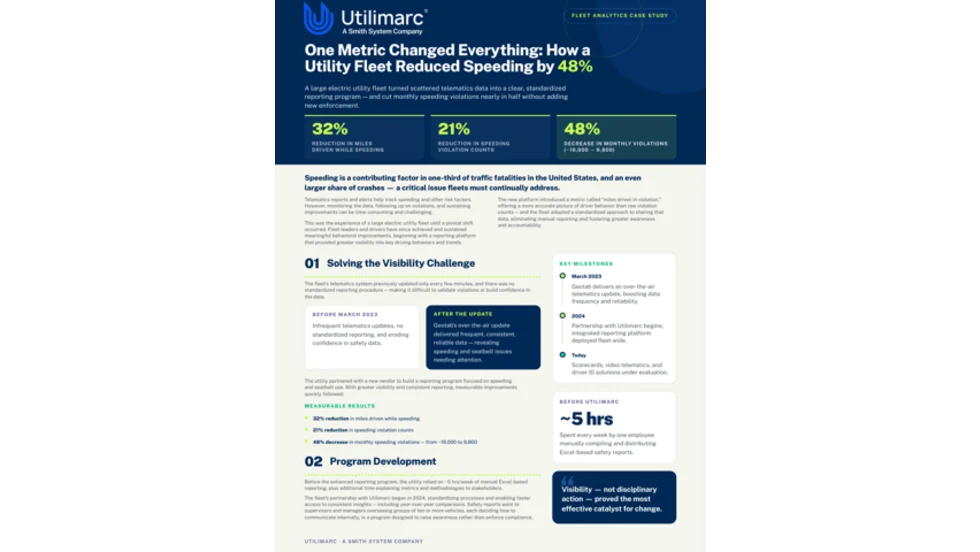
How Better Visibility Cut Speeding Violations by 48%
Fleet leaders don't need more data, they need clearer visibility into what the data is saying. This case study explores how one utility replaced speeding-event counts with a single metric — miles driven in violation — to strengthen safety and significantly reduce speeding violations.
Read More →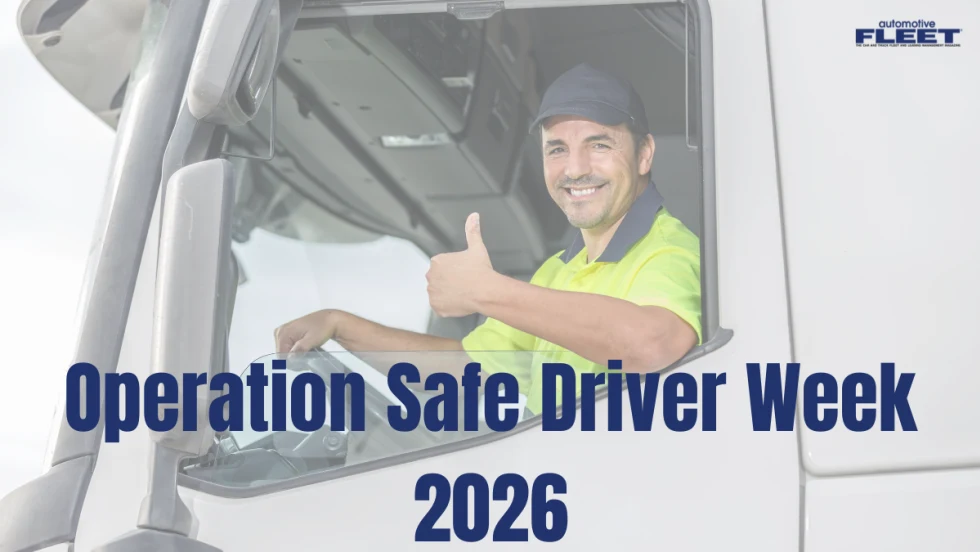
Operation Safe Driver Week: Why the Industry's Oldest Safety Campaign Still Matters to Fleets
A look at how a 2007 enforcement initiative became one of the most consequential weeks on the fleet safety calendar, and what it means for your drivers in 2026.
Read More →