




Volvo Cars Tests New, Unique Safety Technology - In Disguised S60 Prototype
GOTHENBURG, SWEDEN - Recently, citizens in Copenhagen had the opportunity for a sneak preview of the upcoming, sporty Volvo S60 - which won't be introduced to the world until next year.
GOTHENBURG, SWEDEN - Recently, citizens in Copenhagen had the opportunity for a sneak preview of the upcoming, sporty Volvo S60 - which won't be introduced to the world until next year.
A disguised prototype of the new sedan model has been rolling through the streets of the Danish capital, according to the manufacturer, to test a groundbreaking new safety technology that can detect a pedestrian in front of the car and brake automatically if the driver doesn't react in time, to avoid an accident.
The new technology - Collision Warning with Full Auto Brake and Pedestrian Detection - will be introduced together with the all-new Volvo S60 in 2010. Volvo Cars' safety experts have been working with Pedestrian Detection technology for ten years and test cars have been rolling all over the world - most recently in the busy streets of Copenhagen.
"Factors like traffic behaviour, road conditions and climate must be taken into account in the design of the final system. All told we have collected more than 500,000 kilometres of real-life data. We can also use the information from these traffic tests to conduct advanced computer simulations," says Thomas Broberg, Senior Safety Advisor at Volvo Cars.
The new safety functions in Collision Warning with Full Auto Brake and Pedestrian Detection represent the next stage in Volvo Cars' continuous development of technology to detect risky situations and help the driver mitigate or avoid accidents by providing support in the decision-making process.
Collision Warning with Full Auto Brake and Pedestrian Safety consists of a new dual-mode radar unit integrated into the car's grille, a camera behind the inside rear-view mirror and a central control unit. The radar and camera continuously monitor the road in front of the car. The radar's task is to detect objects and measure the distance to them. The camera determines what type of objects they are.
In an emergency situation, the driver is first alerted by an audible warning together with a flashing light in the windscreen's head-up display. In order to prompt an immediate, intuitive reaction, the visual warning is designed to look like a brake light coming on. If the driver does not respond to the warning and the system assesses that a collision is imminent, the car's brakes are applied with full braking power.
In the EU countries' capital cities, 1,560 people died in road accidents in 2007. Of these, 43 percent were pedestrians. The speed of the car is of considerable significance to the outcome of an accident and the risk of a pedestrian being killed in an accident at 50 kilometres per hour is 85 percent higher compared to if the speed is 25 kilometres per hour.
"Our aim is that this new technology should help the driver avoid collisions with pedestrians at speeds below 25 km/h. If the car is travelling faster, the aim is to reduce the impact speed as much as possible. In most cases, we can reduce the collision force by about 75 percent. Considering the large number of pedestrian fatalities that occur, if we manage to lower the fatality risk by 20 percent this new function will make a big difference. In specific situations the fatality reduction can be up to 85 percent," says Thomas Broberg.
More Safety

Nexar-Nauto Merger Aims to Give Fleets Better Safety Intelligence Through Larger Driving Dataset
Stefan Heck tells Automotive Fleet that combining more than 10 billion miles of driving history with Nexar's AI models will give fleets deeper insights into driver risk and roadway conditions than either company could provide independently.
Read More →
Don't Wait for a Crisis: 5 Ways to Build Mental Health Into Your Fleet Safety Program
For Suicide Prevention Month, fleet and safety leaders have an opportunity to put mental health where it belongs: at the center of workplace safety.
Read More →
How Camera Data Can Strengthen a Fleet’s Insurance Renewal
Insights from a commercial insurance carrier and a broker show how fleets can turn video telematic data, driver coaching, and improved claims results into a stronger case at insurance renewal.
Read More →
The Safest Fleets Aren’t the Ones with the Most Technology
You’ve made the telematics investment. Here’s how to capture the other half of its value and build the safest fleet on the road.
Read More →
Hidden in Plain Sight: Fleet Compliance Risks
Fleet compliance isn't just about having policies — it's about consistently enforcing them. This practical guide reveals six hidden compliance risks common in public sector and shared fleet operations and outlines proven strategies to improve visibility, accountability, and audit readiness
Read More →
NETS Sets 2026 Fleet Safety Benchmark Conference for Indianapolis
The Sept. 15–17 program will feature fleet benchmarking data, case studies, emerging technologies, and implementation strategies while running alongside the NSC Safety Congress & Expo.
Read More →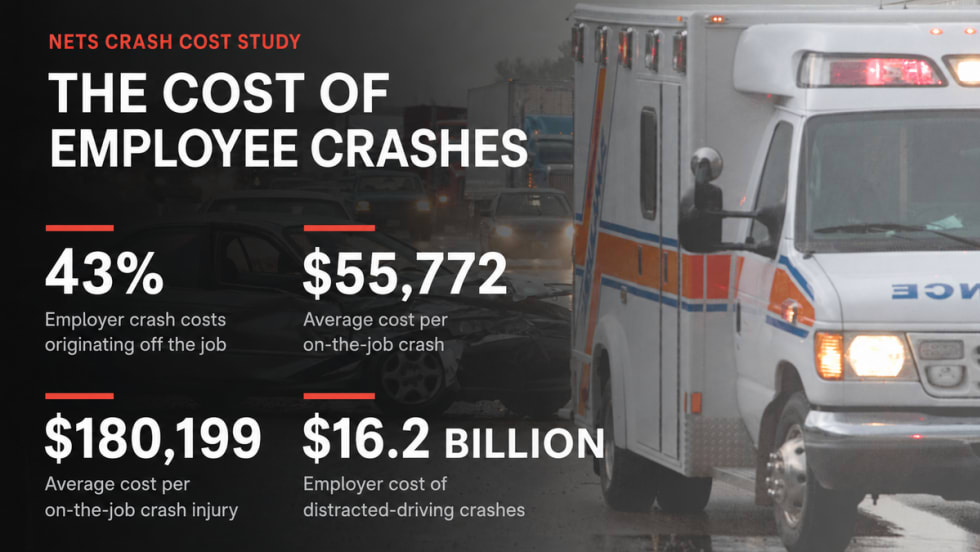
Off-the-Job Crashes Account for 43% of Employers’ $61.7 Billion Crash Burden
NETS quantifies costs dispersed across fleet, risk, HR, and other departments while providing new per-crash benchmarks for employers.
Read More →
Ram Recalls More Than 1.27 Million 1500 Pickups for Seat Belt Anchor Issue
The recall affects certain 2019-2026 Ram 1500 pickups that may have improperly attached second-row seat belt buckle anchors.
Read More →
How Better Visibility Cut Speeding Violations by 48%
Fleet leaders don't need more data, they need clearer visibility into what the data is saying. This case study explores how one utility replaced speeding-event counts with a single metric — miles driven in violation — to strengthen safety and significantly reduce speeding violations.
Read More →
Operation Safe Driver Week: Why the Industry's Oldest Safety Campaign Still Matters to Fleets
A look at how a 2007 enforcement initiative became one of the most consequential weeks on the fleet safety calendar, and what it means for your drivers in 2026.
Read More →