




Volvo Cars Takes on Safety Challenges Involving Electric Cars
GOTHENBURG, SWEDEN - Volvo is conducting extremely wide-ranging and thorough analysis of a variety of safety scenarios for cars with electric power.
GOTHENBURG, SWEDEN - Volvo is conducting extremely wide-ranging and thorough analysis of a variety of safety scenarios for cars with electric power. Through advanced automatic monitoring of battery status and by encapsulating the battery and protecting it effectively in a collision, the result is a comprehensive safety package of the very highest class.
Volvo imposes the same high safety standards on all its products irrespective of car type, fuel or power source. The aim ahead of the launch of any new car model is to improve safety for the vehicle's occupants. Having said that, the safety-related challenges may differ depending on the type of driveline and fuel being used.
For Volvo's safety engineers, work on a new power source is not particularly dramatic. Rather, tried and tested working methods are applied in a well-oiled process to obtain the best results. At the same time, work on electrification is naturally being approached with a great deal of humility and open-mindedness. Everything from the way the cars are produced, used and serviced to the way they are recycled is analyzed thoroughly and the information obtained is used to shape the development of the final production car.
Volvo's safety tests take place in several different stages. First at component level, then for whole systems and finally the complete car is safety-tested. Both virtually in the computer, and physically in Volvo's technically advanced crash-test centre.
Volvo is using its unique know-how from actual traffic conditions when carrying out detailed testing and verification. What is more, the company bases its entire test regime on the general requirements and protocols of the industry's safety institutes.
When Volvo analyzes safety scenarios on the basis of actual traffic situations, the engineers use a model that illustrates the sequence of events in a real-life road accident. The whole process is divided into five phases: from the normal driving situation to after the accident has occurred. Based on these five phases, Volvo develops new safety solutions and improves existing ones.
This approach covers the entire sequence from giving the driver optimal preconditions for safe driving, for instance by providing good comfort and stability-enhancement functions, to systems that alert the driver or automatically step in to avoid a collision. And if a collision is unavoidable, Volvo's cars offer highly advanced impact protection as well as solutions that assist both the driver and the emergency rescue services after the accident has occurred.
All Volvo's existing safety systems will also be available in the company's electric cars. However, electric power also adds new possible safety scenarios to the overall picture and these too must be dealt with.
In the safety work that is currently being undertaken in the field of electrification, Volvo's safety experts have meticulously analyzed the five accident sequence phases and developed unique solutions for the battery and for protection of the occupants as necessary.
Normal driving: A comprehensive and advanced monitoring system keeps watch and ensures that each cell maintains the correct voltage level and optimal operating temperature by regulating the cooling system. This is of significance to both safety and battery capacity. In the event of any deviation, the battery is automatically shut down as a preventive measure.
Conflict: The battery fitted to Volvo's plug-in hybrid weighs about 150 kg. This added weight creates new conditions for the vehicle's dynamics and alters the car's behavior, for instance in fast avoidance maneuvers. Volvo's existing platforms and braking systems can handle the increased mass, and Volvo's DSTC stabilization system (Dynamic Stability and Traction Control) helps the driver contain the situation.
Avoidance: If a collision is imminent and the driver finds it difficult to handle the situation, the vehicle can activate automatic safety systems such as Collision Warning with Full Auto Brake and City Safety to avoid or reduce the effects of an impact. These systems can be used in cars with electric power just as they can in other types of car.
Collision: In order to reduce the effects of a collision, the battery is well-protected in the rear of the car between the wheel housings, separated from the car's crumple zones. The battery is also sturdily encapsulated.
Through Volvo's studies of actual traffic accidents, the safety engineers know that this location helps protect the battery in rear end collisions. What is more, steel beams and other parts of the structure around the battery are reinforced to protect the battery from being affected in the case of a collision.
If the battery is damaged, resulting in gas leakage, there are special evacuation ducts that lead the gas out under the car without any contact with the occupants. In the event of extreme heat, the occupants are shielded by the battery's encapsulation.
At the very moment of impact, crash sensors linked to the battery send information about the collision to the car's computer, which automatically shuts off the power supply to prevent the risk of a short-circuit.In addition, the battery has a security cut-out that functions like a household earth fault circuit breaker. It shuts down and isolates the battery if the current travels in the wrong direction, for instance if two cables are pressed together as a result of an accident.
Volvo also works in close cooperation with the emergency rescue services, providing them with detailed instructions on how best to handle various Volvo models in the event of an accident.
The cars are equipped with a service cut-out to quickly and safely disconnect the car's power supply. Volvo Cars and the battery manufacturers have far-reaching product responsibility as regards both production and recycling. This ensures proper handling of the battery when it comes to the end of its life in the car.
More Safety
The Safest Fleets Aren’t the Ones with the Most Technology
You’ve made the telematics investment. Here’s how to capture the other half of its value and build the safest fleet on the road.
Read More →
Hidden in Plain Sight: Fleet Compliance Risks
Fleet compliance isn't just about having policies — it's about consistently enforcing them. This practical guide reveals six hidden compliance risks common in public sector and shared fleet operations and outlines proven strategies to improve visibility, accountability, and audit readiness
Read More →
NETS Sets 2026 Fleet Safety Benchmark Conference for Indianapolis
The Sept. 15–17 program will feature fleet benchmarking data, case studies, emerging technologies, and implementation strategies while running alongside the NSC Safety Congress & Expo.
Read More →
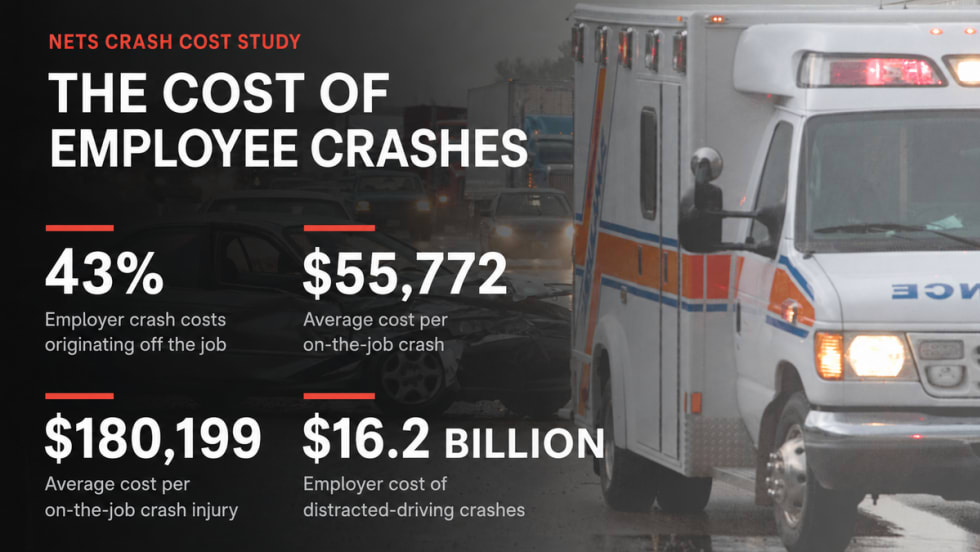
Off-the-Job Crashes Account for 43% of Employers’ $61.7 Billion Crash Burden
NETS quantifies costs dispersed across fleet, risk, HR, and other departments while providing new per-crash benchmarks for employers.
Read More →
Ram Recalls More Than 1.27 Million 1500 Pickups for Seat Belt Anchor Issue
The recall affects certain 2019-2026 Ram 1500 pickups that may have improperly attached second-row seat belt buckle anchors.
Read More →
How Better Visibility Cut Speeding Violations by 48%
Fleet leaders don't need more data, they need clearer visibility into what the data is saying. This case study explores how one utility replaced speeding-event counts with a single metric — miles driven in violation — to strengthen safety and significantly reduce speeding violations.
Read More →
Operation Safe Driver Week: Why the Industry's Oldest Safety Campaign Still Matters to Fleets
A look at how a 2007 enforcement initiative became one of the most consequential weeks on the fleet safety calendar, and what it means for your drivers in 2026.
Read More →
Nexar-Nauto Merger Aims to Give Fleets Better Safety Intelligence Through Larger Driving Dataset
Stefan Heck tells Automotive Fleet that combining more than 10 billion miles of driving history with Nexar's AI models will give fleets deeper insights into driver risk and roadway conditions than either company could provide independently.
Read More →
From Silos to Solutions: Relationship Management for Safer Fleets
From telematics adoption and driver accountability to policy consistency and risk mitigation, this episode breaks down what it really takes to build a safer fleet culture without slowing business down.
Read More →
IIHS Launches First Commercial Vehicle Safety Evaluations
The Insurance Institute for Highway Safety has begun evaluating heavy-duty pickups and cargo vans for driver protection. Which models earned top marks?
Read More →