




Volvo Car's Environmental Vision: 'DRIVe Towards Zero'
GOTHENBURG, SWEDEN - "DRIVe Towards Zero" is Volvo Cars' vision for developing cars entirely free from harmful exhaust emissions and environment-impacting carbon dioxide.
GOTHENBURG, SWEDEN - "DRIVe Towards Zero" is Volvo Cars' vision for developing cars entirely free from harmful exhaust emissions and environment-impacting carbon dioxide.
New steps are being taken to reach that vision. For instance, in 2009 Volvo introduced seven high-efficiency diesel models with low CO2 emissions. The company's electrification strategy promises that plug-in hybrids will be on the market as early as 2012, according to the manufacturer.
Between 2006 and 2014 Volvo will be investing a SEK 15 billion in research and development with the aim of reducing the fuel consumption and environmental emissions of its cars.
2008 saw the introduction of the DRIVe badge, a collective symbol for Volvo Cars' dedication to greener motoring. The new symbol reflects the company's commitment to sustainable mobility and zero emissions, at the same time as it includes a promise of constant improvement.
Volvo follows three main tracks for reducing the environmental impact of its products: efficiency enhancement, renewable fuels and electrification. These three tracks will coexist and vary in significance over the coming decades, with the aim of gradually reducing fuel consumption and emissions to the levels required by the authorities, the customers and the environment.
The emphasis in the short term is to improve the efficiency of existing technology that can be used in several models and for both diesel- and gas-powered cars. This will be paralleled by a switch to increased use of renewable fuels as these become more widely available.
While continuing to improve the efficiency of combustion engines, Volvo is planning to introduce plug-in hybrids running on electricity in combination with economical combustion engines powered for instance by second-generation biofuels such as synthetic diesel. The next stage after that is cars powered solely by electricity for certain customer segments, potentially offering virtually zero CO2 emissions.
Volvo's DRIVe cars consist of a series of extremely fuel-efficient diesel models that had their world premiere at the Paris international car show in early October 2008. The Volvo C30, S40 and V50 were unveiled with particularly economical engines.
Volvo Cars feels the most effective way to cut the product range's total carbon dioxide emissions in the short term is to reduce the fuel consumption of its diesel and petrol engines. This is because cutting the emissions of many cars sold in large volumes will have a bigger total effect and bring favorable results more quickly than making huge cuts in a small number of cars. Really economical diesel engines featuring start/stop technology will be introduced across the entire product range in the coming years.
Volvo's focus and its efforts are ably illustrated by the low CO2 emissions and fuel consumption figures of the company's green DRIVe cars:
Volvo C30 | 3.8 l/100 km | 99 g CO2/km |
Volvo S40 | 3.9 l/100 km | 104 g CO2/km |
Volvo V50 | 3.9 l/100 km | 104 g CO2/km |
Volvo V70 | 4.9 l/100 km | 129 g CO2/km |
Volvo S80 | 4.9 l/100 km | 129 g CO2/km |
Volvo XC60 | 6.0 l/100 km | 159 g CO2/km |
Volvo XC70 | 6.0 l/100 km | 159 g CO2/km |
The switch to increased use of renewable fuels includes car models that are tailored to run on multiple fuels. Volvo offers models that are powered by petrol, diesel, ethanol and natural gas/biogas. Volvo's Flexifuel models, that is to say cars that can run on both petrol and bioethanol, today constitute one of the widest such ranges on the market.
What is more, on several European markets there are aftermarket-converted gas models that can run on up to five fuels - natural gas, biogas, hythane (biomethane with low-blend hydrogen), E85 and petrol. Biogas in particular offers excellent environmental properties. Within the next few years, second-generation biofuels such as synthetic diesel will also be able to be used in Volvo's cars.
In the somewhat longer time perspective, the biggest potential for achieving significant reductions in environmental impact is with electric cars. In early 2009, Volvo Cars introduced microhybrid technology, a start/stop function that switches off the combustion engine whenever the car comes to a standstill.
In 2012, customers will be able to buy Volvo plug-in electrical hybrids, that is to say cars that can be recharged via a regular household electric socket. These cars have both a conventional combustion engine and an electric motor powered by a battery pack. They are propelled primarily by energy from the battery, with the combustion engine taking over when the distance travelled exceeds the capacity of the battery.
For shorter distances in and around cities, it is likely that dedicated battery-powered cars may be in demand. Volvo is therefore conducting research in this area too. There are still many challenges to face with dedicated battery-powered cars in terms of range, cost and safety. In 2010, Volvo will be carrying out comprehensive field tests with Volvo C30s equipped for dedicated battery power. At the end of the field tests, the results will be evaluated and a decision will be taken on possible market introduction.
The wide range of green cars consists of extremely economical diesel models (D), Flexifuel models running on bioethanol (F and FT), and Flexifuel models retro-converted for gas power (Bi-Fuel).
C30 1.8F, C30 1.6D DRIVe and C30 1.6D DRIVe with start/stop
S40 1.8F, S40 1.6D DRIVe and S40 1.6D DRIVe with start/stop
V50 1.8F, V50 1.6 D DRIVe and V50 1.6D DRIVe with start/stop
V70 2.0F
V70 2.5FT
S80 2.0F
S80 2.5FT
V70 2.5 FT Bi-Fuel
More Green Fleet
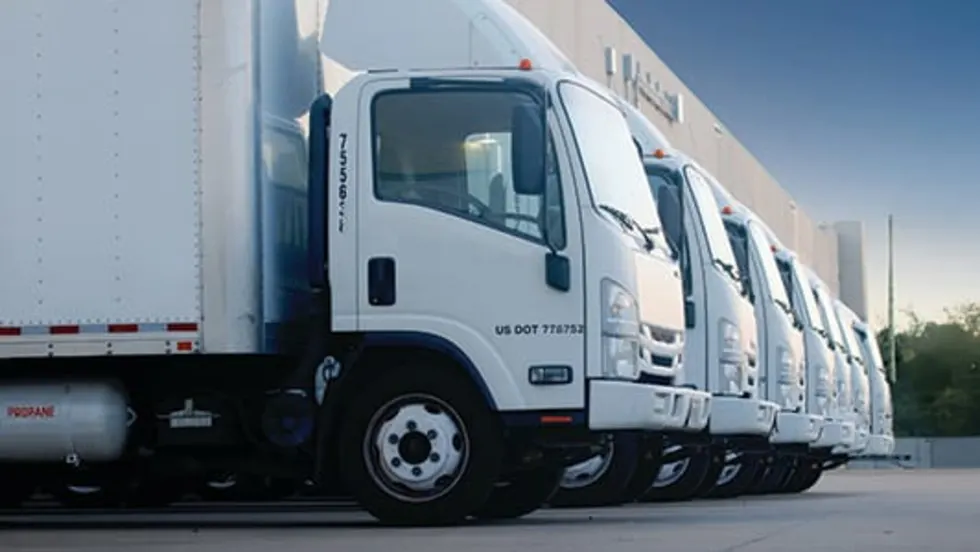
New Propane Autogas Program Offers Fleet Compensation
Qualified commercial fleets can receive $7,500 per eligible propane autogas vehicle and up to $10,000 for new refueling site prep. Learn how the program works and see whether your fleet qualifies.
Read More →
EV Charging Use Is Outpacing Infrastructure Growth
ChargePoint’s 2026 Charging Forward Report points to rising charger use, higher-powered charging, commercial vehicle electrification, and energy-management technology. Here’s what fleets should know.
Read More →
Merchants Fleet Reports 290M EV Miles as Fleets Navigate Changing Electrification Market
From millions in operating savings to hundreds of millions of EV miles, Merchants Fleet’s latest report reveals what’s working and what’s changing in fleet electrification.
Read More →
The EV Breakdown Nobody's Talking About: Why Most Electric Vehicle Roadside Calls Aren't Mechanical Failures
Here's why EV breakdowns are widely misunderstood.
Read More →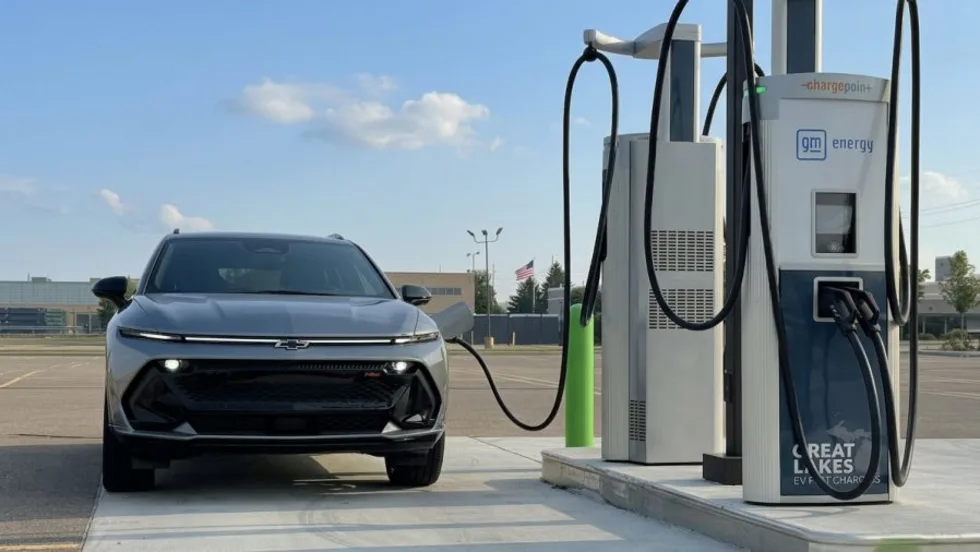
ChargePoint Now Available in Energy Pass
ChargePoint and additional planned charging network integrations were added to GM's Energy Pass.
Read More →

First Look: Slate Auto's Electric Fleet Pickup
Could an affordable, modular EV pickup make electrification more practical for fleets?
Read More →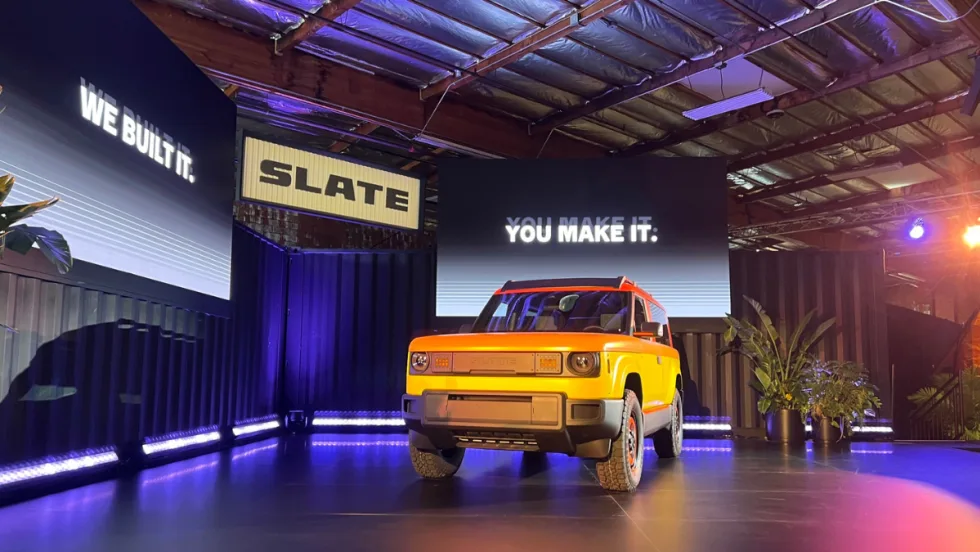
Slate Debuts Colorful, Unique EV Models
A recent media and client event, studded with electric vehicles dressed up on platforms, planted a new position for the manufacturer in the wider EV market. Fleets will find cost-saving advantages.
Read More →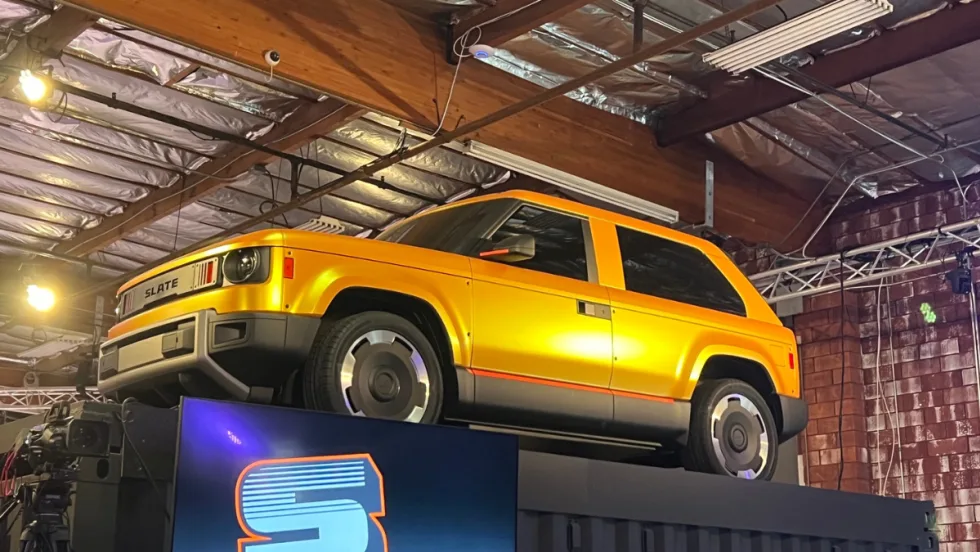
Slate Electric SUV, Pickup Switchable Model Aims For Light-Duty Fleets
Everything about this EV is counterintuitive and understated, making it stand out from the crowd.
Read More →
Inspiration Mobility Acquires Key Electrada Assets
Inspiration Mobility Group has acquired select assets of Electrada, adding the fleet electrification provider's team, technology, and charging infrastructure development capabilities to its energy management business.
Read More →