




Volvo Cars' Crash-Test Lab Turns 10
GŐTEBORG, SWEDEN - Volvo Cars' crash-test laboratory in Torslanda turns 10 years old this year -- and the almost 3,000 full-scale tests that have been carried out during the facility's first decade have helped give Volvo owners safer cars, the company said.
GŐTEBORG, SWEDEN - Volvo Cars' crash-test laboratory in Torslanda turns 10 years old this year -- and the almost 3,000 full-scale tests that have been carried out during the facility's first decade have helped give Volvo owners safer cars, the company said.
"We can replicate most of the incident and accident scenarios that take place out on the roads," explained Thomas Broberg, senior safety advisor at Volvo Cars. "By analyzing these and then testing new safety technology in the crash-test laboratory, we can improve the safety level in our cars so that they become even safer in real-life traffic conditions."
When the safety center was inaugurated by Sweden's King Carl XVI Gustaf in early 2000, it was one of the most advanced in the car industry -- a position it has retained over the years thanks to the continuous implementation of new equipment and new test methods, Volvo said. The latest technology infusion is in the form of a set of digital high-speed cameras that can take 200,000 frames per second.
"The new cameras give us exceptional scope for studying collisions down to the tiniest detail," Broberg said. "What is more, we have a number of miniature cameras that are installed inside the cars to capture what happens with various key components in the vehicle."
[PAGEBREAK]
The crash-test laboratory has one fixed and one movable test track. The movable track can be adjusted from 0 to 90 degrees. This makes it possible to carry out tests involving a variety of incident and accident scenarios -- from frontal impacts to side impacts -- between two moving cars approaching at different angles and speeds. Moreover, avoidance and mitigation of collision can also be tested. The facility can currently handle more than 400 full-scale tests a year.
The two tracks meet above a six-meter deep, Plexiglas-covered pit used for filming the collision tests from underneath. Over the years, the Plexiglas shield has witnessed a number of remarkable crash tests.
For instance, in 2003 Volvo Cars demonstrated the side-impact protection of the Volvo S40 to invited media representatives by allowing the compact sedan model to be struck by a far larger XC90 model traveling at 50 km/h (31 mph).
"The degree of precision in a test in which two moving cars collide at 50 km/h is 2.5 centimeters," Broberg said. "This corresponds to two-thousandths of a second. By way of comparison, a blink of the human eye takes about 60 thousandths of a second. This says a whole lot about the laboratory's precision."
Crash tests on both tracks can also be carried out in the opposite direction. At the end of the fixed track is a concrete slab that can be used for various tests, such as rollovers and tests including avoidance or mitigation of a crash. At the end of the movable track, the surrounding landscape serves as an integrated part of the crash-test laboratory. Here, crash tests are carried out against a variety of objects found in the traffic environment.
The lab's crash block weighs 850 tons. It is moved around with the help of air cushions. In addition, there are around 20 other fixed and movable barriers covering Volvo Cars' test regime as well as various official test requirements.
In addition to the lab's full-time employees there is a team of about 100 crash-test dummies representing men, women and children of various sizes and ages. The dummies are advanced measuring instruments with different designs and configurations for different crash situations.
"In order to offer cars with a safety level of absolute world class, we must ensure that our safety systems are suitable for different occupant sizes at a wide range of speeds and in various traffic situations," Broberg said.
The risk of being involved in an accident or being injured in one of Volvo's latest car models has been more than halved compared with a Volvo from the 1970s, Broberg said.
"We are continuously taking new steps towards our vision that nobody should die or suffer serious injuries in a new Volvo car by the year 2020. The crash-test laboratory is a central part of this development," he added.
More Safety
The Safest Fleets Aren’t the Ones with the Most Technology
You’ve made the telematics investment. Here’s how to capture the other half of its value and build the safest fleet on the road.
Read More →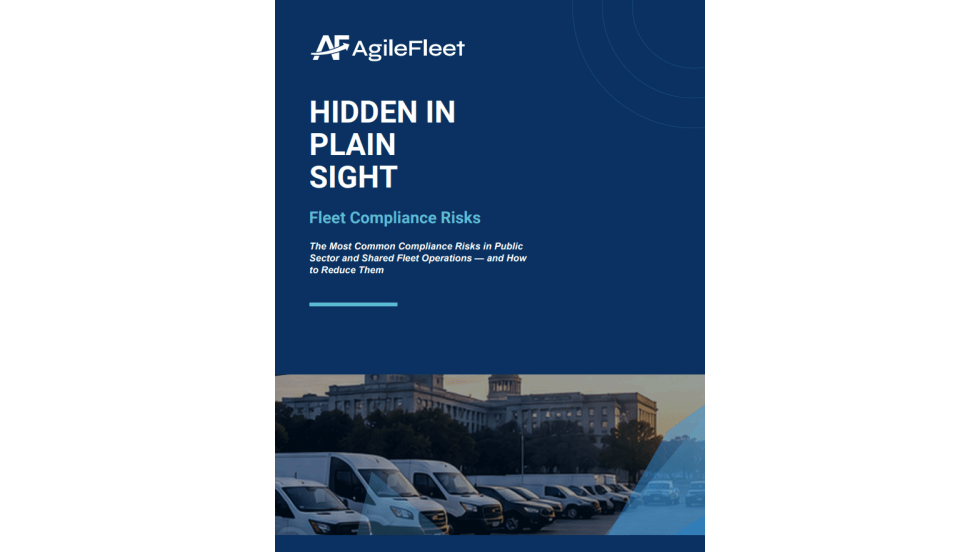
Hidden in Plain Sight: Fleet Compliance Risks
Fleet compliance isn't just about having policies — it's about consistently enforcing them. This practical guide reveals six hidden compliance risks common in public sector and shared fleet operations and outlines proven strategies to improve visibility, accountability, and audit readiness
Read More →
NETS Sets 2026 Fleet Safety Benchmark Conference for Indianapolis
The Sept. 15–17 program will feature fleet benchmarking data, case studies, emerging technologies, and implementation strategies while running alongside the NSC Safety Congress & Expo.
Read More →
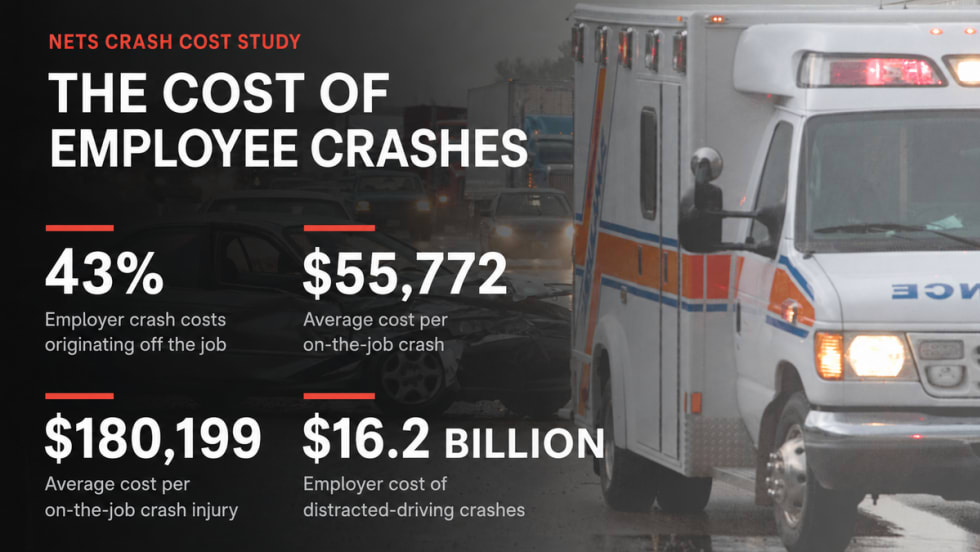
Off-the-Job Crashes Account for 43% of Employers’ $61.7 Billion Crash Burden
NETS quantifies costs dispersed across fleet, risk, HR, and other departments while providing new per-crash benchmarks for employers.
Read More →
Ram Recalls More Than 1.27 Million 1500 Pickups for Seat Belt Anchor Issue
The recall affects certain 2019-2026 Ram 1500 pickups that may have improperly attached second-row seat belt buckle anchors.
Read More →
How Better Visibility Cut Speeding Violations by 48%
Fleet leaders don't need more data, they need clearer visibility into what the data is saying. This case study explores how one utility replaced speeding-event counts with a single metric — miles driven in violation — to strengthen safety and significantly reduce speeding violations.
Read More →
Operation Safe Driver Week: Why the Industry's Oldest Safety Campaign Still Matters to Fleets
A look at how a 2007 enforcement initiative became one of the most consequential weeks on the fleet safety calendar, and what it means for your drivers in 2026.
Read More →
Nexar-Nauto Merger Aims to Give Fleets Better Safety Intelligence Through Larger Driving Dataset
Stefan Heck tells Automotive Fleet that combining more than 10 billion miles of driving history with Nexar's AI models will give fleets deeper insights into driver risk and roadway conditions than either company could provide independently.
Read More →
From Silos to Solutions: Relationship Management for Safer Fleets
From telematics adoption and driver accountability to policy consistency and risk mitigation, this episode breaks down what it really takes to build a safer fleet culture without slowing business down.
Read More →
IIHS Launches First Commercial Vehicle Safety Evaluations
The Insurance Institute for Highway Safety has begun evaluating heavy-duty pickups and cargo vans for driver protection. Which models earned top marks?
Read More →