




Volvo Car Corporation Introduces NAVTEQ MapCare Program
CHICAGO - NAVTEQ has announced the Volvo Car Corporation is the first automotive company to introduce NAVTEQ MapCare for new, premium-segment vehicles.
CHICAGO - NAVTEQ, a global provider of digital map, traffic, and location data for in-vehicle, portable, wireless, and enterprise solutions has announced the Volvo Car Corporation is the first automotive company to introduce NAVTEQ MapCare - a map update program - for new, premium-segment vehicles.
The company opted for the NAVTEQ MapCare initial program which packages a pre-defined number of map updates with the purchase of a new vehicle and navigation system. Therefore, from the 2010 model-year release in June 2009, customers buying a Volvo C30, S40, V50, C70, V70, XC70, S80, XC60, or XC90 with navigation will be eligible to receive two complimentary map updates.
Each car will include a registration card for the customer to complete and return in order to automatically receive the updates at the address of their choice and NAVTEQ will handle the registration and shipment. The program will be available through all Volvo Car Corporation dealerships in Western and Eastern Europe, North America, and Russia.
NAVTEQ MapCare has been designed to help increase map update sales and revenue by providing additional selling points for navigation systems.
"We believe this program will increase satisfaction and loyalty as customers will always have the latest maps. In addition, valuable opportunities for communication and cross-selling will be created," explains Jeff Mize, executive vice president, sales, NAVTEQ. "It is a particularly convenient service for drivers of fleet or lease cars as it provides a clear channel to acquire map updates."
With the road network changing every year, more up-to-date maps help navigation systems operate at their best and generate more efficient routes. More effective routing saves drivers time, fuel, and money and reduces CO2 emissions. A recent study (Impact of Navigation on Fuel Consumption - NAVTEQ April 2009) showed drivers using a navigation system could reduce the overall distance they drove per year and save in fuel costs.
The aim of the NAVTEQ MapCare program is to make implementation as easy as possible for the OEM and, in addition to handling registration and shipment, provide essential communication materials with messaging for both dealers and drivers, dealer sales training, and a package of ready-to-go creative tools for use at the point of sale. The updates are provided to the OEMs at a special price and for those who wish to target existing customers with navigation systems, there is also an after-market program.
More Telematics
Element Expands Waymo Partnership to Support Toronto Robotaxi Fleet
As Waymo prepares to enter the Canadian market, Element Fleet Management will oversee the fleet operations supporting its planned Toronto launch. The partnership highlights the maintenance, charging, and infrastructure requirements behind operating autonomous vehicles at scale.
Read More →
GM Launches OnStar Fleet Intelligence Platform With AI Assistant
The new platform brings vehicle data, order tracking, connected services and fleet analytics into one system, with an AI assistant that can answer fleet questions using natural-language prompts.
Read More →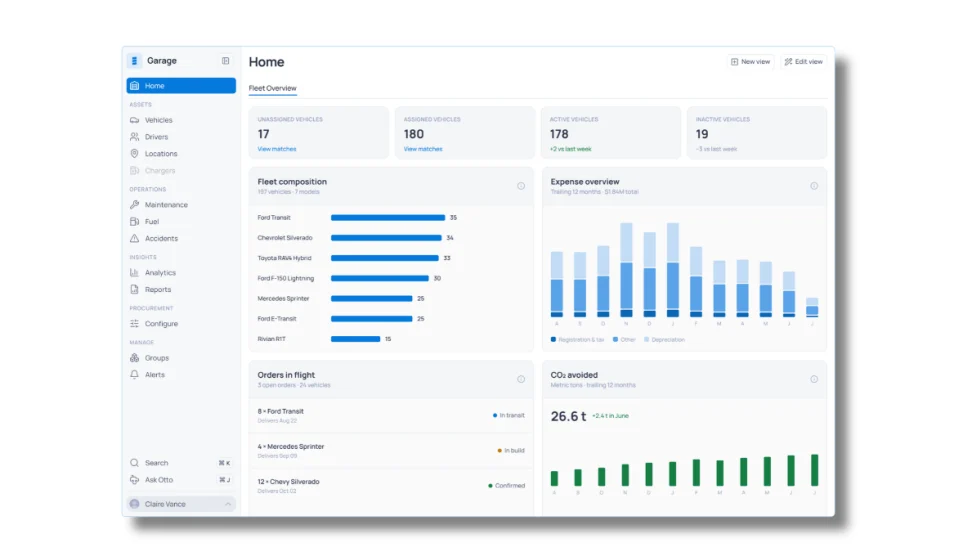
Inspiration Fleet Introduces Garage 2.0 Fleet Intelligence Platform
Fleet managers increasingly have access to data from vehicles, telematics, fuel, charging, and other systems, but those sources don't always communicate with one another. Inspiration Fleet's Garage 2.0 platform brings that information together while letting fleets keep working with different technology and service providers.
Read More →
Inside Inspiration Fleet’s New Platform for Connecting Fleet Data
Inspiration Fleet CTO Chris Getner explains how the new Garage 2.0 platform is designed to connect disparate fleet data and what that could mean for fleet managers in practice.
Read More →
Fleet Manager’s Ultimate Playbook: Navigating the New Standard in OEM Connectivity
Rising operating costs, driver safety concerns, and unplanned downtime are putting unprecedented pressure on modern fleets. Discover how fleet managers use embedded OEM connectivity and real-time vehicle data to cut TCO, prevent downtime, and protect drivers without aftermarket telematics hardware.
Read More →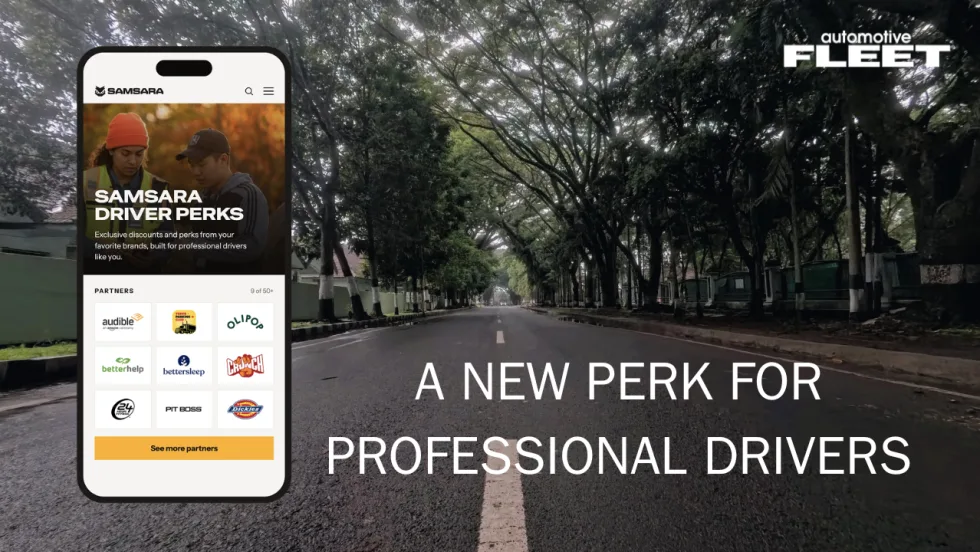
Samsara Driver Perks Adds New Benefit for Corporate Fleet Drivers
The rewards program gives eligible professional drivers access to discounts from more than 50 brands while giving fleets another way to support recruitment, retention, and the driver experience.
Read More →
Inside the Church of Jesus Christ of Latter-day Saints’ Two-Track Telematics Strategy
With 20,000 vehicles and two fundamentally different driver populations, the Church faced a fleet management problem that a single telematics program couldn't solve. How it responded offers a replicable framework for any fleet where one size doesn't fit every driver.
Read More →
How Conversational AI Can Make Fleet Tasks Easier for Drivers
While most generative AI tools help fleet managers interpret data at their desks, Connex2X is applying voice interaction to tasks behind the wheel.
Read More →
Why Fleets Are Creating Dedicated Fleet Analyst Positions
Are fleet analyst positions the new norm? Listen here to find out.
Read More →
Teletrac Navman Begins Next Chapter as Standalone Private Company
What's new with Teletrac Navman and its new owner?
Read More →