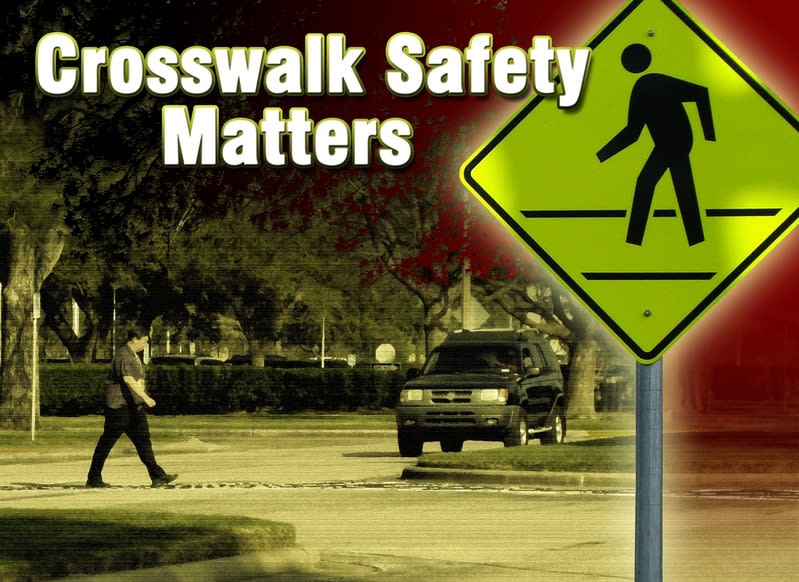
It’s a surprisingly common scenario: A driver signals to make either a left or right turn on a green light but must wait awhile for traffic to clear. When traffic is finally clear, the driver begins making the turn but must stop suddenly after spotting a pedestrian in the crosswalk. By forgetting to double-check the crosswalk before beginning the turn, the driver has increased the risk of a crash.
Ad Loading...
At all hours and in all types of neighborhoods, fleet drivers need to remember to look out for pedestrians. Unfortunately, at night and in bad weather, they’re not as easy to see. And sometimes, their behavior is dangerously unpredictable – especially if the pedestrian is a child or a distracted adult. (To view a Wall Street Journal video about pedestrian cell phone distraction, click on the photo or link below the headline.)
Here’s advice from the California Department of Motor Vehicles about crosswalk safety. You may want to pass these tips along to fleet drivers as a friendly reminder.
Respect the right-of-way of pedestrians. Always stop for any pedestrian crossing at corners or other crosswalks, even if the crosswalk is in the middle of the block or at corners without traffic signal lights or painted lines. Most often, crosswalks on residential streets aren’t marked.
Don’t pass a vehicle stopped at a crosswalk. A pedestrian you can’t see may be crossing the street. Stop and proceed when all pedestrians have crossed the street.
Don’t drive on a sidewalk, except to cross it to enter or exit a driveway or alley. When crossing, yield to all pedestrians.
Don’t stop in a crosswalk. You will place pedestrians in danger.
Remember, if a pedestrian makes eye contact with you, he or she is ready to cross the street. Yield to the pedestrian.
Allow older pedestrians, disabled pedestrians and pedestrians with young children sufficient time to cross the street.
Remember, blind pedestrians rely on the sound of your vehicle to become aware of its presence. Drivers of hybrid or electric vehicles must be aware that the lack of engine noise may cause a blind pedestrian to assume there isn’t a vehicle nearby. Follow this cue: When a blind person pulls in his or her cane and steps away from the intersection, this gesture usually means for you to go.
Stefan Heck tells Automotive Fleet that combining more than 10 billion miles of driving history with Nexar's AI models will give fleets deeper insights into driver risk and roadway conditions than either company could provide independently.
Insights from a commercial insurance carrier and a broker show how fleets can turn video telematic data, driver coaching, and improved claims results into a stronger case at insurance renewal.
Fleet compliance isn't just about having policies — it's about consistently enforcing them. This practical guide reveals six hidden compliance risks common in public sector and shared fleet operations and outlines proven strategies to improve visibility, accountability, and audit readiness
The Sept. 15–17 program will feature fleet benchmarking data, case studies, emerging technologies, and implementation strategies while running alongside the NSC Safety Congress & Expo.
Fleet leaders don't need more data, they need clearer visibility into what the data is saying. This case study explores how one utility replaced speeding-event counts with a single metric — miles driven in violation — to strengthen safety and significantly reduce speeding violations.
A look at how a 2007 enforcement initiative became one of the most consequential weeks on the fleet safety calendar, and what it means for your drivers in 2026.