




Video: NHTSA Closes Investigation of Tesla Model S Fires
The federal safety agency finds no evidence of a defect trend and concludes Tesla is already taking measures to prevent future fires by further shielding the vehicle’s high-voltage battery.
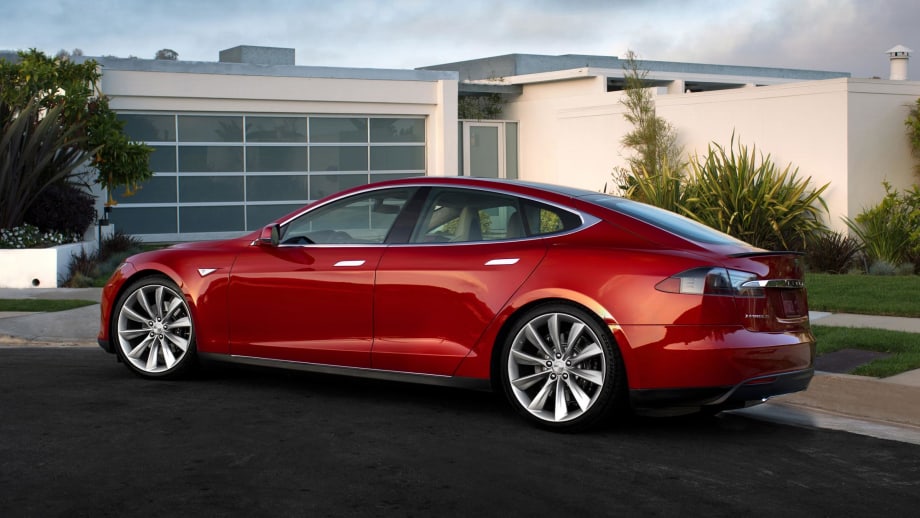
Tesla Model S photo courtesy of Tesla Motors.
Tesla Model S photo courtesy of Tesla Motors.
VIDEO: Tesla Model S Adds Titanium Plate to Protect Against Battery Fires
The National Highway Traffic Safety Administration last week closed its investigation into the causes of two Tesla Model S vehicle fires, concluding there’s no evidence of a “defect trend.” Both fires resulted from underbody collisions with road debris at highway speeds.
In a report posted on the agency’s website, NHTSA also acknowledged that Tesla Motors has already taken measures to prevent similar fires in the future. “In this case, Tesla’s revision of vehicle ride height and addition of increased underbody protection should reduce both the frequency of underbody strikes and the resultant fire risk,” the agency concluded.
Tesla on March 6 began outfitting new Model S vehicles with a triple underbody shield to further protect the electric vehicle’s high-voltage battery. Older Model S cars will be retrofitted with the extra protection upon owner request or during normally scheduled service, Tesla CEO Elon Musk said in a March 28 blog post on the company’s website. The California-based electric automaker will make the retrofit free of charge.
To watch a Consumer Reports video report on the retrofit, which includes footage of Tesla tests, click on the link or photo above.
To assess whether a safety recall was warranted, NHTSA probed two separate Tesla Model S vehicle fires that occurred in 2013 -- one in Washington on Oct. 13 and another in Tennessee on Nov. 13. Both vehicles caught fire after running over roadway debris at highway speeds. One of the cars struck a three-ball hitch that had apparently broken off from another vehicle; the other hit an unidentified object.
In each case, the debris penetrated the aluminum armor plate shielding the electric vehicle’s high-voltage battery and damaged the lithium ion cells. After the impact, each vehicle’s onboard computer alerted the occupants about diminished battery performance and instructed them to stop and exit the vehicle. Both drivers traveled a little farther before stopping. But shortly after they parked, smoke began appearing and a fire developed in the high-voltage battery. Neither fire resulted in injuries.
In response to these incidents, Tesla cooperated with NHTSA and began work on a remedy. In November 2013, the automaker implemented a change in ride height strategy via an over-the-air software update. This update, which increased the default ground clearance of the Model S at highway speeds, mitigates the risk of battery compartment penetration when a three-ball hitch is struck, NHTSA said.
Then in early March, Tesla informed NHTSA of plans for the triple underbody shield. The first shield is a rounded aluminum bar designed to either deflect objects entirely or – in the case of extremely strong objects – to absorb the impact and force them to pike upwards away from the battery pack. The second shield is a titanium plate, and the third is a shallow-angle, solid aluminum extrusion that further absorbs impact energy and provides another layer of deflection.
If the roadway object is immobile, the Model S can still ramp up and over it, according to Tesla.
“During the course of 152 vehicle level tests, the shields prevented any damage that could cause a fire or penetrate the existing quarter inch of ballistic grade aluminum armor plate that already protects the battery pack,” Musk wrote in his blog post. “We have tried every worst case debris impact we can think of, including hardened steel structures set in the ideal position for a piking event, essentially equivalent to driving a car at highway speed into a steel spear braced on the tarmac.”
Musk added that the shields would even prevent a fire resulting from an extremely high-speed impact similar to one that occurred last year in Mexico. The Model S in that collision was traveling at an estimated speed of 110 mph. A fire started several minutes after a succession of multiple impacts, but the driver walked away with no permanent injuries.
In his blog, Musk stressed that no Tesla Model S drivers or passengers have ever suffered serious, permanent injuries of any kind – from a vehicle fire or any other mishap.
“With a track record of zero deaths or serious, permanent injuries since our vehicles went into production six years ago, there is no safer car on the road than a Tesla,” Musk said. “The addition of the underbody shields simply takes it a step further.”
More Safety

What’s Next for Fleet? Safety, AI & Industry Recognition | AF News Recap
Could your company's culture be encouraging distracted driving? This week, we're exploring how workplace expectations affect driver safety, what AI, EVs, and autonomous vehicles could mean for the future of fleet management, and how fleet professionals can strengthen their award nominations.
Read More →
Does Your Fleet's Culture Encourage Distracted Driving?
What happens when the people responsible for enforcing safety rules are the ones setting the wrong example? The answer may reveal why some of the biggest risks to fleet drivers have little to do with what's written in the employee handbook.
Read More →
Fleet Manager’s Ultimate Playbook: Navigating the New Standard in OEM Connectivity
Rising operating costs, driver safety concerns, and unplanned downtime are putting unprecedented pressure on modern fleets. Discover how fleet managers use embedded OEM connectivity and real-time vehicle data to cut TCO, prevent downtime, and protect drivers without aftermarket telematics hardware.
Read More →
From Driver Well-Being to EV Charging | AF News Recap
Mental health belongs in the fleet safety conversation. This week, we’re looking at five ways fleets can support employee well-being before a crisis, plus Holman’s expansion in Mexico, new one-day Fleet Forward passes, and why EV charging demand is outpacing infrastructure growth.
Read More →
Nexar-Nauto Merger Aims to Give Fleets Better Safety Intelligence Through Larger Driving Dataset
Stefan Heck tells Automotive Fleet that combining more than 10 billion miles of driving history with Nexar's AI models will give fleets deeper insights into driver risk and roadway conditions than either company could provide independently.
Read More →
Don't Wait for a Crisis: 5 Ways to Build Mental Health Into Your Fleet Safety Program
For Suicide Prevention Month, fleet and safety leaders have an opportunity to put mental health where it belongs: at the center of workplace safety.
Read More →
How Camera Data Can Strengthen a Fleet’s Insurance Renewal
Insights from a commercial insurance carrier and a broker show how fleets can turn video telematic data, driver coaching, and improved claims results into a stronger case at insurance renewal.
Read More →
The Safest Fleets Aren’t the Ones with the Most Technology
You’ve made the telematics investment. Here’s how to capture the other half of its value and build the safest fleet on the road.
Read More →
Hidden in Plain Sight: Fleet Compliance Risks
Fleet compliance isn't just about having policies — it's about consistently enforcing them. This practical guide reveals six hidden compliance risks common in public sector and shared fleet operations and outlines proven strategies to improve visibility, accountability, and audit readiness
Read More →
NETS Sets 2026 Fleet Safety Benchmark Conference for Indianapolis
The Sept. 15–17 program will feature fleet benchmarking data, case studies, emerging technologies, and implementation strategies while running alongside the NSC Safety Congress & Expo.
Read More →