




Video: Kentucky Asks Drivers to Treat Work Zones as No-Phone Zones
The Kentucky Transportation Cabinet takes steps to promote work zone safety and curb distracted driving.
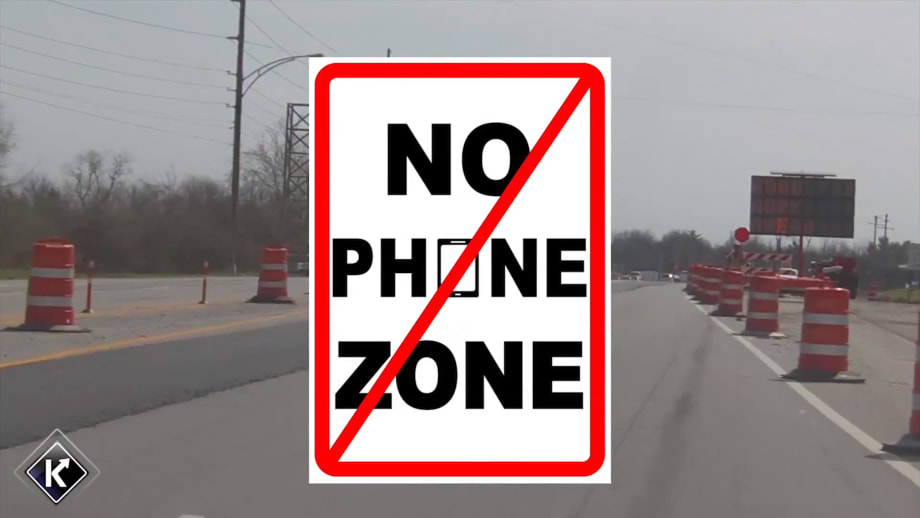
Work Zone Awareness Week is April 7-11. But April is also National Distracted Driving Awareness month, so the Kentucky Transportation Cabinet (KYTC) is working to raise awareness of the dangers associated with distracted driving – especially through work zones.
To view a video about KYTC's efforts, click on the photo or link above.
“It is not unusual for workers to see drivers with a cell phone to their ear, trying to maneuver through traffic cones and construction equipment,” said KYTC Secretary Mike Hancock. “We’re asking drivers to consider work zones as ‘no phone zones’ in order to keep everyone safe on our roadways.”
While it is illegal in Kentucky for anyone to text while driving, drivers age 18 and older are allowed to talk on the phone while driving. However, according to the National Highway Traffic Safety Administration, the cognitive distraction of a phone conversation causes drivers to miss important visual and audio cues that would ordinarily help them in avoiding a crash.
“Inattentive drivers are not prepared for sudden decreases in speed and last-minute lane changes,” said Bill Bell, director of the KYTC Office of Highway Safety. “If drivers knew how dangerous using a cell phone is in work zones, they would put the phone down.”
According to the Federal Highway Administration, work zone injuries and deaths most often involve motorists, not workers. On average, four out of five people killed in work zone crashes are motorists.
In 2012, the latest year for which national statistics are available, there were 609 work zone fatalities in the United States.
Last year in Kentucky, there were 732 crashes in highway construction and maintenance work zones. Three people died and 182 people were injured in those crashes.
The cabinet asks motorists to practice 10 work zone safety tips:
Pay attention – put away the phone!
Slow down.
Don’t tailgate.
Keep a safe distance from workers and equipment.
Expect the unexpected.
Obey road crew flaggers.
Allow extra time to get to your destination if traveling through a work zone.
Be patient.
Keep up with traffic flow.
Before leaving home or work, call 511 or go to www.511.ky.gov for Kentucky traffic and travel information.
National Work Zone Awareness Week is each April at the traditional start of construction season, when the number of workers on roads and highways increases. Cabinet engineers and contractors work to design projects and work schedules that minimize delays and crashes.
More Safety

Nexar-Nauto Merger Aims to Give Fleets Better Safety Intelligence Through Larger Driving Dataset
Stefan Heck tells Automotive Fleet that combining more than 10 billion miles of driving history with Nexar's AI models will give fleets deeper insights into driver risk and roadway conditions than either company could provide independently.
Read More →
Don't Wait for a Crisis: 5 Ways to Build Mental Health Into Your Fleet Safety Program
For Suicide Prevention Month, fleet and safety leaders have an opportunity to put mental health where it belongs: at the center of workplace safety.
Read More →
How Camera Data Can Strengthen a Fleet’s Insurance Renewal
Insights from a commercial insurance carrier and a broker show how fleets can turn video telematic data, driver coaching, and improved claims results into a stronger case at insurance renewal.
Read More →
The Safest Fleets Aren’t the Ones with the Most Technology
You’ve made the telematics investment. Here’s how to capture the other half of its value and build the safest fleet on the road.
Read More →
Hidden in Plain Sight: Fleet Compliance Risks
Fleet compliance isn't just about having policies — it's about consistently enforcing them. This practical guide reveals six hidden compliance risks common in public sector and shared fleet operations and outlines proven strategies to improve visibility, accountability, and audit readiness
Read More →
NETS Sets 2026 Fleet Safety Benchmark Conference for Indianapolis
The Sept. 15–17 program will feature fleet benchmarking data, case studies, emerging technologies, and implementation strategies while running alongside the NSC Safety Congress & Expo.
Read More →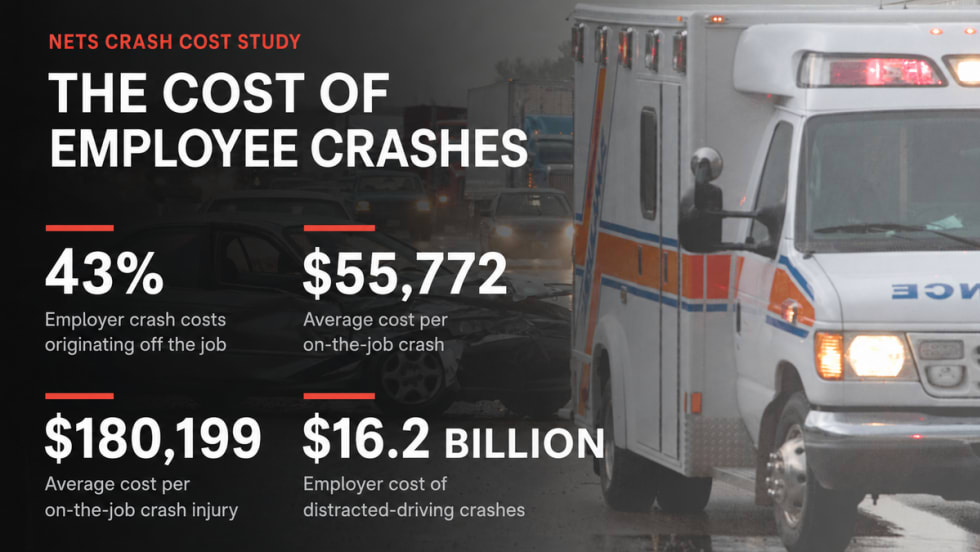
Off-the-Job Crashes Account for 43% of Employers’ $61.7 Billion Crash Burden
NETS quantifies costs dispersed across fleet, risk, HR, and other departments while providing new per-crash benchmarks for employers.
Read More →
Ram Recalls More Than 1.27 Million 1500 Pickups for Seat Belt Anchor Issue
The recall affects certain 2019-2026 Ram 1500 pickups that may have improperly attached second-row seat belt buckle anchors.
Read More →
How Better Visibility Cut Speeding Violations by 48%
Fleet leaders don't need more data, they need clearer visibility into what the data is saying. This case study explores how one utility replaced speeding-event counts with a single metric — miles driven in violation — to strengthen safety and significantly reduce speeding violations.
Read More →
Operation Safe Driver Week: Why the Industry's Oldest Safety Campaign Still Matters to Fleets
A look at how a 2007 enforcement initiative became one of the most consequential weeks on the fleet safety calendar, and what it means for your drivers in 2026.
Read More →