




Video: Ford Triples Self-Driving Test Fleet
The automaker is adding 20 Fusion Hybrid autonomous vehicles for testing on roads in California, Arizona and Michigan.
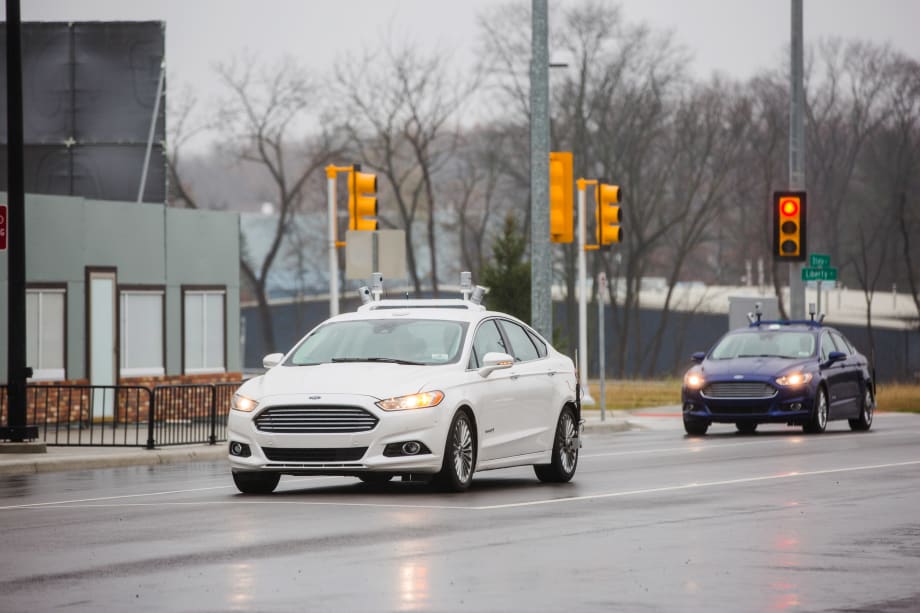
Photo of autonomous Ford Fusion Hybrid test vehicle courtesy of Ford.
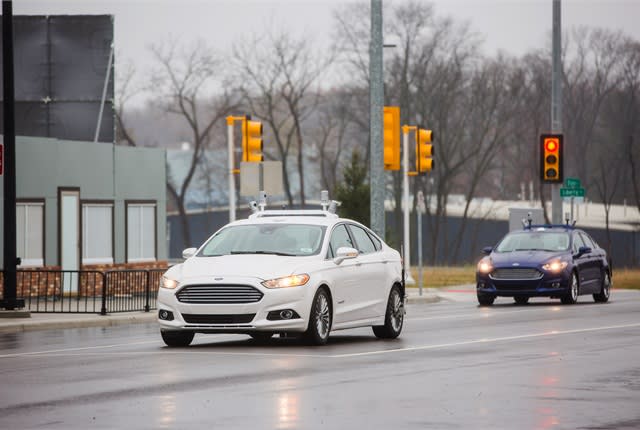
Photo of autonomous Ford Fusion Hybrid test vehicle courtesy of Ford.
Ford Motor Co. is tripling the size of its fleet of fully autonomous Ford Fusion Hybrid test vehicles, and will use new sensor technology as the company further accelerates development plans for self-driving cars, Ford said.
This year, Ford will add 20 Fusion Hybrid autonomous vehicles, bringing the company's self-driving car test fleet to about 30 vehicles. They will be tested on roads in California, Arizona and Michigan.
“Using the most advanced technology and expanding our test fleet are clear signs of our commitment to make autonomous vehicles available for millions of people,” said Raj Nair, Ford chief technical officer and executive vice president of global product development. “With more autonomous vehicles on the road, we are accelerating the development of software algorithms that serve to make our vehicles even smarter.”
Ford has engaged in autonomous vehicle research for more than a decade. (To view a Ford video about the company's progress in autonomous car research and development, click on the photo or link below the headline.) The current expansion is a key element of the Ford Smart Mobility initiative, aimed at taking the company to the next level in connectivity, mobility, autonomous vehicles, the customer experience, and data and analytics.
The newest vehicles are on Ford’s third-generation autonomous vehicle development platform, built using Fusion Hybrid sedans.
Ford recently announced its fully autonomous cars will take to the streets of California this year. The company already tests autonomous vehicles at its proving grounds, as well as on public roads, in Michigan. Ford was the first automaker to test a fully autonomous vehicle at Mcity – a 32-acre simulated urban environment at the University of Michigan.
Ford is using Velodyne’s newest LiDAR sensors – named Solid-State Hybrid Ultra PUCK Auto for their hockey puck-like size and shape – on the automaker’s third-generation autonomous vehicle platform. These sensors boast a longer range of 200 meters, making them the first auto-specific LiDAR sensors capable of handling different driving scenarios, Ford said.
Ultra Puck will accelerate the development and validation of Ford’s virtual driver software, which serves as the decision-making brain that directs vehicle systems, Ford said. The lightweight design of the LiDAR sensor permits packaging on a vehicle, such as placement on the sideview mirror.
The design, Ford noted, means the company can reduce the amount of LiDAR sensors from four to two on new Fusion Hybrid autonomous vehicles, and get as much useful data because of the more targeted field of view.
”Adding the latest generation of computers and sensors, including the smaller and more affordable Solid-State Hybrid Ultra PUCK Auto sensors, helps bring Ford ever closer to having a fully autonomous vehicle ready for production,” said Jim McBride, Ford technical leader for autonomous vehicles.
The vehicle's hardware systems, which interact continuously with the virtual driver, are equally important.
Third-generation autonomous Fusion Hybrid sedans will have supplemental features and duplicate wiring for power, steering and brakes. These supplemental features will act as backups, if needed.
Ford has been using Velodyne LiDAR sensors for roughly a decade, dating back to Defense Advanced Research Projects Agency autonomous vehicle challenges. LiDAR emits short pulses of laser light to precisely scan the surrounding environment millions of times per second and determine the distance to objects, allowing the vehicle to create a real-time, high-definition 3D image of whatever’s around it.
Ford’s first-generation autonomous vehicle platform was built using a Ford F-250 Super Duty for participation in the DARPA challenges in 2005 and 2007. In 2013, Ford introduced its second-generation autonomous vehicle platform, using a Fusion Hybrid sedan.
Ford was one of only six teams to participate in both the DARPA Desert Classic and Urban Finals challenges, supported by four engineers who still are on the company’s autonomous vehicle development team.
“We’ve come a long way since DARPA,” said McBride. “A decade ago, no one in the field knew what the art of the possible was. Today, we’re all hustling to make the most ambitious dreams become a reality.”
Fusion Hybrid sedans were chosen for the second-generation vehicles because they have the newest and most advanced electrical architecture. With the latest generation of computers and sensors – including the smaller but more advanced Velodyne LiDAR HDL-32E sensor – Ford’s autonomous vehicle platform moved a step closer to production.
The objective of the second-generation vehicle fleet is to test many of the computing and sensor components required to achieve fully autonomous driving capability, as defined by SAE International Level 4. This level doesn't require the driver to intervene and take control of the vehicle.
Last summer, Ford transitioned from the research phase of development to the advanced engineering phase.
Meanwhile, Ford said it continues to hone other types of sensors – cameras, radar and ultrasonic devices – to deliver semi-autonomous features to customers today. These include adaptive cruise control, active park assist, lane-departure warning, lane-keeping aid, pedestrian detection, Pro Trailer Backup Assist and vehicle-to-vehicle connection technology already available on millions of Ford vehicles today.
More Safety

Nexar-Nauto Merger Aims to Give Fleets Better Safety Intelligence Through Larger Driving Dataset
Stefan Heck tells Automotive Fleet that combining more than 10 billion miles of driving history with Nexar's AI models will give fleets deeper insights into driver risk and roadway conditions than either company could provide independently.
Read More →
Don't Wait for a Crisis: 5 Ways to Build Mental Health Into Your Fleet Safety Program
For Suicide Prevention Month, fleet and safety leaders have an opportunity to put mental health where it belongs: at the center of workplace safety.
Read More →
How Camera Data Can Strengthen a Fleet’s Insurance Renewal
Insights from a commercial insurance carrier and a broker show how fleets can turn video telematic data, driver coaching, and improved claims results into a stronger case at insurance renewal.
Read More →
The Safest Fleets Aren’t the Ones with the Most Technology
You’ve made the telematics investment. Here’s how to capture the other half of its value and build the safest fleet on the road.
Read More →
Hidden in Plain Sight: Fleet Compliance Risks
Fleet compliance isn't just about having policies — it's about consistently enforcing them. This practical guide reveals six hidden compliance risks common in public sector and shared fleet operations and outlines proven strategies to improve visibility, accountability, and audit readiness
Read More →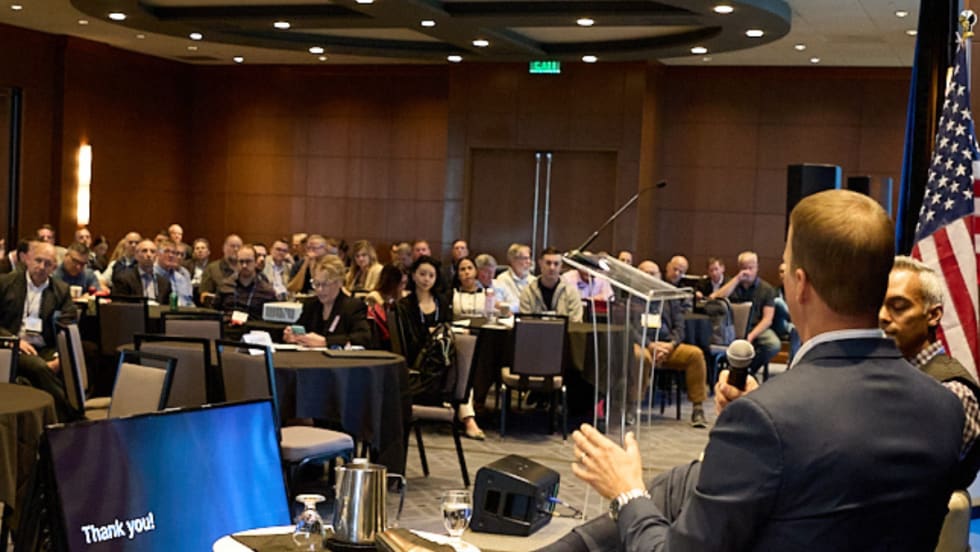
NETS Sets 2026 Fleet Safety Benchmark Conference for Indianapolis
The Sept. 15–17 program will feature fleet benchmarking data, case studies, emerging technologies, and implementation strategies while running alongside the NSC Safety Congress & Expo.
Read More →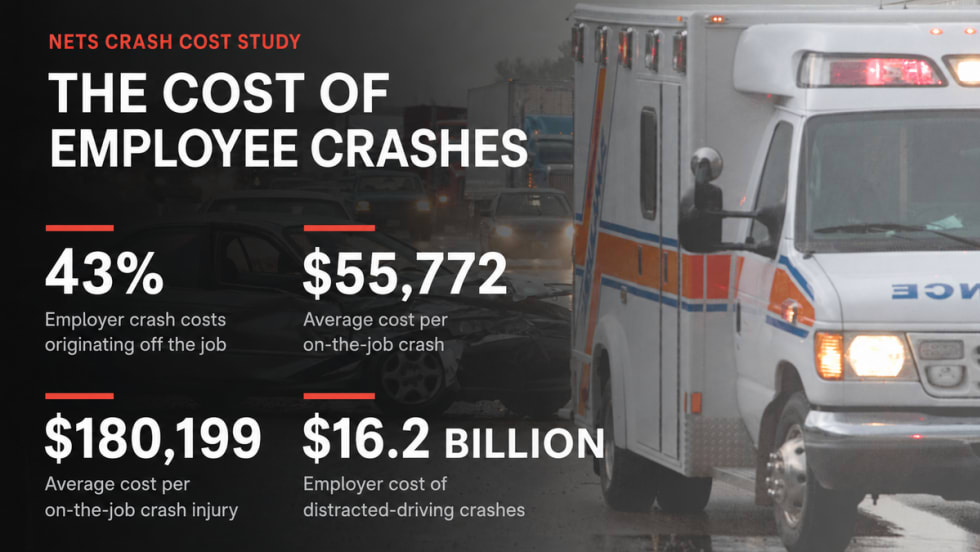
Off-the-Job Crashes Account for 43% of Employers’ $61.7 Billion Crash Burden
NETS quantifies costs dispersed across fleet, risk, HR, and other departments while providing new per-crash benchmarks for employers.
Read More →
Ram Recalls More Than 1.27 Million 1500 Pickups for Seat Belt Anchor Issue
The recall affects certain 2019-2026 Ram 1500 pickups that may have improperly attached second-row seat belt buckle anchors.
Read More →
How Better Visibility Cut Speeding Violations by 48%
Fleet leaders don't need more data, they need clearer visibility into what the data is saying. This case study explores how one utility replaced speeding-event counts with a single metric — miles driven in violation — to strengthen safety and significantly reduce speeding violations.
Read More →
Operation Safe Driver Week: Why the Industry's Oldest Safety Campaign Still Matters to Fleets
A look at how a 2007 enforcement initiative became one of the most consequential weeks on the fleet safety calendar, and what it means for your drivers in 2026.
Read More →