




Video: Distractions Causing Teen Crashes, AAA Says
In a new AAA Foundation study, researchers conclude that distraction was a factor in nearly six out of 10 moderate-to-severe crashes involving teens. AAA pushes for state legislative measures to curb the trend.
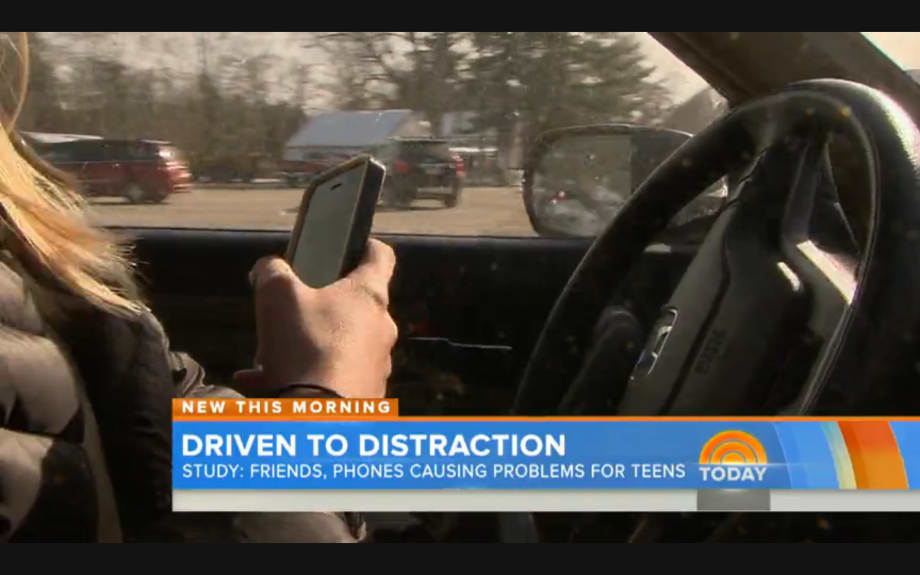
Citing a new study on teen distracted driving, AAA is calling on many states to enact – or strengthen – cell phone bans and passenger restrictions for novice drivers.
The AAA Foundation for Traffic Safety on March 25 released new research, based on video analysis, that found distraction was a factor in nearly six out of 10 moderate-to-severe crashes involving teenage drivers. That’s four times as many as government estimates based on police reports.
Researchers analyzed the six seconds leading up to a crash in nearly 1,700 videos of teen drivers taken from in-vehicle event recorders. The results showed that distraction was a factor in 58 percent of all crashes studied, including 89 percent of road-departure crashes and 76 percent of rear-end crashes.
To watch an NBC News report on the study, click on the photo or link above.
The National Highway Traffic Safety Administration has previously estimated that distraction is a factor in only 14 percent of all teen driver crashes.
“Access to crash videos has allowed us to better understand the moments leading up to a vehicle impact in a way that was previously impossible,” said Peter Kissinger, president and CEO of the AAA Foundation for Traffic Safety. “The in-depth analysis provides indisputable evidence that teen drivers are distracted in a much greater percentage of crashes than we previously realized.”
The most common forms of distraction leading up to a crash by a teen driver included:
Interacting with one or more passengers – 15 percent of crashes
Cell phone use – 12 percent of crashes
Looking at something in the vehicle – 10 percent of crashes
Looking at something outside the vehicle – 9 percent of crashes
Singing/moving to music – 8 percent of crashes
Grooming – 6 percent of crashes
Reaching for an object – 6 percent of crashes.
“It is troubling that passengers and cell phones were the most common forms of distraction, given that these factors can increase crash risks for teen drivers,” said AAA CEO Bob Darbelnet. “The situation is made worse by the fact that young drivers have spent less time behind the wheel and cannot draw upon their previous experience to manage unsafe conditions.”
Researchers found that drivers manipulating their cell phone – calling, texting or other uses – had their eyes off the road for an average of 4.1 seconds out of the final six seconds leading up to a crash.
The researchers also measured reaction times in rear-end crashes and found that teen drivers using a cell phone failed to react more than half of the time before the impact. In other words, they crashed without braking or steering.
“This study shows how important it is for states to review their graduated driver licensing and distracted driving laws to ensure they provide as much protection as possible for teens,” Darbelnet said. “AAA recommends that state laws prohibit cell phone use by teen drivers and restrict passengers to one non-family member for the first six months of driving.”
Graduated driver licensing (GDL) laws allow new drivers to gain practical experience in a relatively safe environment by restricting their exposure to risky situations, AAA said. Thirty-three states have laws that prevent cell phone use for teens, and 18 states have passenger restrictions meeting AAA’s recommendations.
Teens have the highest crash rate of any group in the U.S. About 963,000 drivers ages 16-19 were involved in police-reported crashes in 2013, which is the most recent year of available data. These crashes resulted in 383,000 injuries and 2,865 deaths.
The AAA Foundation partnered with researchers at the University of Iowa to conduct this study. Additionally, Lytx Inc., a leader in video-based driver safety technology, provided the collision videos.
The Lytx DriveCam program collects video, audio and accelerometer data when a driver triggers an in-vehicle device by hard braking, fast cornering or experiencing an impact that exceeds a certain g-force. Each 12-second video includes footage before and after the trigger. The videos are used in the DriveCam Program for coaching fleet drivers on how to improve behavior and reduce collisions.
More Safety
IIHS Crash Avoidance Tests Reveal Safety Gaps in Cargo Vans and Work Trucks
New crash-avoidance ratings from the Insurance Institute for Highway Safety reveal inconsistent performance among commercial vehicles, with several popular cargo vans and heavy-duty pickups struggling to avoid collisions with other vehicles and pedestrians.
Read More →
What’s Next for Fleet? Safety, AI & Industry Recognition | AF News Recap
Could your company's culture be encouraging distracted driving? This week, we're exploring how workplace expectations affect driver safety, what AI, EVs, and autonomous vehicles could mean for the future of fleet management, and how fleet professionals can strengthen their award nominations.
Read More →
Does Your Fleet's Culture Encourage Distracted Driving?
What happens when the people responsible for enforcing safety rules are the ones setting the wrong example? The answer may reveal why some of the biggest risks to fleet drivers have little to do with what's written in the employee handbook.
Read More →
Fleet Manager’s Ultimate Playbook: Navigating the New Standard in OEM Connectivity
Rising operating costs, driver safety concerns, and unplanned downtime are putting unprecedented pressure on modern fleets. Discover how fleet managers use embedded OEM connectivity and real-time vehicle data to cut TCO, prevent downtime, and protect drivers without aftermarket telematics hardware.
Read More →
From Driver Well-Being to EV Charging | AF News Recap
Mental health belongs in the fleet safety conversation. This week, we’re looking at five ways fleets can support employee well-being before a crisis, plus Holman’s expansion in Mexico, new one-day Fleet Forward passes, and why EV charging demand is outpacing infrastructure growth.
Read More →
Nexar-Nauto Merger Aims to Give Fleets Better Safety Intelligence Through Larger Driving Dataset
Stefan Heck tells Automotive Fleet that combining more than 10 billion miles of driving history with Nexar's AI models will give fleets deeper insights into driver risk and roadway conditions than either company could provide independently.
Read More →
Don't Wait for a Crisis: 5 Ways to Build Mental Health Into Your Fleet Safety Program
For Suicide Prevention Month, fleet and safety leaders have an opportunity to put mental health where it belongs: at the center of workplace safety.
Read More →
How Camera Data Can Strengthen a Fleet’s Insurance Renewal
Insights from a commercial insurance carrier and a broker show how fleets can turn video telematic data, driver coaching, and improved claims results into a stronger case at insurance renewal.
Read More →
The Safest Fleets Aren’t the Ones with the Most Technology
You’ve made the telematics investment. Here’s how to capture the other half of its value and build the safest fleet on the road.
Read More →
Hidden in Plain Sight: Fleet Compliance Risks
Fleet compliance isn't just about having policies — it's about consistently enforcing them. This practical guide reveals six hidden compliance risks common in public sector and shared fleet operations and outlines proven strategies to improve visibility, accountability, and audit readiness
Read More →