




Video: 2015 Volvo XC90 Introduces New Safety Tech
The all-new all-wheel-drive, seven-seat SUV will feature a run-off-road protection package and auto brake-at-intersection capability.
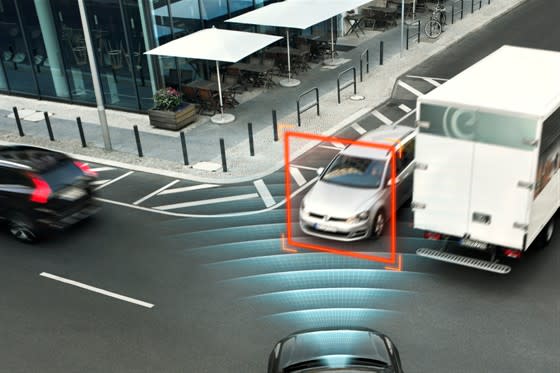
The 2015 Volvo XC90 features automatic braking when the driver turns in front of an oncoming vehicle. Image courtesy of Volvo Car Group.
The 2015 Volvo XC90 features automatic braking when the driver turns in front of an oncoming vehicle. Image courtesy of Volvo Car Group.
The 2015 Volvo XC90 features automatic braking when the driver turns in front of an oncoming vehicle. Image courtesy of Volvo Car Group.
Volvo Cars’ 2015 model-year XC90 luxury SUV, set to arrive in August, will offer an advanced standard safety package featuring two new technologies: a run-off-road protection package and auto brake-at-intersection capability.
Run-off-road accidents have different causes, including driver distraction, fatigue and poor weather conditions. Half of all traffic fatalities in the U.S. involve road-departure accidents. In Sweden, single-vehicle accidents account for one-third of all fatal and severe-injury crashes involving passenger cars.
Troubled by these statistics, Volvo set out to develop technology – dubbed Safe Positioning – that’s aimed at preventing these types of accidents.
The Safe Positioning capability means that in a run-off-road scenario, the Volvo XC90 detects what’s happening and tightens the front safety belts to keep the occupants in position. The belts are firmly tightened as long as the car is in motion.
To help prevent spine injuries, energy-absorbing functionality between the seat and seat frame helps cushion the vertical forces that can arise when the car lands hard in the terrain. This safety feature can reduce the vertical occupant forces by up to one-third, Volvo said.
The XC90 also features technologies that help the driver avoid run-off-road scenarios.
The Lane Keeping Aid applies extra steering torque when the car is about to leave the lane unintentionally. Additionally, Driver Alert Control, which is also standard, detects and warns tired or inattentive drivers. It even has Rest Stop Guidance, which directs the driver to the nearest rest area.
The XC90 also introduces technology that features automatic braking if the driver turns in front of an oncoming car. This is a common scenario at busy city intersections as well as on highways, where speed limits are higher. The Volvo XC90 detects a potential crash and brakes automatically to either avoid a collision or curtail its severity.
“These two world-firsts are further examples of how new technologies target substantial real-life traffic problems,” said Prof. Lotta Jakobsson, senior technical specialist in safety at Volvo Cars Safety Center. “This strategy moves us closer and closer to our ambition that by 2020 no one should be killed or seriously injured in a new Volvo.”
Other advanced safety features in the XC90 include:
Pre-crash protection in rear impacts -- Rearward facing radars detect if a rear impact is imminent, and safety belts are tightened in advance to keep the occupant in a good position. Lights also start flashing to warn the driver behind, and the brakes are activated to help reduce the impact on the occupants.
Together with Volvo Cars’ new seat design, which integrates the next generation of Whiplash Protection System (WHIPS), this new rear-impact, pre-crash function helps reduce whiplash injuries.
Rollover prevention and protection -- The latest generation of Roll Stability Control comes standard. The system uses advanced sensors to calculate the risk of rolling over. If the risk is assessed as high, the car restricts engine torque and applies some braking force to one or more wheels to counteract the rollover tendency.
If a rollover is judged inevitable, the car activates the inflatable curtains. They cover all three seat rows for an extended period of time to help prevent head injuries.
All seven seats in the XC90 have pyrotechnical safety belt pre-tensioners that also activate in rollover situations.
City Safety auto-braking functions -- City Safety will become the umbrella name for all of Volvo Cars’ auto brake functions, which are standard equipment in the XC90. The purpose of the new collision avoidance system is to assist the driver when there’s a high risk of collision with another vehicle, pedestrian or cyclist. This assistance is made possible through an intuitive warning strategy and a brake support system. If a collision is almost unavoidable, the system will provide autonomous braking when the driver fails to respond to the imminent threat.
“City Safety is one of the most advanced standard crash prevention offers you can find in a modern car, Jakobsson said. “It now covers vehicles, cyclists and pedestrians in front of the car, day and night. We are now able to cover the whole span from dusk to dawn by a smarter and faster high-sensitive camera combined with advanced exposure control.”
Extended road sign information -- The XC90 is the first car on the market with Road Sign Information technology as standard. Volvo has improved the feature to show an extended selection of road signs in the digital display in front of the driver.
Blind spot coverage -- The Blind Spot Information System informs about vehicles in the blind spots. It also warns the driver about vehicles quickly approaching from behind.
Queue Assist -- Queue Assist improves safety by following the vehicle in front in slow-moving queues. Acceleration, braking and steering are controlled automatically.
“Distraction and inattentiveness are the most common causes of accidents in modern traffic,” Jakobsson explained. “The Adaptive Cruise Control with Queue Assist makes driving safer and more relaxed in monotonous stop-and-go traffic by adding steering assistance to the speed adaption.”
Click on the photo or link above to watch a video on the upcoming Volvo XC90 SUV.
More Safety

Nexar-Nauto Merger Aims to Give Fleets Better Safety Intelligence Through Larger Driving Dataset
Stefan Heck tells Automotive Fleet that combining more than 10 billion miles of driving history with Nexar's AI models will give fleets deeper insights into driver risk and roadway conditions than either company could provide independently.
Read More →
Don't Wait for a Crisis: 5 Ways to Build Mental Health Into Your Fleet Safety Program
For Suicide Prevention Month, fleet and safety leaders have an opportunity to put mental health where it belongs: at the center of workplace safety.
Read More →
How Camera Data Can Strengthen a Fleet’s Insurance Renewal
Insights from a commercial insurance carrier and a broker show how fleets can turn video telematic data, driver coaching, and improved claims results into a stronger case at insurance renewal.
Read More →
The Safest Fleets Aren’t the Ones with the Most Technology
You’ve made the telematics investment. Here’s how to capture the other half of its value and build the safest fleet on the road.
Read More →
Hidden in Plain Sight: Fleet Compliance Risks
Fleet compliance isn't just about having policies — it's about consistently enforcing them. This practical guide reveals six hidden compliance risks common in public sector and shared fleet operations and outlines proven strategies to improve visibility, accountability, and audit readiness
Read More →
NETS Sets 2026 Fleet Safety Benchmark Conference for Indianapolis
The Sept. 15–17 program will feature fleet benchmarking data, case studies, emerging technologies, and implementation strategies while running alongside the NSC Safety Congress & Expo.
Read More →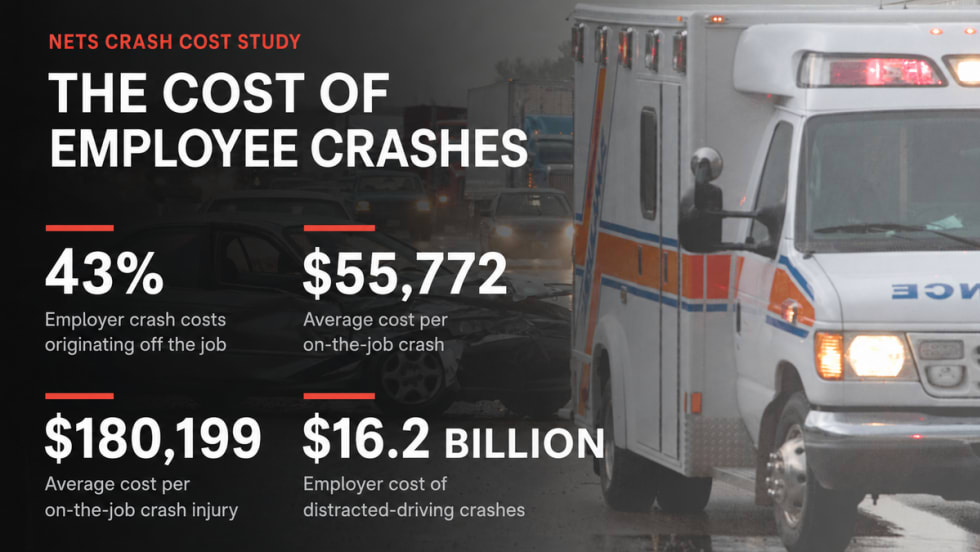
Off-the-Job Crashes Account for 43% of Employers’ $61.7 Billion Crash Burden
NETS quantifies costs dispersed across fleet, risk, HR, and other departments while providing new per-crash benchmarks for employers.
Read More →
Ram Recalls More Than 1.27 Million 1500 Pickups for Seat Belt Anchor Issue
The recall affects certain 2019-2026 Ram 1500 pickups that may have improperly attached second-row seat belt buckle anchors.
Read More →
How Better Visibility Cut Speeding Violations by 48%
Fleet leaders don't need more data, they need clearer visibility into what the data is saying. This case study explores how one utility replaced speeding-event counts with a single metric — miles driven in violation — to strengthen safety and significantly reduce speeding violations.
Read More →
Operation Safe Driver Week: Why the Industry's Oldest Safety Campaign Still Matters to Fleets
A look at how a 2007 enforcement initiative became one of the most consequential weeks on the fleet safety calendar, and what it means for your drivers in 2026.
Read More →