





Related: Hurricane Dorian Will Bring More Flood-Damaged Cars to Used Market
Vehicle Flood Claims Spike in Southwest Texas
Hurricane Dorian and tropical storm Imelda have caused more than 17,000 vehicle flood claims were recently reported in Southeast Texas alone, according to the Insurance Council of Texas.
October 2, 2019
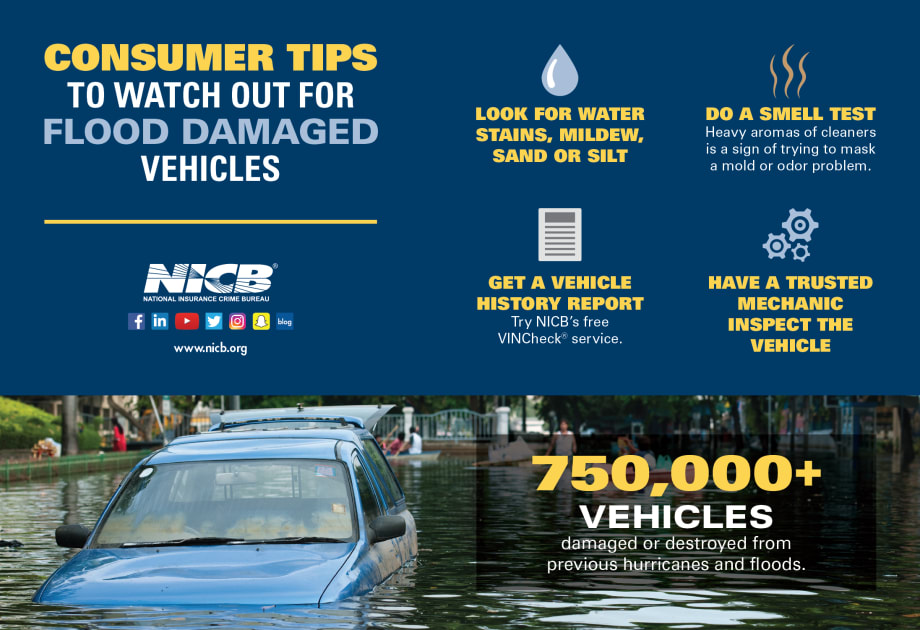
Hurricanes from 2018 have caused a spike in insurance claims for flooded vehicles in southwest Texas, according to the NICB.
Infographic courtesy of NICB.
2 min to read
Hurricane Dorian and tropical storm Imelda have caused more than 17,000 vehicle flood claims were recently reported in Southeast Texas alone, according to the Insurance Council of Texas.
In fact, Imelda brought more than 30 inches of rains to portions of southeast Texas causing rising floodwaters, reminiscent of Hurricane Harvey.
The National Insurance Crime Bureau (NICB) is cautioning all used car buyers — including commercial fleets — to beware of fraudsters who are selling damaged and flooded vehicles but presenting them as vehicles in good condition.
Buyers can take a number of steps to ensure they don't get duped, reports NICB. For example, when examining a used vehicle, be sure to check for water stains, mildew, sand or silt. Do a smell test as well — heavy aromas can be coming from cleaners the fraudster used to mask the odor problem of a flooded vehicle. It's always wise to have a trusted mechanic inspect the used vehicle as well.
Perhaps most importantly, consumers and fleets can take advantage of NICB's free tool called VINCheck that allows potential buyers to check a vehicle for red flags.
VINCheck came into being after Hurricane Katrina hit in 2005. Katrina resulted in estimates ranging from 300,000 to 500,000 damaged vehicles. That’s when NICB created an online tool to access all the vehicle identification numbers (VIN) of damaged vehicles, resulting from claims data provided electronically by NICB member insurance companies. The challenge was to enable the general public to access the data while protecting each insurance company’s proprietary information.
In October 2005, after securing member-company authorization and support for the idea, NICB launched its Flood Vehicle Database. Now anyone anywhere could query a VIN — free of charge — to see if it had been damaged from Hurricane Katrina before they handed over any money.
The Flood Vehicle Database has been enhanced and expanded twice since its creation. In November 2007, the name changed to VINCheck.
The VINCheck service is unprecedented and has proved to be the most popular feature on NICB’s website — with more than 2.5 million page views since July 1, 2018. There have been more than 1.1 million VINCheck queries since Oct. 1, 2018.
More Safety

Nexar-Nauto Merger Aims to Give Fleets Better Safety Intelligence Through Larger Driving Dataset
Stefan Heck tells Automotive Fleet that combining more than 10 billion miles of driving history with Nexar's AI models will give fleets deeper insights into driver risk and roadway conditions than either company could provide independently.
Read More →
Don't Wait for a Crisis: 5 Ways to Build Mental Health Into Your Fleet Safety Program
For Suicide Prevention Month, fleet and safety leaders have an opportunity to put mental health where it belongs: at the center of workplace safety.
Read More →
How Camera Data Can Strengthen a Fleet’s Insurance Renewal
Insights from a commercial insurance carrier and a broker show how fleets can turn video telematic data, driver coaching, and improved claims results into a stronger case at insurance renewal.
Read More →
The Safest Fleets Aren’t the Ones with the Most Technology
You’ve made the telematics investment. Here’s how to capture the other half of its value and build the safest fleet on the road.
Read More →
Sponsored•August 7, 2026
Hidden in Plain Sight: Fleet Compliance Risks
Fleet compliance isn't just about having policies — it's about consistently enforcing them. This practical guide reveals six hidden compliance risks common in public sector and shared fleet operations and outlines proven strategies to improve visibility, accountability, and audit readiness
Read More →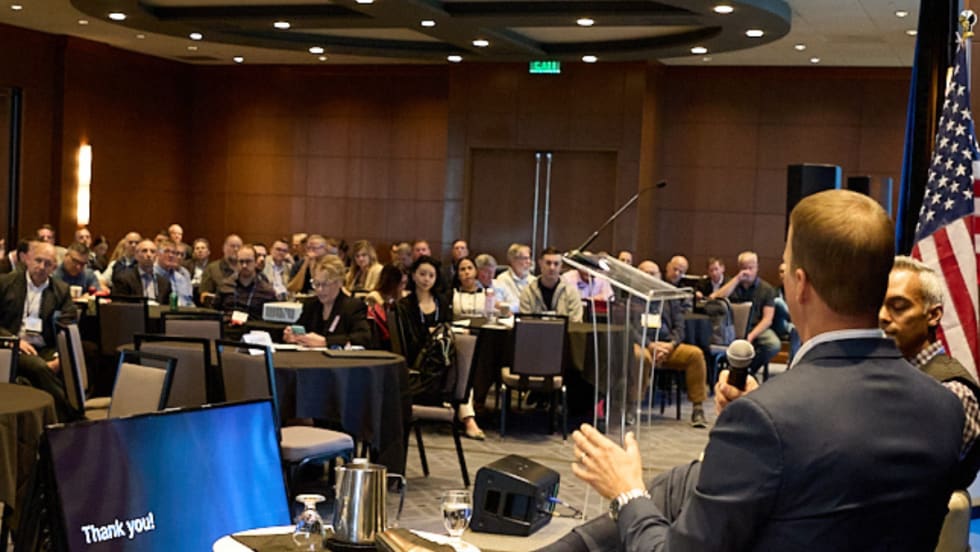
NETS Sets 2026 Fleet Safety Benchmark Conference for Indianapolis
The Sept. 15–17 program will feature fleet benchmarking data, case studies, emerging technologies, and implementation strategies while running alongside the NSC Safety Congress & Expo.
Read More →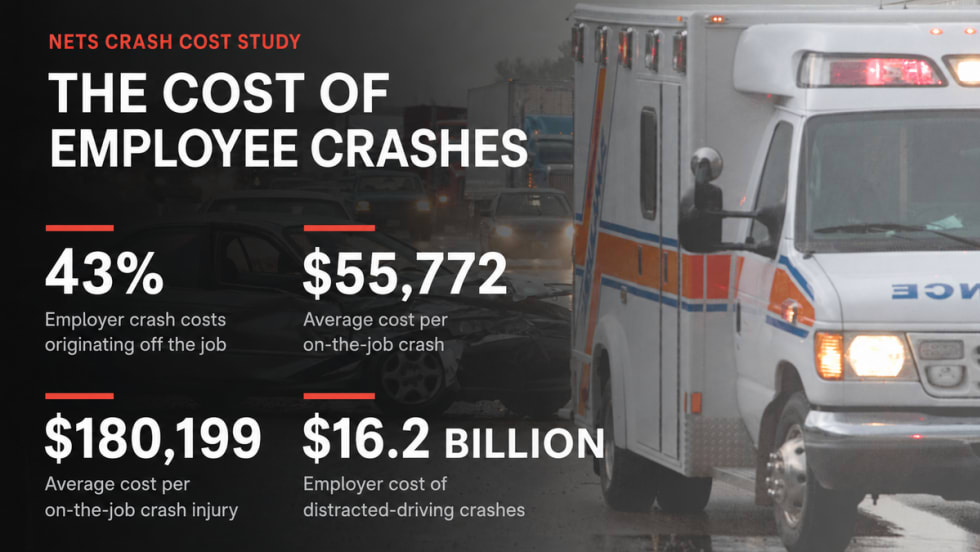
Off-the-Job Crashes Account for 43% of Employers’ $61.7 Billion Crash Burden
NETS quantifies costs dispersed across fleet, risk, HR, and other departments while providing new per-crash benchmarks for employers.
Read More →
Ram Recalls More Than 1.27 Million 1500 Pickups for Seat Belt Anchor Issue
The recall affects certain 2019-2026 Ram 1500 pickups that may have improperly attached second-row seat belt buckle anchors.
Read More →
Sponsored•July 17, 2026
How Better Visibility Cut Speeding Violations by 48%
Fleet leaders don't need more data, they need clearer visibility into what the data is saying. This case study explores how one utility replaced speeding-event counts with a single metric — miles driven in violation — to strengthen safety and significantly reduce speeding violations.
Read More →
Operation Safe Driver Week: Why the Industry's Oldest Safety Campaign Still Matters to Fleets
A look at how a 2007 enforcement initiative became one of the most consequential weeks on the fleet safety calendar, and what it means for your drivers in 2026.
Read More →