





Keep Reading: A Roadmap for U.S. Postal Service Electrification
USPS Unveils first EV Charging Stations, Electric Delivery Vehicles
Hundreds of new USPS Sorting and Delivery Centers will be equipped with infrastructure to power more than 66,000 USPS electric delivery vehicles. Among the vehicles will be 9,250 Ford E-Transits.
January 24, 2024
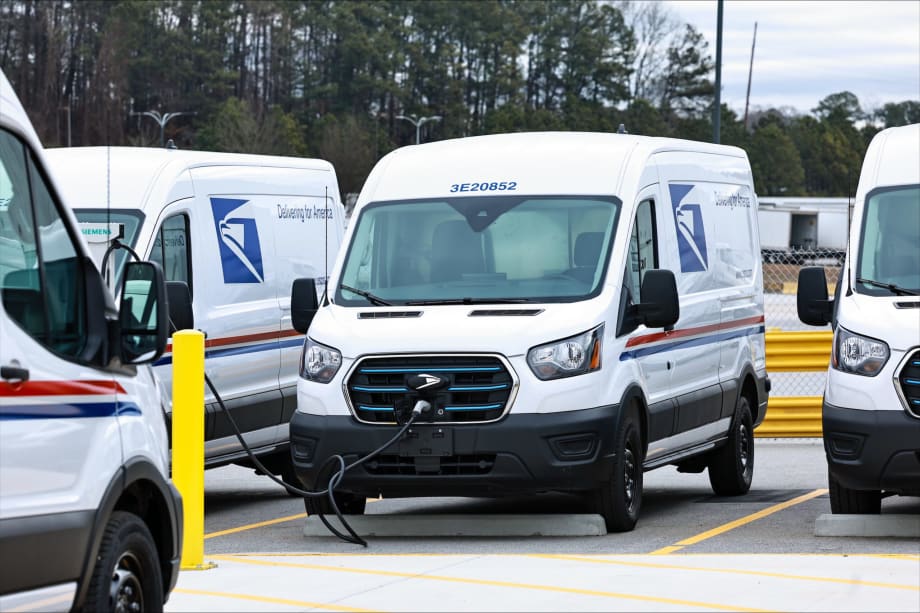
Ford E-Transits have nearly three times the cargo capacity of the Grumman LLV delivery vehicles that the Postal Service currently uses, which will lead to a more efficient delivery system.
Photo: USPS
4 min to read
The United States Postal Service, alongside White House officials, unveiled its first set of electric vehicle charging stations and electric commercial off-the-shelf (COTS) delivery vehicles at its South Atlanta Sorting and Delivery Center (S&DC) on Jan. 22.
Charging stations like these will be installed at hundreds of new S&DCs across the country throughout the year and will power what the Postal Service hopes will be the nation’s largest EV fleet.
Electrifying the Postal Service
USPS also showcased new battery-powered and domestically manufactured Ford E-Transit COTS delivery vehicles that will make up a portion of the Postal Service’s EV fleet.
USPS plans on procuring a total of 21,000 COTS EVs — including 9,250 from Ford — depending on market availability and operational feasibility.
In addition, the Postal Service anticipates adding at least 45,000 battery-electric Next Generation Delivery Vehicles (NGDVs) by 2028, bringing the total number of EVs in the delivery fleet to more than 66,000.
This represents one of the largest commitments to vehicle electrification in the nation, the Postal Service noted in a news release.
USPS will also continue to explore the feasibility of achieving 100% electrification for its delivery vehicle fleet.
Deployment of electric delivery trucks will start in Georgia and then expand to other locations across the country throughout the year.
The vehicles feature air conditioning and advanced safety technology and are designed to meet modern operational requirements.
Modernizing the fleet will allow delivery vehicles to haul larger volumes of mail and packages. For example, the Ford E-Transits have nearly three times the cargo capacity of the Grumman LLV delivery vehicles that the Postal Service currently uses.
Increased cargo capacity will reduce inefficient transportation, improve delivery operations and eliminate the need for many second trips carriers take to deliver high volumes of packages.
“In every neighborhood in America, people know their postal carrier and recognize the USPS vehicle driving down their street,” said John Podesta, Senior Advisor to the President for Clean Energy Innovation and Implementation. “The work USPS is doing to electrify those vehicles is making EVs commonplace on every road and street in our country, while reducing air pollution and increasing comfort and safety for the dedicated public servants who deliver our mail.”
The charging stations displayed at the Jan. 22 event were manufactured by Siemens. These stations will be able to efficiently charge Postal Service EVs overnight prior to the next day’s deliveries.
The Postal Service’s first 14,000 EV chargers will be manufactured by three suppliers: Siemens, Rexel/ChargePoint, and Blink.
“Today is a victory for the U.S. Postal Service, America’s electric vehicle industry, workers, and the environment,” White House Council on Environmental Quality Chair Brenda Mallory said. “USPS is leading by example by building the world’s largest electric delivery vehicle fleet and delivering on President Joe Biden’s Investing in America agenda resulting in cleaner air, better health and good-paying jobs in communities across the country.”
Making Improvements to the Delivery Process
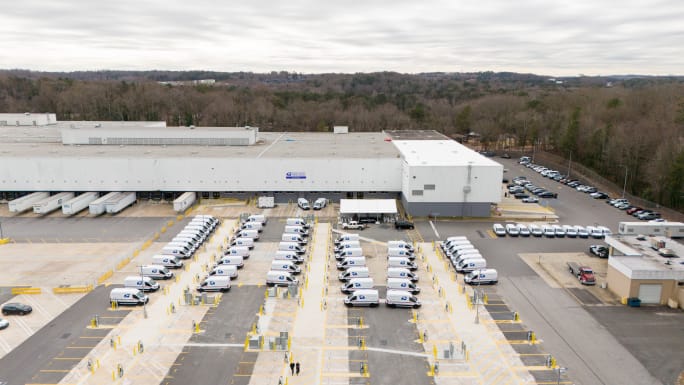
The Postal Service's new Sorting and Delivery Centers, which provide faster and more reliable mail and package delivery over a greater geographic area, will serve as the local hubs to deploy EVs along local carrier routes. The Atlanta one is pictured here.
Photo: USPS
The electrification and modernization of the Postal Service’s delivery fleet is part of the organization’s $40 billion investment strategy to upgrade and improve the USPS processing, transportation, and delivery networks.
As part of its 10-year Delivering for America plan, the Postal Service expects to convert approximately 400 selected sites into S&DCs nationwide.
These centers — which provide faster and more reliable mail and package delivery over a greater geographic area — will serve as the local hubs to deploy EVs along local carrier routes. As of January 2024, the Postal Service has opened 29 S&DCs nationwide.

Postmaster General Louis DeJoy was at Atlanta's Sorting and Delivery Center when new EV charging stations and Ford E-Transit COTS vehicles were unveiled.
Photo: USPS
“The improvements we need to achieve in sustainability are an integral outgrowth of the broader modernization efforts we have undertaken through our 10-year Delivering for America plan,” Postmaster General Louis DeJoy said. “As we transform our operating processes and invest in new automation, new technologies, and upgraded facilities and vehicles, we will generate significant efficiencies that reduce our costs, slash our carbon footprint and minimize waste. We are grateful for the support of Congress and the Biden Administration through Inflation Reduction Act funding, which helped enable the electrification in evidence here today.”
The procurement of EVs and charging stations is enabled by the Postal Service’s overall network modernization efforts — which allow more rapid EV deployment — as well as its improving financial condition, which includes $3 billion in congressional funding appropriated under the Inflation Reduction Act.
Looking Back at Postal Service's Electrification Plans
The Postal Service has faced scrutiny in recent years for not committing to a more electrified fleet, both from environmental activists and lawmakers.
USPS answered to that call in Dec. 2022, committing to deliveries of all-electric NGDVs beginning in 2026 in addition to the 21,000 COTS EVs previously mentioned.
In Dec. 2021, President Biden issued an executive order asking the U.S. government to buy only EVs for the federal fleet by 2035.
The Postal Service was exempt from the order. However, a USPS spokesperson previously told Government Fleet that the Postal Service hopes to follow the same precedent.
More Green Fleet
Sponsored•October 1, 2026
New Propane Autogas Program Offers Fleet Compensation
Qualified commercial fleets can receive $7,500 per eligible propane autogas vehicle and up to $10,000 for new refueling site prep. Learn how the program works and see whether your fleet qualifies.
Read More →
EV Charging Use Is Outpacing Infrastructure Growth
ChargePoint’s 2026 Charging Forward Report points to rising charger use, higher-powered charging, commercial vehicle electrification, and energy-management technology. Here’s what fleets should know.
Read More →
Merchants Fleet Reports 290M EV Miles as Fleets Navigate Changing Electrification Market
From millions in operating savings to hundreds of millions of EV miles, Merchants Fleet’s latest report reveals what’s working and what’s changing in fleet electrification.
Read More →
The EV Breakdown Nobody's Talking About: Why Most Electric Vehicle Roadside Calls Aren't Mechanical Failures
Here's why EV breakdowns are widely misunderstood.
Read More →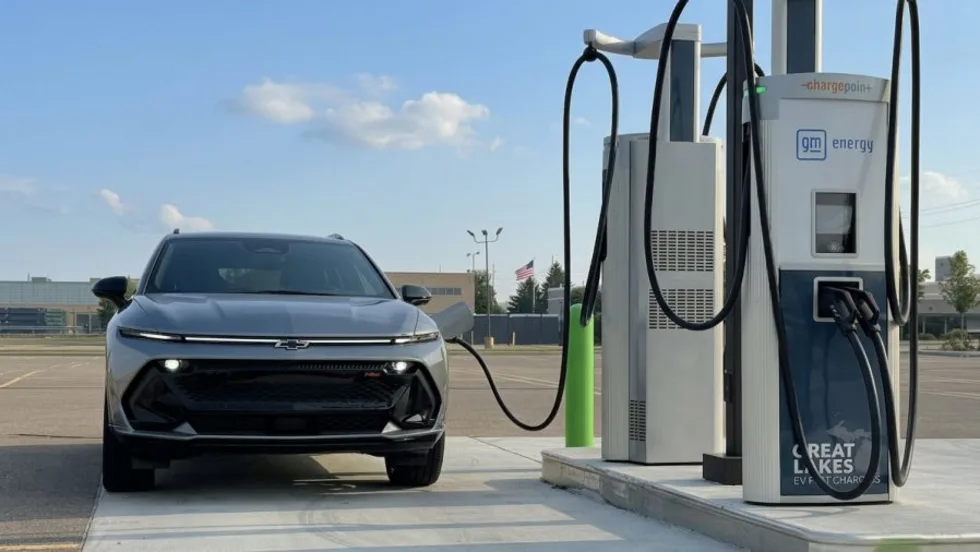
ChargePoint Now Available in Energy Pass
ChargePoint and additional planned charging network integrations were added to GM's Energy Pass.
Read More →

First Look: Slate Auto's Electric Fleet Pickup
Could an affordable, modular EV pickup make electrification more practical for fleets?
Read More →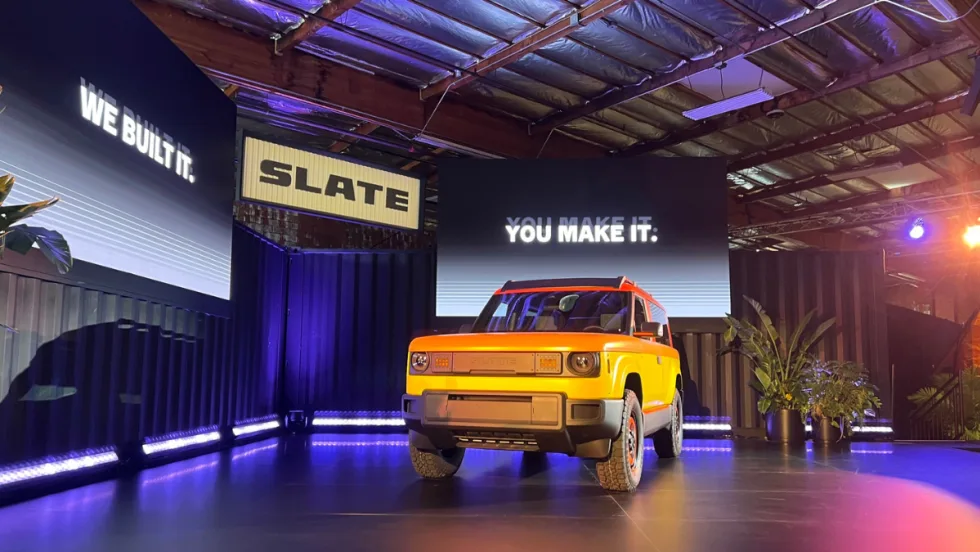
Slate Debuts Colorful, Unique EV Models
A recent media and client event, studded with electric vehicles dressed up on platforms, planted a new position for the manufacturer in the wider EV market. Fleets will find cost-saving advantages.
Read More →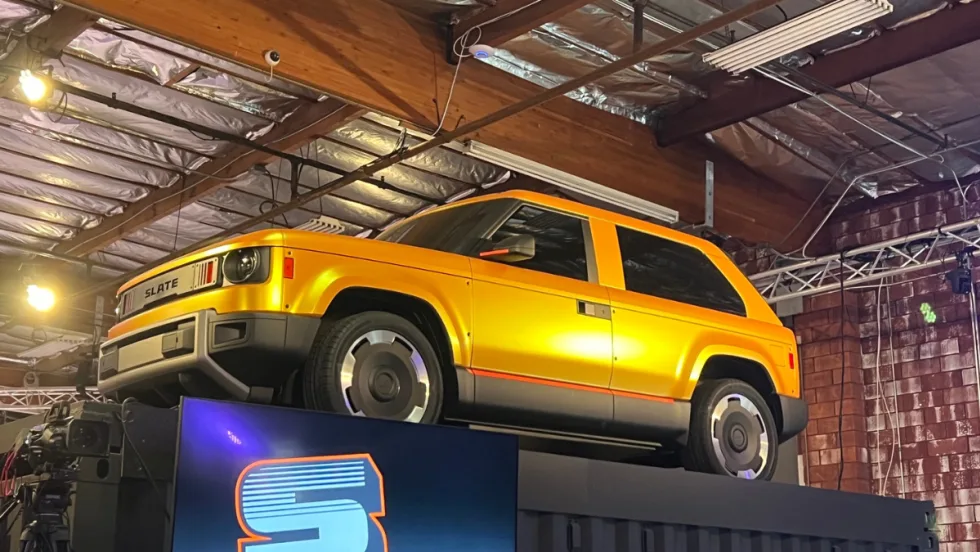
Slate Electric SUV, Pickup Switchable Model Aims For Light-Duty Fleets
Everything about this EV is counterintuitive and understated, making it stand out from the crowd.
Read More →
Inspiration Mobility Acquires Key Electrada Assets
Inspiration Mobility Group has acquired select assets of Electrada, adding the fleet electrification provider's team, technology, and charging infrastructure development capabilities to its energy management business.
Read More →