




U.S. Warns Against Night Driving in Guadalajara, Mexico
GUADALAJARA, JALISCO, MEXICO - The U.S. Consulate General in Guadalajara, Mexico, on Feb. 3 issued a safety recommendation that all U.S. citizens not drive at night in the Guadalajara area because of escalated criminal activity there.
GUADALAJARA, JALISCO, MEXICO - The U.S. Consulate General in Guadalajara, Mexico, on Feb. 3 issued a safety recommendation that all U.S. citizens not drive at night in the Guadalajara area because of escalated criminal activity there.
The U.S. Consulate General in Guadalajara is also prohibiting U.S. Government officials from traveling after dark between Guadalajara and the Guadalajara International Airport.
A number of major American corporations have operations in the region.
The warning specifically cites violence that took place the evening of Feb. 1, when a series of road blockades were set up in various sections of the Guadalajara metropolitan area. Buses, trucks and cars were forcibly commandeered and set on fire. "One of the blockades was installed on the Chapala highway between Guadalajara and the airport at the same point that was targeted on the evening of Saturday, January 15th," the warning stated.
The U.S. Consulate General offers these additional safety recommendations for drivers traveling in the region:
Make every attempt to travel on main roads during daylight hours, particularly the toll ("cuota") roads which generally are more secure.
Delay any travel if media reports road closures due to police or emergency responder activity.
If the road in front of you has been blocked due to a security incident or natural disaster, attempt to return to your point of origin using available alternate routes.
If you are presented with an imminent threat on the road, do not hesitate to run over any median (or similar obstacle) to make an emergency U-turn to get out of harm's way.
If physical barriers along the road prevent emergency evasive action in any direction, locate a restaurant, shopping mall, hotel, or another business establishment where you can temporarily remove your vehicle from the road and take cover until the road is clear.
If you are driving or walking and you hear or see gun fire and/or explosions, take immediate evasive action, get down on the ground or behind a solid barrier (engine block, tree planter, etc.) and evacuate the area as soon as it is safe to move.
Always call "066" (equivalent of 911 in the U.S.) immediately if you are exposed to a life-threatening situation requiring emergency police or fire responders.
The State Department also recommends that U.S. citizens living or traveling in Mexico enroll with the U.S. Embassy or nearest U.S. Consulate via the online registration service through the Smart Traveler Enrollment Program (STEP) (http://travel.state.gov). Travel registration allows the State Department to contact U.S. citizens in the event of an emergency and to provide up-to-date safety and security information.
More Safety

Tips for Driving Safely on Halloween Night
This video features a reminder from the Connecticut Department of Transportation (DOT) and the Connecticut Police Chiefs Association, urging drivers to prioritize safety this Halloween.
Read More →
IIHS Crash Avoidance Tests Reveal Safety Gaps in Cargo Vans and Work Trucks
New IIHS crash avoidance ratings show uneven performance among cargo vans and heavy-duty pickups, with most struggling to avoid vehicle-to-vehicle collisions.
Read More →
What’s Next for Fleet? Safety, AI & Industry Recognition | AF News Recap
Could your company's culture be encouraging distracted driving? This week, we're exploring how workplace expectations affect driver safety, what AI, EVs, and autonomous vehicles could mean for the future of fleet management, and how fleet professionals can strengthen their award nominations.
Read More →
Does Your Fleet's Culture Encourage Distracted Driving?
What happens when the people responsible for enforcing safety rules are the ones setting the wrong example? The answer may reveal why some of the biggest risks to fleet drivers have little to do with what's written in the employee handbook.
Read More →
Fleet Manager’s Ultimate Playbook: Navigating the New Standard in OEM Connectivity
Rising operating costs, driver safety concerns, and unplanned downtime are putting unprecedented pressure on modern fleets. Discover how fleet managers use embedded OEM connectivity and real-time vehicle data to cut TCO, prevent downtime, and protect drivers without aftermarket telematics hardware.
Read More →
From Driver Well-Being to EV Charging | AF News Recap
Mental health belongs in the fleet safety conversation. This week, we’re looking at five ways fleets can support employee well-being before a crisis, plus Holman’s expansion in Mexico, new one-day Fleet Forward passes, and why EV charging demand is outpacing infrastructure growth.
Read More →
Nexar-Nauto Merger Aims to Give Fleets Better Safety Intelligence Through Larger Driving Dataset
Stefan Heck tells Automotive Fleet that combining more than 10 billion miles of driving history with Nexar's AI models will give fleets deeper insights into driver risk and roadway conditions than either company could provide independently.
Read More →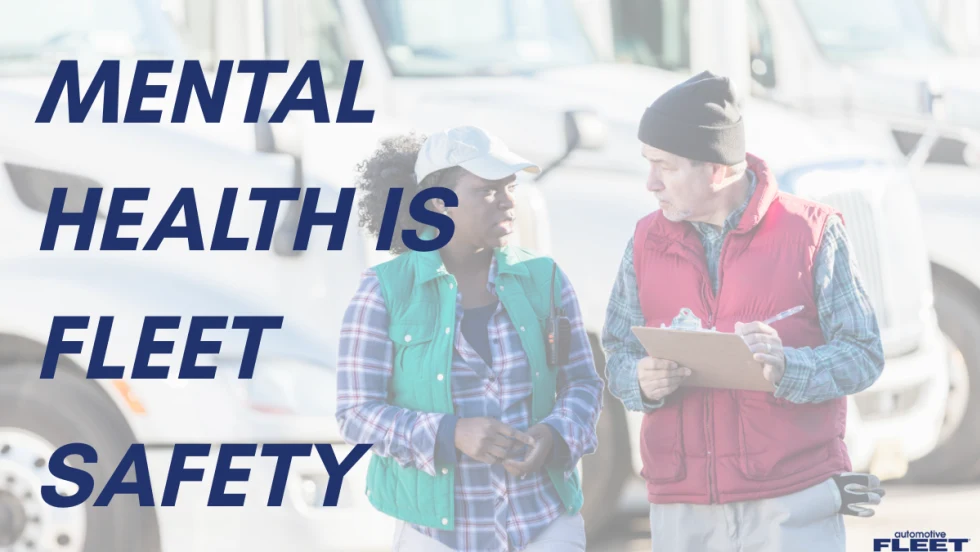
Don't Wait for a Crisis: 5 Ways to Build Mental Health Into Your Fleet Safety Program
For Suicide Prevention Month, fleet and safety leaders have an opportunity to put mental health where it belongs: at the center of workplace safety.
Read More →
How Camera Data Can Strengthen a Fleet’s Insurance Renewal
Insights from a commercial insurance carrier and a broker show how fleets can turn video telematic data, driver coaching, and improved claims results into a stronger case at insurance renewal.
Read More →
The Safest Fleets Aren’t the Ones with the Most Technology
You’ve made the telematics investment. Here’s how to capture the other half of its value and build the safest fleet on the road.
Read More →