




U.S. Traffic Safety Leaders Honored
The Governors Highway Safety Association recognizes the CDC’s David A. Sleet, as well as safety consultant Betty Mercer, for contributions to making public roads safer.

David A. Sleet

Sleet
The Governors Highway Safety Association has presented its most prestigious honor, the James J. Howard Highway Safety Trailblazer Award, to David A. Sleet of the Centers for Disease Control and Prevention (CDC).
Sleet, associate director for science with the CDC’s National Center for Injury Prevention and Control, was recognized for his contributions in bringing a public health and behavioral science approach to traffic safety.
“His groundbreaking research has led to such achievements as improved child passenger safety laws, the adoption of the national 0.08% blood alcohol concentration (BAC) standard and safer airbag designs,” GHSA said in a released statement about the award. “Today, every state has a .08 BAC level and child passenger safety laws are in place across the nation. Dr. Sleet's lifetime of work, spanning 37 years and three continents, continues to save lives on our roadways.”
Additionally, GHSA presented the Kathryn J.R. Swanson Public Service Award to Betty Mercer, a former governor’s representative at the Michigan Office of Highway Safety Planning. Mercer now runs a consulting practice focusing on traffic safety policy, planning, and leadership development.
During her 13 years as a consultant, Mercer has developed a wide variety of tools and resources that highway safety office directors rely on to manage their offices. She has also worked on a range of critical demonstration projects for the National Highway Traffic Safety Administration (NHTSA).
“More broadly, she continues to mentor GHSA staff and countless highway safety office directors on how to effectively manage state programs,” GHSA said.
Mercer is a former vice chair at GHSA and a current member of the Transportation Research Board Occupant Protection Committee.
GHSA presented these awards at its 2016 highway safety awards luncheon, held Aug. 30 during the organization’s annual meeting in Seattle.
GHSA also presented four Peter K. O'Rourke Special Achievement Awards to the following programs:
The Connecticut DOT and UConn Transportation Safety Research Center Crash Data Improvement, a partnership that developed a statewide electronic reporting system based on the national Model Minimum Uniform Crash Criteria (MMUCC) that provides real-time crash data to all highway safety users. The tools developed through this program are easily transferable to other states looking to modernize their crash reporting systems. As a result of this project, crash report processing times have been slashed from 16 months to two weeks, and the number of errors that have to be manually corrected have dropped to just 1% of all MMUCC reports.
The New York State Governor’s Traffic Safety Committee and ITSMR DRE Tablet Application, which allows drug recognition expert (DRE) officers to use tablet computers to enter their observations and assessments of persons suspected of drugged driving. This partnership between the New York State Governor’s Traffic Safety Committee and the University of Albany Institute for Traffic Safety Management and Research (ITSMR) comes as the drugged driving problem continues to grow and law enforcement officers require tools and data to help them evaluate impaired motorists.
The North Carolina Initiative to Reduce Underage Drinking, a North Carolina Alcoholic Beverage Control (ABC) Commission campaign to minimize the cost of underage drinking to the state. The initiative's Talk It Out effort is based on quantitative and qualitative research, and encourages parents to talk with their children about the dangers of underage drinking. Talk It Out focuses on raising parental awareness, eliminating misconceptions, educating retailers, and coordinating with law enforcement agencies.
Texas Municipal Traffic Safety Initiatives (MTSI), a program first established in 2008 to help municipal courts combat impaired driving. MTSI was designed to educate the judiciary in Texas about impaired driving laws, issues, legislation, and trends and to provide courts with the resources to educate their communities on the dangers of impaired driving. This past year, MTSI provided more than 9,000 hours of training, assisted 271 courts with anti-DUI exhibits, and shipped impaired driving resources to more than 1,500 courts and other municipal organizations.
More Safety

Nexar-Nauto Merger Aims to Give Fleets Better Safety Intelligence Through Larger Driving Dataset
Stefan Heck tells Automotive Fleet that combining more than 10 billion miles of driving history with Nexar's AI models will give fleets deeper insights into driver risk and roadway conditions than either company could provide independently.
Read More →
Don't Wait for a Crisis: 5 Ways to Build Mental Health Into Your Fleet Safety Program
For Suicide Prevention Month, fleet and safety leaders have an opportunity to put mental health where it belongs: at the center of workplace safety.
Read More →
How Camera Data Can Strengthen a Fleet’s Insurance Renewal
Insights from a commercial insurance carrier and a broker show how fleets can turn video telematic data, driver coaching, and improved claims results into a stronger case at insurance renewal.
Read More →
The Safest Fleets Aren’t the Ones with the Most Technology
You’ve made the telematics investment. Here’s how to capture the other half of its value and build the safest fleet on the road.
Read More →
Hidden in Plain Sight: Fleet Compliance Risks
Fleet compliance isn't just about having policies — it's about consistently enforcing them. This practical guide reveals six hidden compliance risks common in public sector and shared fleet operations and outlines proven strategies to improve visibility, accountability, and audit readiness
Read More →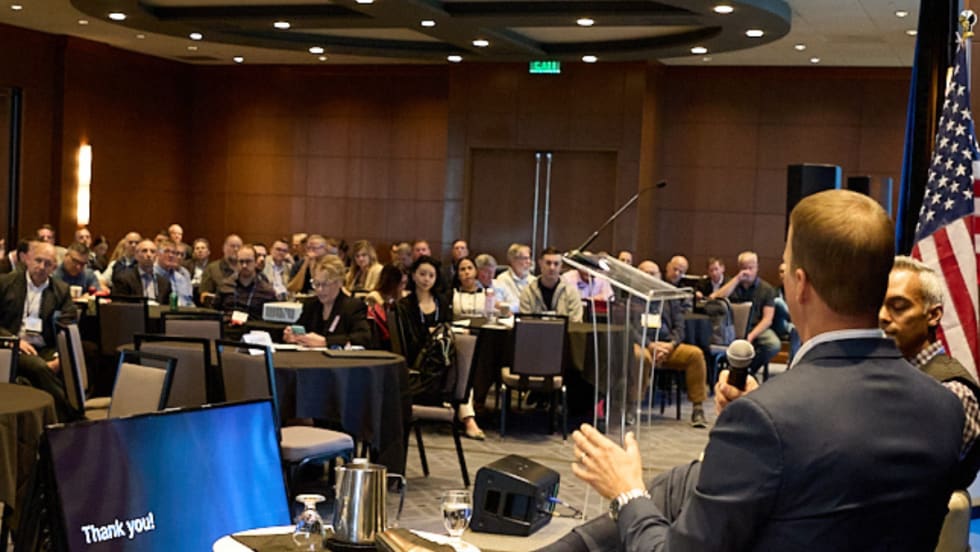
NETS Sets 2026 Fleet Safety Benchmark Conference for Indianapolis
The Sept. 15–17 program will feature fleet benchmarking data, case studies, emerging technologies, and implementation strategies while running alongside the NSC Safety Congress & Expo.
Read More →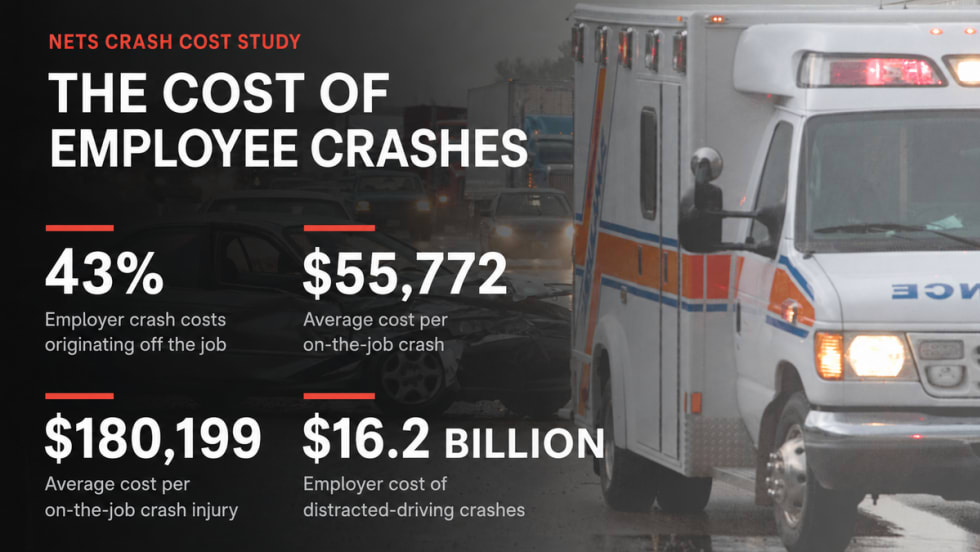
Off-the-Job Crashes Account for 43% of Employers’ $61.7 Billion Crash Burden
NETS quantifies costs dispersed across fleet, risk, HR, and other departments while providing new per-crash benchmarks for employers.
Read More →
Ram Recalls More Than 1.27 Million 1500 Pickups for Seat Belt Anchor Issue
The recall affects certain 2019-2026 Ram 1500 pickups that may have improperly attached second-row seat belt buckle anchors.
Read More →
How Better Visibility Cut Speeding Violations by 48%
Fleet leaders don't need more data, they need clearer visibility into what the data is saying. This case study explores how one utility replaced speeding-event counts with a single metric — miles driven in violation — to strengthen safety and significantly reduce speeding violations.
Read More →
Operation Safe Driver Week: Why the Industry's Oldest Safety Campaign Still Matters to Fleets
A look at how a 2007 enforcement initiative became one of the most consequential weeks on the fleet safety calendar, and what it means for your drivers in 2026.
Read More →