





Further Reading: US Hybrid Launches Parallel Hybrid Powertrain Tech
U.S. Readers Sound Off on "Is the Push to EVs Forced?"
If Automotive Fleet readers are to be believed, then yes, the push to EVs is an overhyped political strategy and not a realistic endeavor for today's fleet, commercial, and private markets.
August 24, 2022
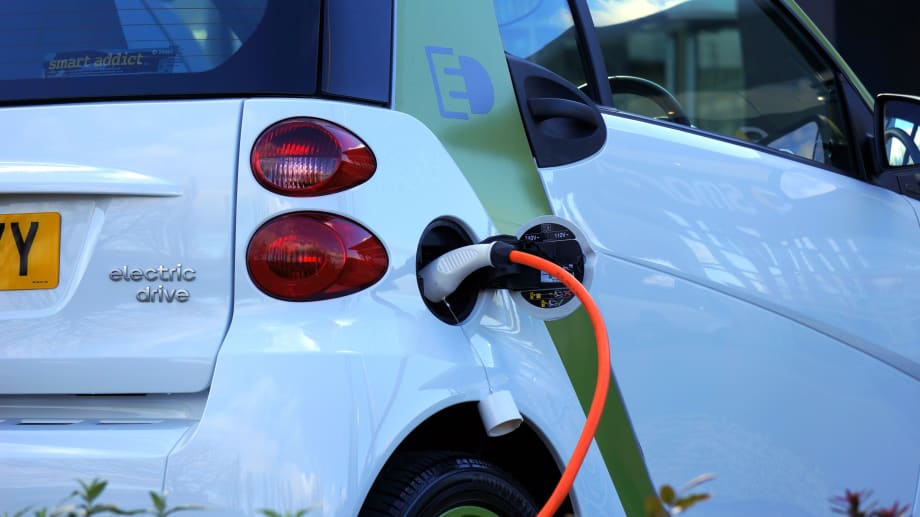
Many employees live in apartment complexes or condos where they do not have their own parking spot to install a charger. One alternative option is public charging, but few people move their cars when fully charged. They treat these spots like parking spaces.
Photo by Mike B: https://www.pexels.com/photo/white-and-orange-gasoline-nozzle-110844/
5 min to read
Many readers contributed further thoughts to Joe Pelehach's article, "Is the Push to EVs Forced?" Some of their responses are below.
Payload Reduces EV Range
I read the guest blog entitled “Is the Push for EVs Forced?” by Joe Pelehach of Motorlease. I would like to add to this discussion by noting that reduced range is determined by the payload being hauled. And the biggest issue is that EVs are not paying a cent in road taxes for road maintenance. It has been a free ride, but the tax man cometh. And if the federal government wasn’t subsidizing EVs, how many would buy one? What about fire training? In Sacramento, Calif., the fire department tried to put out a Tesla auto fire with water. How in today’s world do they not know that spraying water on lithium batteries is very bad? Do you have one of those battery storage packs in your garage? Did you let the fire department know before they started hosing your house down and making the fire worse? What state is going to allow new power plants to handle the electrical needs of the EVs if all of the mandates are actually achieved? I know the State of California will not permit a new power plant – they have rejected all attempts for decades.
Norma Havens, Co-National Sales Manager, USA Fleet Solutions
Reno, Nevada
Still Years Away
The blog entitled “Is the Push for EVs Forced?” hit many key points that a lot of folks are hesitant or haven’t had a chance to touch on. Senior leadership from the government and from various corporations are pushing for green fleet, some more aggressive than others. In the U.S., however, the technology and infrastructure is nowhere near where it needs to be to support any sort of widespread use, especially for commercial fleet. In general, sales leaders will not want their reps to be spending time in the middle of the day waiting at some charging station to charge their cars. The EV charging “lifestyle” and the “range anxiety” of drivers are all legitimate concerns we have to address. Additionally, the supply chain issues we’ve been facing since the pandemic are greatly impacting our buying decisions. For personal leisure use, if everything lines up for the individual, it will certainly work. But for most of the mid-to-large size commercial fleet, I think we are still years away from being able to look at replacing ICE vehicles with EVs.
Jen Vrmeer, Senior Manager, Operations Support/Sales Operations, BD (Becton Dickenson)
San Diego, Calif.
Political Pressure
The blog entitled “Is the Push for EVs Forced?” hit the nail on the head. Manufacturers, though, I think are only responding to political pressure, not reality. What surprises me is why there isn’t a push for hydrogen fuel technology? It seems that hydrogen-powered fuel-cell vehicles would be a less expensive alternative to our current technology and much more sustainable than EVs.
Scott Lowe, PE, CEM, PWLF, Public Works Director
City of Buckeye, Ariz.
EVs are not the Clean Answer
The blog asks: “Is the push for EV’s forced?” I say “YES.” EVs simply aren’t the clean answer to individual or small group transportation. IE.. coal and natural gas currently generate much of our grid’s power and EVs significantly add to these power needs. Lengthy charging time and high cost of battery disposal/replacement are also big issues that ‘mother necessity’ has yet to provide solutions. Pricing people out of gas/diesel vehicles is at a minimum a reckless political model.
Major Steve Rockefeller, Leesburg Police Department
Leesburg, Fla.
EVs in Yellowstone?
Finally good to at least shout in the night on this. I’m trying to imaging what Yellowstone Park will look like in 2055 with several thousand people in RVs and cars at the end of a three- day weekend all wanting to recharge and leave. The second scenario is wildland firefighting vehicles. I work in that world. I can’t see any portable charging stations for the amount of vehicles that show up at the base camp let alone out in the woods chasing fires down. EVs will be one solution of many and primarily used in high-density traffic corridors (interstate routes between large cities). The alternative is ICE vehicles powered by alternative fuels, which also charge the batteries.
Kevin Fecteau, Fleet & Equipment Manager, US Forest Service
Medford, Ore.
Infrastructure is Inadequate
If there is a push to EVs, then the infrastructure to provide power needs to change fast. All the KWH needed at night to charge all the EVs will be crazy.
Jeronimo Cervantes, President, Jebol
Mexico City, Mexico
Asking the Same Question
The blog “Is the Push for EVS Forced?” nailed it. I keep asking the same questions. If this is THE chance to rebuild our auto and energy industry from the ground up, you’d think we’d be doing it right? It feels like the polar opposite – antiquated grids, no charging network, range issues, and don’t forget cost! We still can move to a cleaner environment, better grid, etc., but hybrid was, and still is, the right call.
Mark Erskine, Executive Client Partner, Cox Automotive
Meridian, Idaho
Not Ready for Prime Time
I am a retired fleet manager and the EV is not ready (batteries) for prime time. Just look to France where they purchased 5,000 EVs for the city of Paris and five years later found the battery replacement cost more than the cars, and now those cars are parked. The story only addresses the charging and not the grid capabilities.
Michael Galorath, Retired Supervisor for UPS
Rolling Meadows, Ill.
More Global Fleet

Holman Takes Full Ownership of ARIZA in Mexico
Holman is bringing its Mexican fleet management operation fully under its own brand after more than 30 years as a joint venture. The change gives multinational fleet customers a single Holman operation across the U.S., Canada, and Mexico.
Read More →
5 Tire Maintenance Tips to Help Prevent Work Truck Downtime
Regular tire checks can do more than extend tread life. These five maintenance practices can help work truck fleets catch problems early, reduce costs, and prevent downtime.
Read More →
Proven Ways to Reduce Work Truck Downtime
The age-old problem of downtime will always be a reality, but with new strategies at hand, fleets have more ways to keep trucks on the road longer.
Read More →



Cameras, Safety and Insurance: From Reactive Claims to Real-Time Prevention (Part 2 of 2)
Part Two: Commercial auto remains one of the most challenging and costly lines of coverage for fleet operators and insurers alike. Continue learning more about how to effectively address these issues from Onur Aksan, Enterprise Business Development Executive, Geotab
Read More →
Cameras, Safety and Insurance: From Reactive Claims to Real-time Prevention
Commercial auto remains one of the most challenging and costly lines of coverage for fleet operators and insurers alike. Learn more about how to effectively address these issues from Onur Aksan, Enterprise Business Development Executive, Geotab.
Read More →
Fleet Costs Are Rising: Here’s How Leaders Are Responding
Fleet leaders are under pressure to reduce costs, adapt to economic uncertainty, and make smarter decisions. See how peers across North America are responding with real data, proven strategies, and forward-looking insights. Download the 2026 Market Pulse Report to benchmark your strategy and uncover where you can gain an edge.
Read More →
Enterprise Fleet Management Surpasses 900,000 Vehicles in U.S. & Canada
Enterprise Mobility connects with mobility solutions around the globe
Read More →
Automotive Fleet's Guide to Fleet Electrification
Unlock the secrets to a successful transition to electric fleets with Automotive Fleet's comprehensive Fleet Electrification Guide!
Read More →