




U.S. DOE and GM Select 17 College Teams for “EcoCAR” Vehicle Engineering Competition
WASHINGTON – The U.S.Department of Energy, General Motors, and Natural Resources Canada has announced the 17 teams selected to participate in EcoCAR: The NeXt Challenge, a collegiate vehicle engineering competition set to begin in Fall 2008.
WASHINGTON – The U.S.Department of Energy, General Motors, and Natural Resources Canada has announced the 17 teams selected to participate in EcoCAR: The NeXt Challenge, a collegiate vehicle engineering competition set to begin in Fall 2008. EcoCAR will challenge university engineering students across North America to re-engineer a Saturn VUE to achieve improved fuel economy and reduced green house gas emissions, while retaining the vehicle’s performance and consumer appeal.
Students will design and build advanced propulsion solutions that are based on the vehicle categories from the California Air Resources Board (CARB) zero emissions vehicle (ZEV) regulations. They will be encouraged to explore a variety of cutting-edge clean vehicle solutions, including full-function electric, range-extended electric, hybrid, plug-in hybrid, and fuel cell technologies. In addition, they will incorporate lightweight materials into the vehicles, improve aerodynamics and utilize alternative fuels such as ethanol, biodiesel, and hydrogen.
The following teams have been selected to compete in the EcoCAR competition:
· Embry-Riddle Aeronautical University (Daytona Beach, Fla.) .
· Georgia Tech (Atlanta, Ga.).
· Howard University (Washington, D.C.).
·Michigan Technological University (Houghton, Mich.).
· Mississippi State University (Starkville, Miss.).
· Missouri University of Science and Technology (Rolla, Mo.).
· North Carolina State University (Raleigh, N.C.).
· Ohio State University (Columbus, Ohio).
· Pennsylvania State University (University Park, Pa.).
· Rose-Hulman Institute of Technology (Terre Haute, Ind.).
· Texas Tech University (Lubbock, Texas).
· University of Ontario Institute of Technology (Oshawa, Ontario, Canada).
· University of Victoria (Victoria, British Columbia, Canada).
· University of Waterloo (Waterloo, Ontario, Canada).
· University of Wisconsin (Madison, Wis.).
· Virginia Tech (Blacksburg, Va.).
· West Virginia University (Morgantown, W.V.).
During the three-year program, General Motors will provide production vehicles, vehicle components, seed money, technical mentoring, and operational support. The U.S. Department of Energy and its research and development facility, Argonne National Laboratory, will provide competition management, team evaluation, and technical and logistical support.
“We’re excited to see what these student engineers will develop over the next three years,” said Beth Lowery, General Motors vice president, Environment, Energy, and Safety Policy. “The objectives of EcoCAR are right in line with GM’s strategy.”
In the first year, teams will develop their vehicle designs through the use of GM’s Global Vehicle Development Process — the modeling and simulation process currently used to develop all of GM’s vehicles. Sophisticated hardware in the loop (HIL) and software in the loop (SIL) systems will be utilized, and teams will be challenged to model and simulate the integration of their subsystems into the overall vehicle design. The emphasis is on optimizing a practical, realizable solution that will meet the goals of the competition.
During the second and third years of the competition, students will build the vehicle and continue to refine, test, and improve vehicle operation. At the end of Years Two and Three, the re-engineered student vehicle prototypes will compete in a week-long competition of engineering tests. These tests will be similar to the tests GM conducts to determine a prototype’s readiness for production. The Greenhouse gas, Regulated Emissions, and Energy in Transportation (GREET) model, developed at Argonne National Laboratory, will be used to assess a well-to-wheel analysis of the greenhouse gas impacts of each technology approach the teams select.
In addition to sponsorship from GM and DOE, Platinum sponsor Government of Canada is providing extensive operational support. The other Platinum sponsors, dSPACE, National Instruments, The MathWorks, and Freescale Semiconductor are providing critical software and hardware components.
Gold sponsors are The National Science Foundation and MotoTron Corporation. Silver sponsors are SnapOn Tools and Renewable Fuels Association. Bronze sponsors are Delphi Corporation, EcoMotors, CarSim, and Bosch.
Additional information about EcoCAR is available at www.ecoCARchallenge.org.
More Green Fleet
EV Charging Use Is Outpacing Infrastructure Growth
ChargePoint’s 2026 Charging Forward Report points to rising charger use, higher-powered charging, commercial vehicle electrification, and energy-management technology. Here’s what fleets should know.
Read More →
Merchants Fleet Reports 290M EV Miles as Fleets Navigate Changing Electrification Market
From millions in operating savings to hundreds of millions of EV miles, Merchants Fleet’s latest report reveals what’s working and what’s changing in fleet electrification.
Read More →
The EV Breakdown Nobody's Talking About: Why Most Electric Vehicle Roadside Calls Aren't Mechanical Failures
Here's why EV breakdowns are widely misunderstood.
Read More →
ChargePoint Now Available in Energy Pass
ChargePoint and additional planned charging network integrations were added to GM's Energy Pass.
Read More →
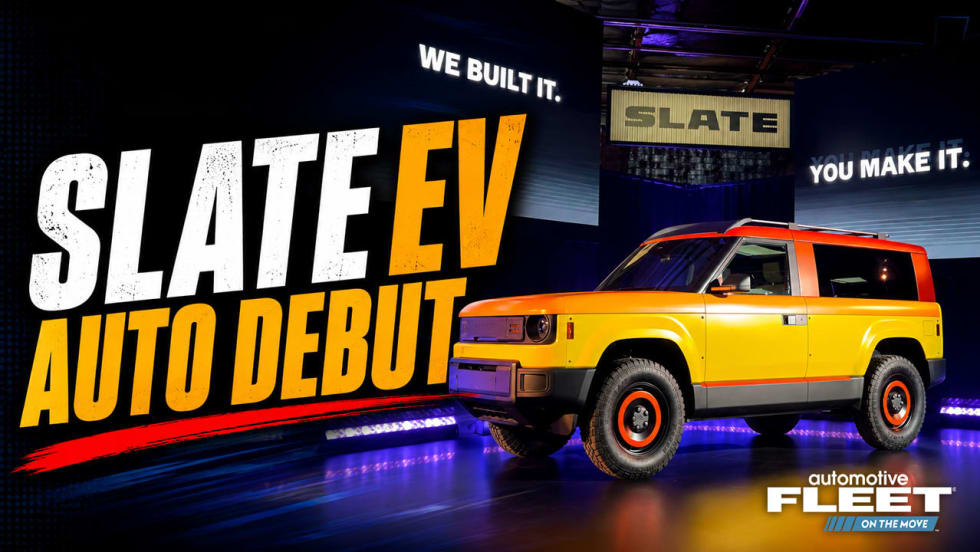
First Look: Slate Auto's Electric Fleet Pickup
Could an affordable, modular EV pickup make electrification more practical for fleets?
Read More →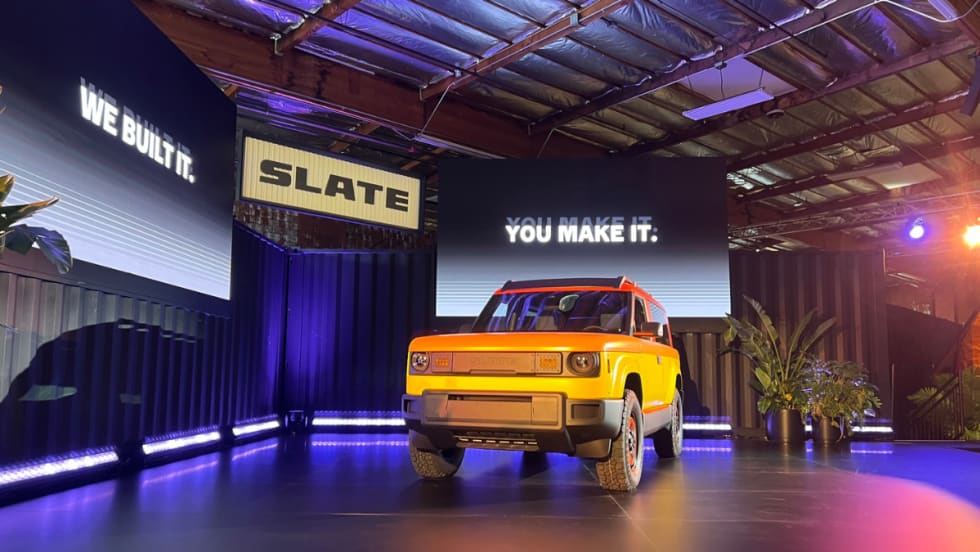
Slate Debuts Colorful, Unique EV Models
A recent media and client event, studded with electric vehicles dressed up on platforms, planted a new position for the manufacturer in the wider EV market. Fleets will find cost-saving advantages.
Read More →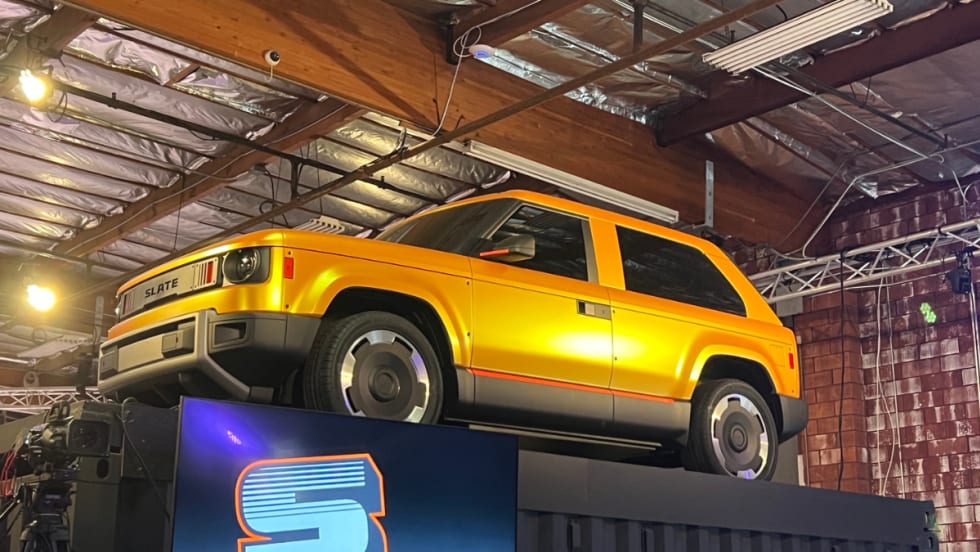
Slate Electric SUV, Pickup Switchable Model Aims For Light-Duty Fleets
Everything about this EV is counterintuitive and understated, making it stand out from the crowd.
Read More →
Inspiration Mobility Acquires Key Electrada Assets
Inspiration Mobility Group has acquired select assets of Electrada, adding the fleet electrification provider's team, technology, and charging infrastructure development capabilities to its energy management business.
Read More →
Turning Connected Vehicle Data Into Decisions That Matter
Fleet leaders have more data than ever, but turning that data into clear, actionable decisions remains a challenge. This white paper shows how leading organizations are using connected vehicle data to improve safety, reduce costs, and optimize fleet performance. Learn how to turn insight into action across your fleet.
Read More →