




U.S. Bank Voyager Offers Discounted Online Driver Safety Lessons
MINNEAPOLIS - U.S. Bank Voyager Fleet Systems is teaming up with The CEI Group, Inc. to offer Voyager cardholders DriverCare Web-Based Training driver safety lessons at a 25-percent discount.
MINNEAPOLIS - U.S. Bank Voyager Fleet Systems is teaming up with The CEI Group, Inc. (CEI) to offer Voyager cardholders DriverCare Web-Based Training driver safety lessons at a 25-percent discount.
Developed by CEI, DriverCare Web-Based Training offers multiple modules for fleet drivers. The curriculum focuses on techniques drivers can employ to safeguard against highway collisions, pointers on how to cut fuel consumption and ways to reduce the hazards posed by bad weather, night driving and
roadside breakdowns.
"Each year, industry statistics show that one in five fleet vehicles will be involved in some type of accident. By giving our cardholders easy access to driver safety lessons online, we hope to reduce the likelihood that Voyager cardholders will be involved in an accident," said Jeffrey A. Rankin, senior sales and marketing officer, U.S. Bank Corporate Payment Systems.
The self-service web site is designed for use both by automotive fleets and individual drivers. To help fleet managers run a driver safety training program, the site has built-in administrative features that enable them to assign training to individual drivers, track their progress, retain records and run a variety of status reports.
"Our lessons are effective because they offer a highly engaging learning experience," said Ryan Woolfenden, CEI senior manager of business development. "They feature simulations that employ 3-dimensional computer graphics and realistic sound effects, along with interactive exercises and
tests the driver has to pass to receive credit."
Voyager clients can purchase and take the lessons at training.drivercare.com/voyager or log onto the website via Voyager Fleet Commander Online.
About CEI
Founded in 1983, CEI is a provider of technology-enhanced vehicle accident management services. In 2000, CEI launched DriverCare, a line of fleet risk and driver safety services that includes DriverCare Risk Manager, a comprehensive fleet risk management tool; DriverCare mvrComplete, a motor vehicle record retrieval and reporting system; DriverCare Quarterly, a driver safety newsletter, and DriverCare Web-Based Training.
CEI's customers include self-insured commercial, institutional and governmental fleets, directly and through its alliances with fleet leasing companies. CEI also provides vehicle direct repair program outsourcing to leading property and casualty insurance companies. The company is headquartered near Philadelphia, and has field sales offices in Trevose, Pa.; Monroe, Mich.; Tulsa, Okla.; and Pittsburgh. For more information about CEI, visit ceinetwork.com.
About Voyager
U.S. Bank Voyager Fleet Systems is a provider of the universal fleet fueling and maintenance cards for over 1.6 million vehicles. Specifically designed to serve the needs of any size fleet, Voyager issues the Voyager Fleet Card, accepted at over 230,000 retail locations in all 50 states and provides comprehensive fleet management information services to commercial businesses and government agencies. To learn more, visit Voyager online at usbcpssolutions.com/fleet.
About U.S. Bancorp
U.S. Bancorp, with $266 billion in assets, is the parent company of U.S. Bank, the 6th largest commercial bank in the United States. The company operates 2,850 banking offices and 5,173 ATMs in 24 states, and provides a comprehensive line of banking, brokerage, insurance, investment, mortgage, trust and payment services products to consumers, businesses and institutions. Visit U.S. Bancorp on the web at www.usbank.com.
More Safety

Nexar-Nauto Merger Aims to Give Fleets Better Safety Intelligence Through Larger Driving Dataset
Stefan Heck tells Automotive Fleet that combining more than 10 billion miles of driving history with Nexar's AI models will give fleets deeper insights into driver risk and roadway conditions than either company could provide independently.
Read More →
Don't Wait for a Crisis: 5 Ways to Build Mental Health Into Your Fleet Safety Program
For Suicide Prevention Month, fleet and safety leaders have an opportunity to put mental health where it belongs: at the center of workplace safety.
Read More →
How Camera Data Can Strengthen a Fleet’s Insurance Renewal
Insights from a commercial insurance carrier and a broker show how fleets can turn video telematic data, driver coaching, and improved claims results into a stronger case at insurance renewal.
Read More →
The Safest Fleets Aren’t the Ones with the Most Technology
You’ve made the telematics investment. Here’s how to capture the other half of its value and build the safest fleet on the road.
Read More →
Hidden in Plain Sight: Fleet Compliance Risks
Fleet compliance isn't just about having policies — it's about consistently enforcing them. This practical guide reveals six hidden compliance risks common in public sector and shared fleet operations and outlines proven strategies to improve visibility, accountability, and audit readiness
Read More →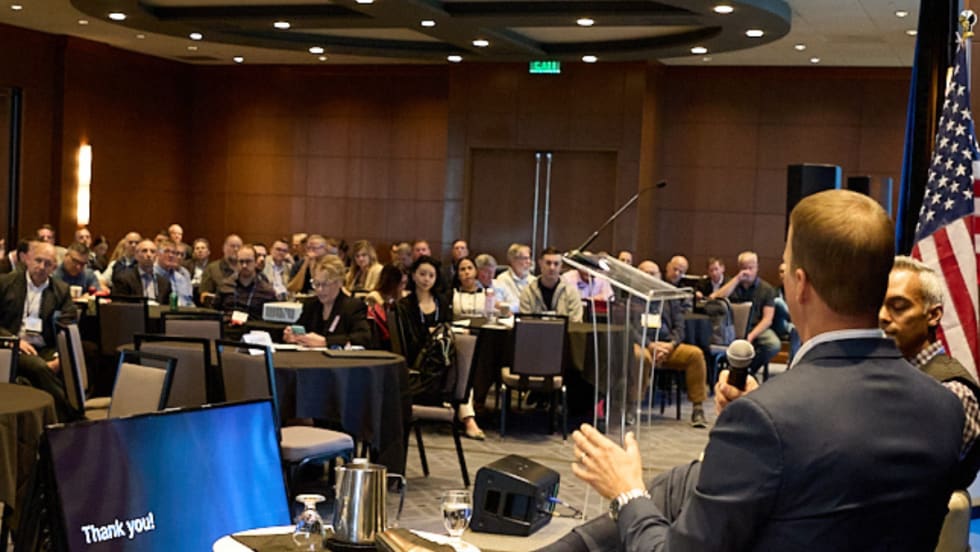
NETS Sets 2026 Fleet Safety Benchmark Conference for Indianapolis
The Sept. 15–17 program will feature fleet benchmarking data, case studies, emerging technologies, and implementation strategies while running alongside the NSC Safety Congress & Expo.
Read More →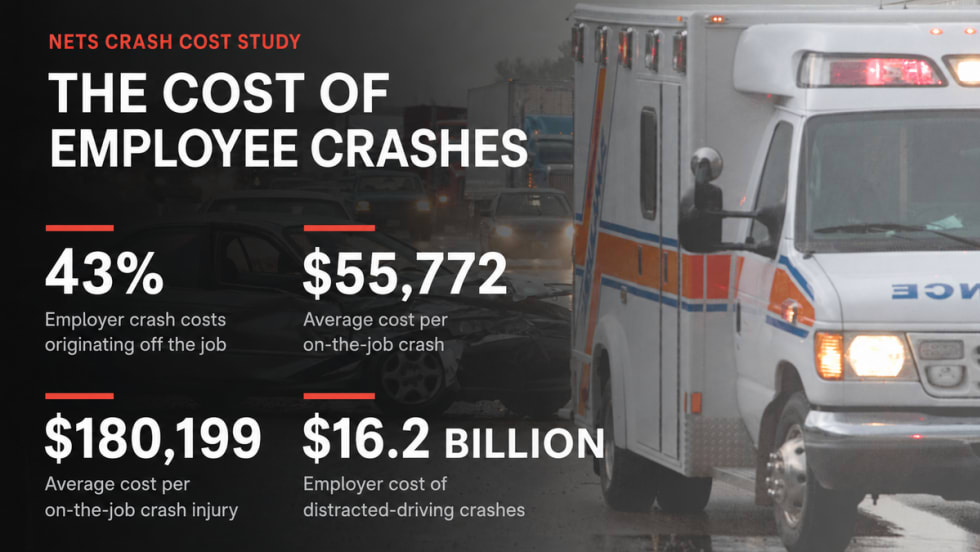
Off-the-Job Crashes Account for 43% of Employers’ $61.7 Billion Crash Burden
NETS quantifies costs dispersed across fleet, risk, HR, and other departments while providing new per-crash benchmarks for employers.
Read More →
Ram Recalls More Than 1.27 Million 1500 Pickups for Seat Belt Anchor Issue
The recall affects certain 2019-2026 Ram 1500 pickups that may have improperly attached second-row seat belt buckle anchors.
Read More →
How Better Visibility Cut Speeding Violations by 48%
Fleet leaders don't need more data, they need clearer visibility into what the data is saying. This case study explores how one utility replaced speeding-event counts with a single metric — miles driven in violation — to strengthen safety and significantly reduce speeding violations.
Read More →
Operation Safe Driver Week: Why the Industry's Oldest Safety Campaign Still Matters to Fleets
A look at how a 2007 enforcement initiative became one of the most consequential weeks on the fleet safety calendar, and what it means for your drivers in 2026.
Read More →