




UPS Sustainability Report Details Fuel Use Reduction of 1.3 Million Gallons in 2012
UPS detailed the technologies and methods it employed to reduce fuel use and emissions, in many cases by helping its drivers avoid traveling unnecessary miles and idling.
UPS released its latest sustainability report, which details the progress the company made that year toward making its overall operations more environmentally friendly and offers specifics on how it is managing its fleet to meet its larger goals.
One of the key performance indicators (KPIs) the company measures is total miles driven, and in 2012, UPS avoided driving more than 12.1 million miles, compared to 2011, in its U.S. Domestic Package segment. This also reduced CO2 emissions by 13,000 metric tonnes. The company was able to achieve this via a number of methods.
To start, the company used its own telematics platform to optimize routes, which helped reduce idling time at stoplights and helped drivers avoid traffic and to reach destinations in less time. Next, the company re-routed vehicles as-needed based on changing customer pick-up requests, requested changes in delivery, etc. Also, the company identified loading and unloading locations that allow for multiple deliveries.
In terms of measuring miles avoided by using telematics, UPS tracks the number of stops its delivery drivers made per mile traveled during a given year. In 2012, the company said it improved the number of stops per mile to 1.456 from 1.437 in 2011, which translates into the 12.1 million miles the company's drivers avoided driving. Although UPS said its total number of stops increased 2.3 percent in 2012, the number of miles its drivers traveled only increased 1.3 percent.
UPS' telematics platform provides the company’s drivers with feedback on their fuel-efficiency performance and tells them methods for improving it. For example, in dealing with idling, UPS said telematics helped its drivers reduce the average time spent idling per driver per day to 48 minutes in 2012, which was down from the average of 122 minutes spent idling in 2011. UPS said this equates to 250,000 gallons of fuel savings and emissions reductions of 2,600 metric tonnes.
The company also uses telematics to collect vehicle data that allowed it to replace parts and perform service closer to when needed. In 2012, the company said it completed 96 percent of its targeted telematics rollout for its U.S. Domestic Package segment, which includes more than 74,800 vehicles.
Beyond optimizing its ground fleet’s operations, UPS operates a number of alternative-fuel vehicles, and at the end of 2012, the company had 2,688 of the on the road in 10 countries. The company drove these vehicles 49 million more miles in 2012, which was approximately 43 percent more compared to 2011.
When measuring its sustainability progress, one method the company uses is the metric of ground packages per gallon of fuel to track the carbon intensity of its ground transportation fleet in its U.S. Domestic Package service. The company said in 2012, it increased the number of ground packages per gallon of fuel used for the fourth year in a row to 8.85. UPS added that although its package volume rose 2.7 percent for this business segment in 2012, its fuel consumption only rose 0.3 percent.
More Fuel
Fuel Prices Surge in September | September Fuel Update
September brought major fuel price swings, including diesel crossing $6 a gallon. Here’s how gas and diesel prices changed throughout the month, and where they stood heading into October.
Read More →
Turning Fleet Payment Data into Executive Insights
Ramel Lindsay of U.S. Bank Voyager discusses how fleets can transform payment and transaction data into actionable intelligence to reduce costs, improve oversight, and support executive decision-making.
Read More →
Why the IRS Raised Its Mileage Rate in the Middle of 2026
Fuel-price volatility drove the rare increase to 76 cents per mile, the fifth midyear adjustment since 2000.
Read More →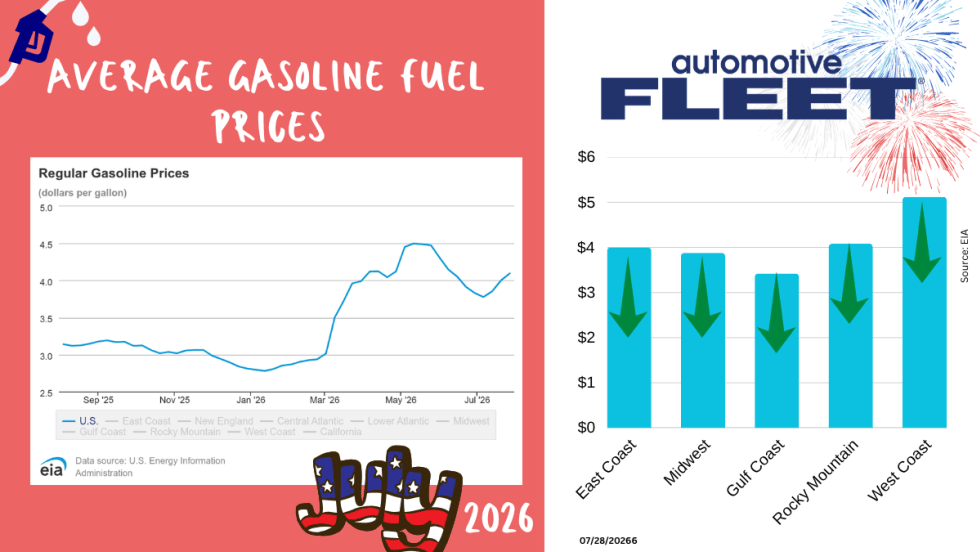
July Fuel Update: Prices Keep Rising in Light of More Conflict
Gas prices continue to rise as more and more conflicts do, too.
Read More →
Bob Adamsky on Fuel Volatility: "Don't Panic, Have a Plan."
When it comes to up and down fuel prices, Adamsky has a message for fleets: “Don’t panic.”
Read More →
How Fleets Can Gain Control of Non-Fuel Spend
Fuel often gets the spotlight, but non-fuel expenses can have a major impact on fleet costs. Ramel Lindsay of U.S. Bank Voyager discusses how fleets can gain better visibility and control over these often-overlooked expenditures.
Read More →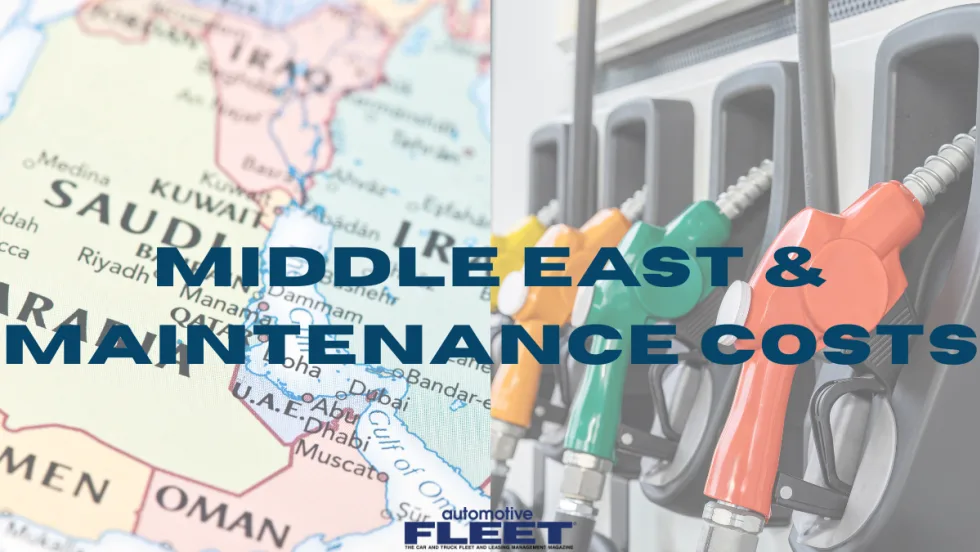
Fuel is Just the Start: How Middle East Tensions are Driving Up Fleet Maintenance Costs
The Middle East conflict is doing more than pushing up fuel prices. It’s also raising the cost of key maintenance products your fleet depends on, from motor oil to tires to windshield wipers. Here’s what you need to know about this budget-busting situation.
Read More →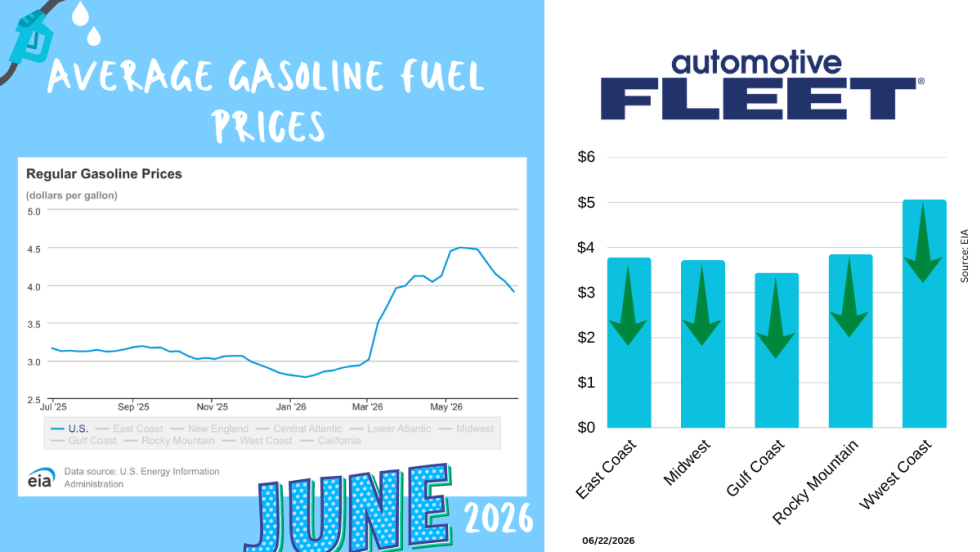
June Fuel Update: Prices Fall Below $4
Drivers are finally getting some relief at the pump. The national average gas price has dropped below $4 a gallon for the first time in months, with prices falling in 47 states as oil markets react to developments in U.S.-Iran negotiations.
Read More →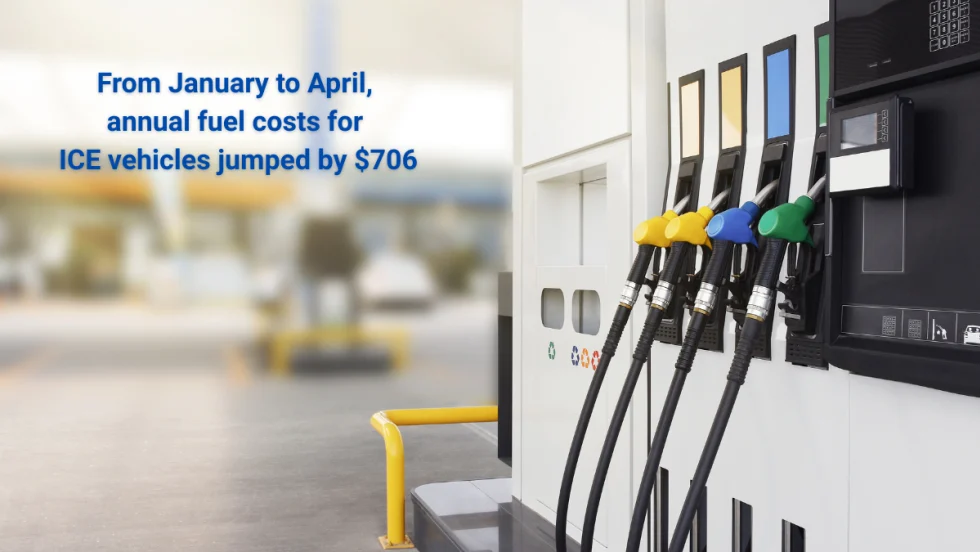
Study: How 2026's Gas Price Hikes Affect Different Vehicle Types
New data from iSeeCars reveals how rising fuel costs have affected different vehicle segments as gasoline prices climbed nearly 46% over the past four months.
Read More →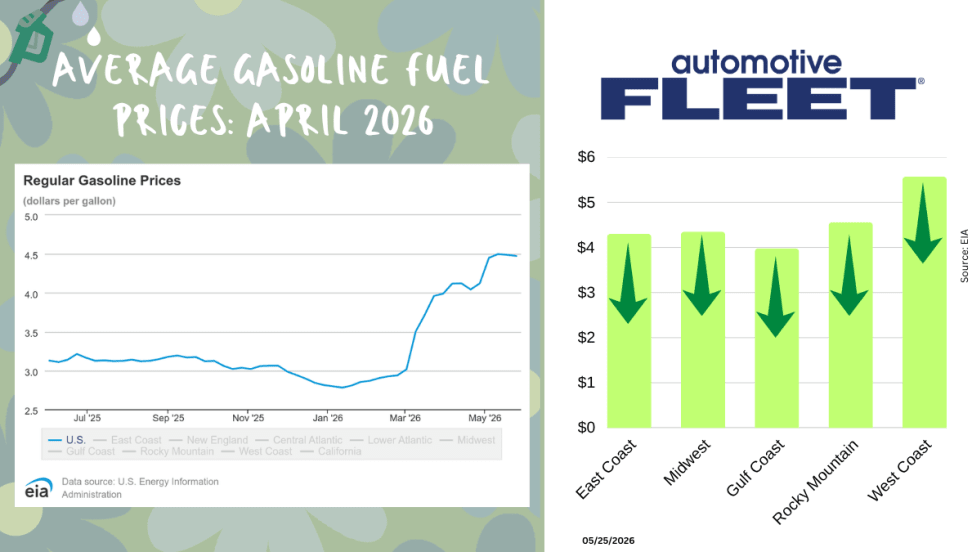
May Fuel Update: All Regions Experience Declines
Gas prices are finally easing in much of the country, but experts warn global tensions could quickly reverse the trend as the national average remains well above last month’s levels.
Read More →