




UPS Honors 1,283 Additional Drivers for Accident-Free Records
A total of 6,486 UPS drivers are now part of the company’s "Circle of Honor," which acknowledges 25 years or more of accident-free driving.
UPS announced the induction of 1,283 drivers into its elite "Circle of Honor," raising to 6,486 the number of drivers who have steered clear of accidents for 25 years or more.
The number of new inductees is the largest for any single year in the company's history and includes 41 new members from Canada, Germany and Puerto Rico. Collectively, the 6,486 drivers have logged more than 5.3 billion miles and more than 178,663 years of safe driving through their careers. That's enough miles to circle the earth 212,000 times.
"Keeping our highways and roads safe for travelers is our highest priority," said U.S. Transportation Secretary Ray LaHood. "I commend UPS and these outstanding drivers for helping create safer roads for us all and achieving the milestone of 25 or more crash-free years of driving."
Of the Circle of Honor members, 364 have been accident-free for 35 or more years, with 40 of those having driven more than 40 years without an accident.
UPS's top safe driver in 2012 is Great Lakes District package car driver Tom Camp, who has driven 50 years and delivered 5 million packages without an accident. "I'm extremely honored," said Camp. "UPS's safety training really pays off, both personally and in my professional life."
This year, 36 new inductees are females and 18 women have joined the ranks of those with more than 30 years of safe driving. This latter group is led by Orlando tractor-trailer driver Ginny Odom, who is credited with 38 years and more than 3 million miles without an accident. There are a total of 132 women in the Circle of Honor.
UPS's 102,000 drivers worldwide are among the safest on the roads, logging nearly 3 billion miles per year with less than one accident per million miles driven. All UPS drivers are taught safe driving methods beginning on the first day of classroom training through the company's defensive driving platform. The training continues throughout their careers.
In 2010, UPS implemented a ban within its organization on text and e-mail messaging while behind the wheel, distractions that are a proven cause of traffic crashes.
"Our training and our drivers' attention to details, such as avoiding distractions while driving, all play a part in their remarkable record," noted John McDevitt, UPS senior vice president of human resources and labor relations. "The annual expansion of the Circle of Honor is proof that our training works."
UPS extends its safe driving expertise to the communities it serves through UPS Road Code, a teen safe driving program available in the United States and now expanding globally. Taught by UPS volunteers, the program is available to teens between the ages of 13 and 18. More than 10,000 teenagers have participated to date.
The program has expanded to the U.K., Canada and Germany. Further international expansion is planned, starting with Shanghai in July. The four-session training effort is based on UPS's safe driving methods. UPS Road Code is offered in the U.S. in conjunction with Boys & Girls Clubs of America, thanks to $6.1 million in funding from UPS Foundation contributions.
More Safety

Nexar-Nauto Merger Aims to Give Fleets Better Safety Intelligence Through Larger Driving Dataset
Stefan Heck tells Automotive Fleet that combining more than 10 billion miles of driving history with Nexar's AI models will give fleets deeper insights into driver risk and roadway conditions than either company could provide independently.
Read More →
Don't Wait for a Crisis: 5 Ways to Build Mental Health Into Your Fleet Safety Program
For Suicide Prevention Month, fleet and safety leaders have an opportunity to put mental health where it belongs: at the center of workplace safety.
Read More →
How Camera Data Can Strengthen a Fleet’s Insurance Renewal
Insights from a commercial insurance carrier and a broker show how fleets can turn video telematic data, driver coaching, and improved claims results into a stronger case at insurance renewal.
Read More →
The Safest Fleets Aren’t the Ones with the Most Technology
You’ve made the telematics investment. Here’s how to capture the other half of its value and build the safest fleet on the road.
Read More →
Hidden in Plain Sight: Fleet Compliance Risks
Fleet compliance isn't just about having policies — it's about consistently enforcing them. This practical guide reveals six hidden compliance risks common in public sector and shared fleet operations and outlines proven strategies to improve visibility, accountability, and audit readiness
Read More →
NETS Sets 2026 Fleet Safety Benchmark Conference for Indianapolis
The Sept. 15–17 program will feature fleet benchmarking data, case studies, emerging technologies, and implementation strategies while running alongside the NSC Safety Congress & Expo.
Read More →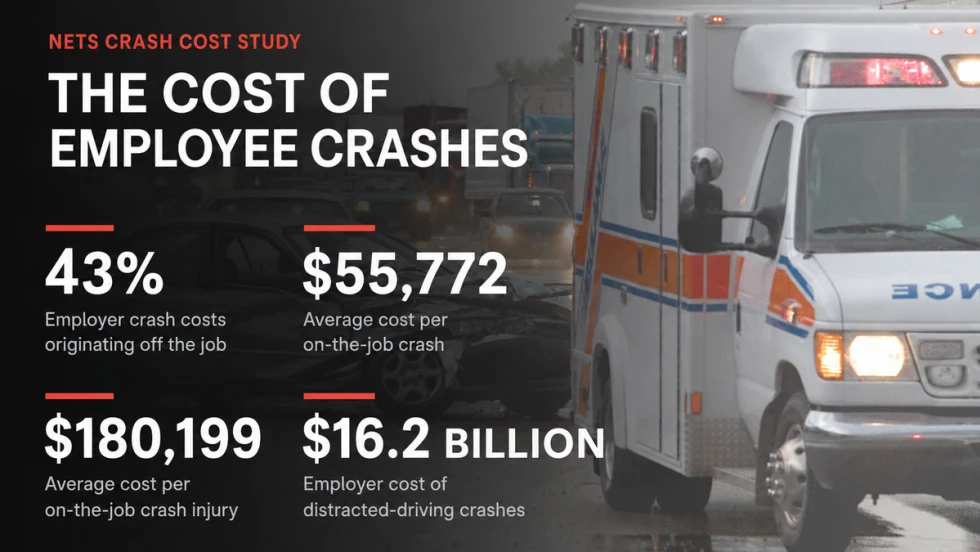
Off-the-Job Crashes Account for 43% of Employers’ $61.7 Billion Crash Burden
NETS quantifies costs dispersed across fleet, risk, HR, and other departments while providing new per-crash benchmarks for employers.
Read More →
Ram Recalls More Than 1.27 Million 1500 Pickups for Seat Belt Anchor Issue
The recall affects certain 2019-2026 Ram 1500 pickups that may have improperly attached second-row seat belt buckle anchors.
Read More →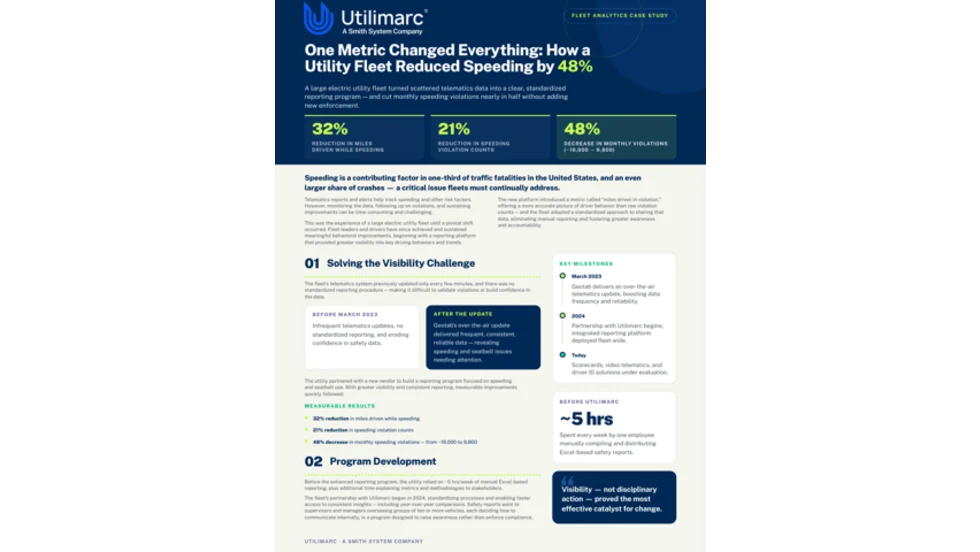
How Better Visibility Cut Speeding Violations by 48%
Fleet leaders don't need more data, they need clearer visibility into what the data is saying. This case study explores how one utility replaced speeding-event counts with a single metric — miles driven in violation — to strengthen safety and significantly reduce speeding violations.
Read More →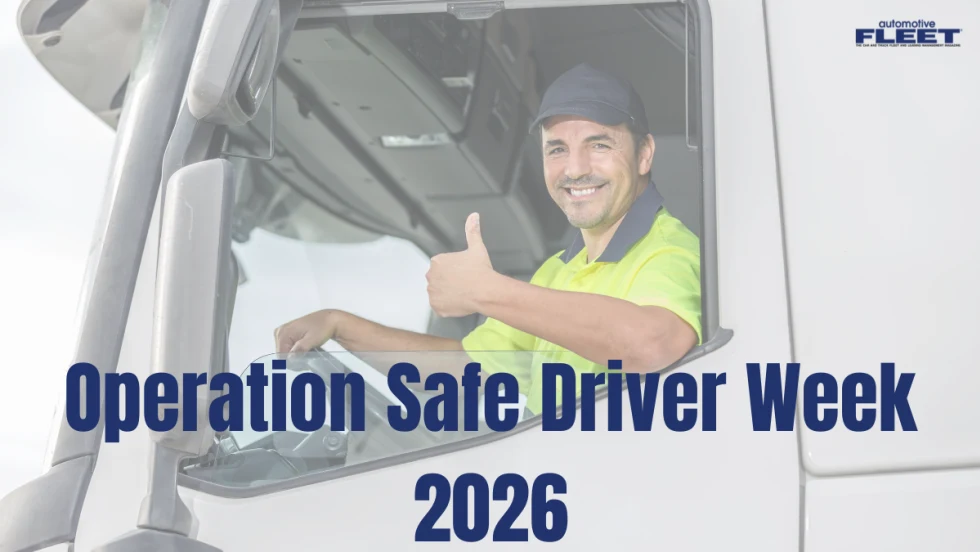
Operation Safe Driver Week: Why the Industry's Oldest Safety Campaign Still Matters to Fleets
A look at how a 2007 enforcement initiative became one of the most consequential weeks on the fleet safety calendar, and what it means for your drivers in 2026.
Read More →