




UPS Deploys 200 Hybrid Electric Vehicles
Latest HEV expansion broadens UPS green fleet to major cities in the United States.
UPS announced Tuesday that its fleet of alternative-fuel vehicles had expanded with the deployment of 200 hybrid-electric delivery trucks in eight U.S. cities.
The 200 new hybrid electric vehicles (HEV) join roughly 20,000 low-emission and alternative-fuel vehicles already in use and have been deployed in Austin, Houston, Philadelphia, Chicago, Washington, D.C., Long Island, Minneapolis and Louisville. Before this latest deployment, UPS operated 50 hybrid electrics in Atlanta, Dallas, Houston and Phoenix.
"We're proud of this large HEV deployment to major cities in the United States," said Bob Stoffel, UPS senior vice president of supply chain, strategy, engineering and sustainability. "This technology, where properly used, can yield a 35 percent fuel savings, the equivalent of 100 conventional UPS delivery vehicles."
The 200 new HEV delivery trucks are expected to reduce fuel consumption by roughly 176,000 gallons over the course of a year compared to an equivalent number of traditional diesel trucks. The hybrids also should reduce by 1,786 metric tons the amount of CO2 gases released annually into the atmosphere.
The new hybrid power system utilizes a conventional diesel engine combined with a battery pack, saving fuel and reducing pollution-causing emissions. The small diesel is used to recharge the battery pack and to add power when necessary.
The HEVs also use regenerative braking. The energy generated from applying the brakes is captured and returned to the battery as electricity. The combination of clean diesel power and electric power, supplemented by regenerative braking, allows dramatic improvements in fuel savings and emissions reductions.
The HEV fleet features two different size vehicles from Workhorse Custom Chassis and Freightliner Custom Chassis Corporation and a hybrid power system from Eaton Corporation. The external truck bodies are identical to UPS's other signature brown trucks, although they feature additional labeling identifying them as hybrid electrics. The trucks use lithium ion batteries, which offer a faster re-charging capability and last longer than previous generation HEV batteries. Additionally, these vehicles are much quieter than conventional UPS trucks and feature keyless entry.
The UPS alternative fuel fleet is a diverse one with multiple technologies, including compressed natural gas, liquefied natural gas, propane, electricity and hydraulic hybrid technology. Since 2000, the alternative fuel fleet has traveled more than 165 million miles.
"The wide variety of technologies in our green fleet is indicative of UPS's 'rolling laboratory' philosophy to energy efficiency and reduced fuel consumption," Stoffel said. "Our goal is to reduce dependence on fossil fuels, but there is no silver bullet technology to achieve this. This dependence will rely on a multi-modal approach."
More Green Fleet
The EV Breakdown Nobody's Talking About: Why Most Electric Vehicle Roadside Calls Aren't Mechanical Failures
Here's why EV breakdowns are widely misunderstood.
Read More →
ChargePoint Now Available in Energy Pass
ChargePoint and additional planned charging network integrations were added to GM's Energy Pass.
Read More →

First Look: Slate Auto's Electric Fleet Pickup
Could an affordable, modular EV pickup make electrification more practical for fleets?
Read More →
Slate Debuts Colorful, Unique EV Models
A recent media and client event, studded with electric vehicles dressed up on platforms, planted a new position for the manufacturer in the wider EV market. Fleets will find cost-saving advantages.
Read More →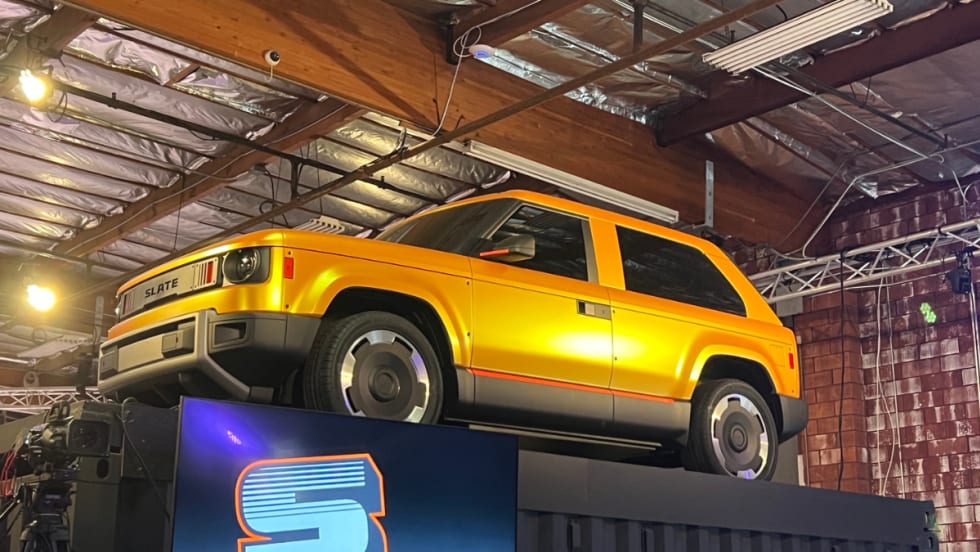
Slate Electric SUV, Pickup Switchable Model Aims For Light-Duty Fleets
Everything about this EV is counterintuitive and understated, making it stand out from the crowd.
Read More →
Inspiration Mobility Acquires Key Electrada Assets
Inspiration Mobility Group has acquired select assets of Electrada, adding the fleet electrification provider's team, technology, and charging infrastructure development capabilities to its energy management business.
Read More →
Turning Connected Vehicle Data Into Decisions That Matter
Fleet leaders have more data than ever, but turning that data into clear, actionable decisions remains a challenge. This white paper shows how leading organizations are using connected vehicle data to improve safety, reduce costs, and optimize fleet performance. Learn how to turn insight into action across your fleet.
Read More →
Are You Tracking Your Fleet's True Total Cost of Ownership?
Bobit Business Media surveyed 190 fleet professionals and found that while most fleets are tracking costs, fragmented systems and data gaps are keeping true TCO visibility out of reach. With rising pressure to control spend in an increasingly volatile environment, the gap between what fleets think they know and what the data actually shows is wider than you might expect. See how your peers are managing costs today and where the industry still has room to improve.
Read More →
Hybrids: Electrification Without the Challenges
For fleet managers, fuel is one of the biggest line items in the budget — and it's one hybrids can shrink without changing how your people work. Download the eBook to see the numbers, understand the technology, and get a step-by-step guide to making the switch.
Read More →