





Further Reading: Global Fleet Advisory Board Spotlights Europe
UK Government Unveils £20m Boost For EV Chargepoints
The government says the scheme will help those electric car and van drivers that do not have a private driveway or workplace charging to more easily access a chargepoint.
August 24, 2022
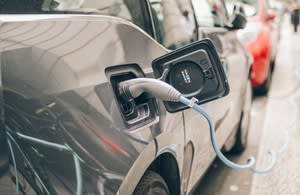
In addition to the LEVI fund, the government said that its On-Street Residential Chargepoint Scheme (ORCS) had delivered 2,900 chargepoints with funding provided for a further 10,000 chargepoints.
Photo: gov.uk
2 min to read
More than 1,000 new electric vehicle chargepoints will be installed across nine local authorities in the UK to provide improved access to electric vehicle charging infrastructure.
It’s part of a new pilot backed by £20 million of government and industry funding which is delivered through the Local EV Infrastructure (LEVI) pilot scheme.
The scheme sees local authorities and industry collaborating to create new, commercial EV charging infrastructure for drivers. These range from faster on-street chargepoints to larger gas station-style charging hubs.
The government says the scheme will help those electric car and van drivers that do not have a private driveway or workplace charging to more easily access a chargepoint.
Meryem Brassington, electrification propositions lead at the UK’s largest leasing provider, Lex Autolease, commented: “If the UK is to lead the way in electrification, then expanding the network of chargepoints is mission critical. Electric vehicle adoption levels are dominating the new car market and for this momentum to continue, drivers need access to widely available charging stations. This is particularly important for motorists without driveways to ensure that they don’t get left behind on the switch to electric.”
The announcement made today (August 24, 2022) comes as lack of infrastructure is still considered a drawback to greater fleet adoption of EVs.
According to Arval’s Mobility Observatory research, companies that had not electrified their fleets pointed to lack of public charging points (50%), no charging solution at an employee’s office (40%), while 35% said there was no charging available at an employee’s home.
Shaun Sadlier, head of Arval Mobility Observatory in the UK, commented:
“Among fleets that are not yet considering the adoption of electric vehicles, there is one predominant concern and that relates to the perceived limitations in the charging facilities currently available. Three of the top four factors mentioned in response to this question all relate to this issue and were reported as a constraint to electrification.”
The funding unveiled today is part of a scheme totaling £450 million. Decarbonisation Minister Trudy Harrison added: “We want to expand and grow our world-leading network of EV chargepoints, working closely with industry and local government, making it even easier for those without driveways to charge their electric vehicles and support the switch to cleaner travel. This scheme will help to level up electric vehicle infrastructure across the country.”
The winners of the pilot fund are:
Barnet
Dorset
Durham
Kent
Midlands Connect (with Lincolnshire as a lead authority)
North Yorkshire
Nottinghamshire
Suffolk
Warrington
In addition to the LEVI fund, the government said that its On-Street Residential Chargepoint Scheme (ORCS) had delivered 2,900 chargepoints with funding provided for a further 10,000 chargepoints.
More Global Fleet

GeoFencing Adds to Your Truck Security Arsenal
Geofencing is a familiar fleet tool today, but its early adoption marked a major shift in vehicle tracking, route monitoring, and the debate over employee privacy.
Read More →
Holman Takes Full Ownership of ARIZA in Mexico
Holman is bringing its Mexican fleet management operation fully under its own brand after more than 30 years as a joint venture. The change gives multinational fleet customers a single Holman operation across the U.S., Canada, and Mexico.
Read More →
5 Tire Maintenance Tips to Help Prevent Work Truck Downtime
Regular tire checks can do more than extend tread life. These five maintenance practices can help work truck fleets catch problems early, reduce costs, and prevent downtime.
Read More →

Proven Ways to Reduce Work Truck Downtime
The age-old problem of downtime will always be a reality, but with new strategies at hand, fleets have more ways to keep trucks on the road longer.
Read More →


Cameras, Safety and Insurance: From Reactive Claims to Real-Time Prevention (Part 2 of 2)
Part Two: Commercial auto remains one of the most challenging and costly lines of coverage for fleet operators and insurers alike. Continue learning more about how to effectively address these issues from Onur Aksan, Enterprise Business Development Executive, Geotab
Read More →
Cameras, Safety and Insurance: From Reactive Claims to Real-time Prevention
Commercial auto remains one of the most challenging and costly lines of coverage for fleet operators and insurers alike. Learn more about how to effectively address these issues from Onur Aksan, Enterprise Business Development Executive, Geotab.
Read More →
Fleet Costs Are Rising: Here’s How Leaders Are Responding
Fleet leaders are under pressure to reduce costs, adapt to economic uncertainty, and make smarter decisions. See how peers across North America are responding with real data, proven strategies, and forward-looking insights. Download the 2026 Market Pulse Report to benchmark your strategy and uncover where you can gain an edge.
Read More →
Enterprise Fleet Management Surpasses 900,000 Vehicles in U.S. & Canada
Enterprise Mobility connects with mobility solutions around the globe
Read More →