UK Fleets Mostly Electric By 2025 Says Arval Survey - Unlike Europe
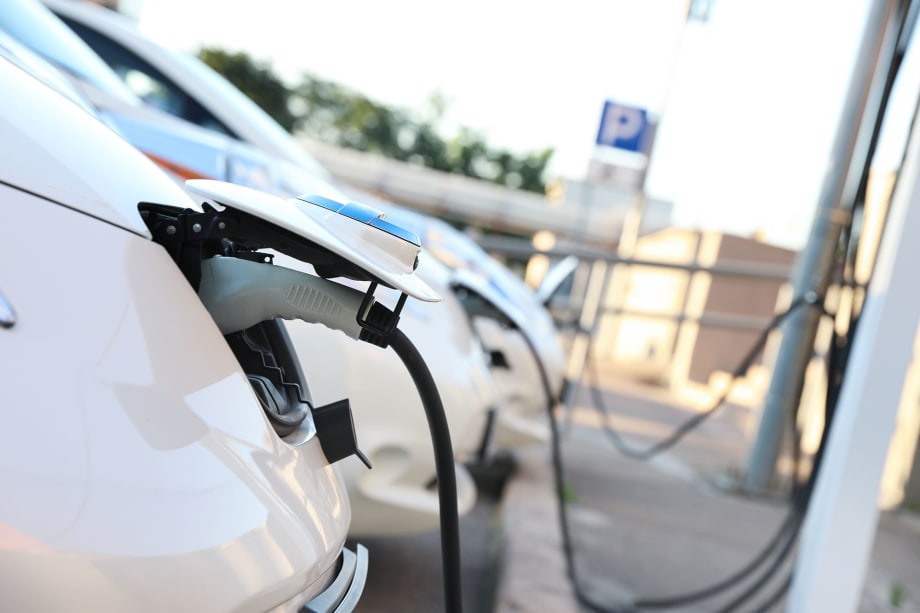
A report from leasing and mobility provider Arval says that over 70% of car fleets are expected to be electric and 50% of van fleets will have switched to electric by 2025, suggesting that UK fleets are well ahead of the UK’s 2030 ban on the sale of petrol and diesel vehicles.
In a little over three years, fleets in the UK will be running more electric vehicles than internal combustion engined (ICE) vehicles.
Ad Loading...
A report from leasing and mobility provider Arval, says that over 70% of car fleets are expected to be electric and 50% of van fleets will have switched to electric by 2025.
Ad Loading...
The research from the latest Arval Mobility Observatory Barometer suggests UK fleets are well ahead of the UK’s 2030 ban on the sale of petrol and diesel vehicles.
In Europe, EV readiness appears to be lagging behind.
Only 48% of car fleets expect to be electrified while 36% of commercial van fleets expect to be running eLCVs by 2025.
However, the decarbonization route had been less clear for fleets operating in Europe, which is possibly why European fleets are further behind than their UK counterparts.
The regulatory framework has only recently been ratified by the EU Parliament (on 29 June). Under the ‘fit for 55’ banner, there is a requirement to meet a 55% reduction of car CO2 emissions and 50% van emissions by 2030 compared with 2021. This supersedes the previous car proposal which had been a 50% reduction by 2030.
Ad Loading...
By 2035 the EU wants vehicles to be emission free, in line with the UK's stated aim.
Shaun Sadlier, head of Arval Mobility Observatory in the UK, said:
“Looking three years ahead, the research shows that fleet operators expect electrified vehicles to dominate their fleets.
“The numbers show the anticipated rapidity of the decline of 100% petrol and diesel powered vehicles. This view is remarkably consistent across companies of all sizes according to our data – from those with fewer than 10 employees to those with more than 1,000 – and there is an absolute expectation that electrification will happen at speed and across all vehicle types.”
Some Fleets Are Consider Keeping Diesel Vans "Indefinitely"
However, not all fleets see electrification as the immediate solution to their operational requirements.
Ad Loading...
Fleetcheck, a fleet management and software specialist, says that some of its customers cannot envisage moving to eLCVs.
According to managing director, Peter Golding, “Some of my customers believe there are some jobs for which electric vans are unlikely to ever make sense – for example, where very long range is needed, where there is a lack of charging facilities in remote areas, or where there is a need to keep moving during power cuts. They believe that this leaves them no choice other than to operate diesel vans until the technology changes.”
Golding said this raised operational issues about condition and fit for purpose.
Golding added:
“It’s no exaggeration to suggest that, by the turn of the decade, some fleets may already be operating a number of diesel vans that have been in service for nearly a decade with no plans to take them out of service.
Ad Loading...
“We believe that the ideal solution would be for the UK government to introduce an effective road hydrogen strategy, giving these fleets a more flexible, zero emissions alternative to diesel in the long term but there is simply no sign of this happening. In our view, this is a mistake.”
While the UK Government updated its hydrogen strategy in July 2022, transport use of the fuel is focused predominantly for HGVs and in shipping.
Photo: Vauxhall
Stellantis Brand Vauxhall Plans Hydrogen Vivaro in 2023
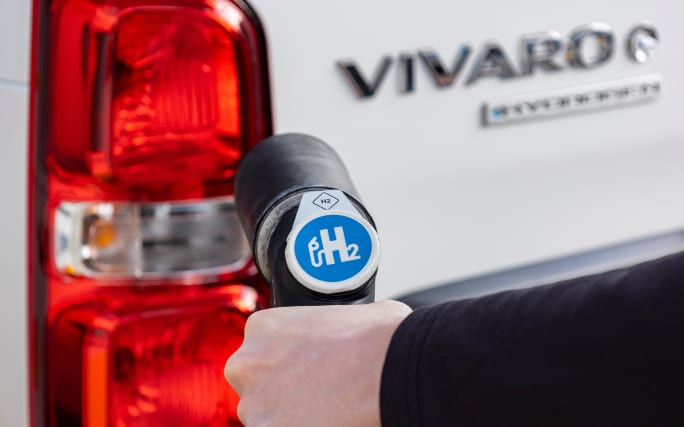
Nevertheless, Stellantis brand vauxhall is pushing ahead with plans to introduce a hydrogen fueled version of its Vivaro-e panel van next year, with a range of up to 249 miles, and refueling in just three minutes .
In Europe, Miele is testing an Opel version, while trials of the Peugeot e-Expert hydrogen van are being undertaken in Germany. So while hydrogen remains a minority choice, there remains an opportunity for fleets to choose a zero emission alternative, provided the refueling infrastructure is adequate and there are sufficient vehicles available.
Nevertheless, Arval’s Sadler remains aware of the challenges commercial vehicle fleets face with electrification. Headded:
Ad Loading...
“These findings are forecasts rather than fact and may be over optimistic in the case of vans, where there are issues around supply and model choice, as well as cost and operational challenges. Bearing in mind this situation, the speed of change may in fact take longer than the next three years.”
Geofencing is a familiar fleet tool today, but its early adoption marked a major shift in vehicle tracking, route monitoring, and the debate over employee privacy.
Holman is bringing its Mexican fleet management operation fully under its own brand after more than 30 years as a joint venture. The change gives multinational fleet customers a single Holman operation across the U.S., Canada, and Mexico.
Regular tire checks can do more than extend tread life. These five maintenance practices can help work truck fleets catch problems early, reduce costs, and prevent downtime.
Part Two: Commercial auto remains one of the most challenging and costly lines of coverage for fleet operators and insurers alike. Continue learning more about how to effectively address these issues from Onur Aksan, Enterprise Business Development Executive, Geotab
Commercial auto remains one of the most challenging and costly lines of coverage for fleet operators and insurers alike. Learn more about how to effectively address these issues from Onur Aksan, Enterprise Business Development Executive, Geotab.
Fleet leaders are under pressure to reduce costs, adapt to economic uncertainty, and make smarter decisions. See how peers across North America are responding with real data, proven strategies, and forward-looking insights. Download the 2026 Market Pulse Report to benchmark your strategy and uncover where you can gain an edge.