




Two, Three-Wheelers and Buses at Forefront of India’s Electrification Strategy
Vehicle electrification has become a strategic priority for the stakeholders of the automotive market in India.
Credit: Wikipedia
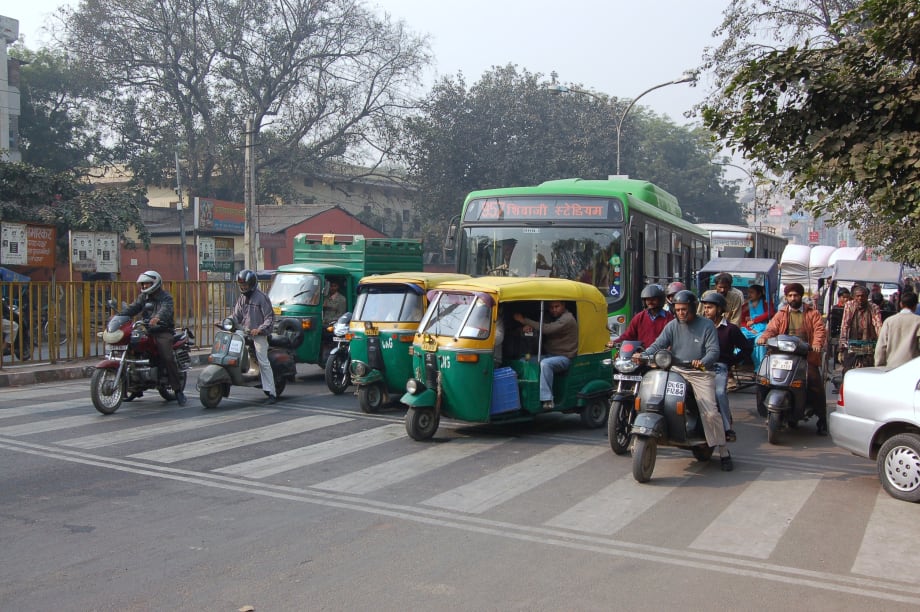
Vehicle electrification has become a strategic priority for the stakeholders of the automotive market in India. Therefore, everybody is undergoing the essential ‘upskilling’ phase to be future-ready for electric vehicles (EV). To give an impetus to this idea, India plans to prioritize the electrification of the two-wheelers, three-wheelers and buses, says GlobalData, a leading data and analytics company.
For the past few years, automakers, government (central and the state governments) and component manufacturers are amending/building new policy frameworks that favor EVs and help the market’s transition towards the cleaner technology from traditional ICE.
Bakar Sadik Agwan, senior automotive analyst at GlobalData, comments: “Two-wheelers, three-wheelers and buses are clearly the ‘key beneficiaries’ of the government schemes with the passenger EVs being on the ‘backburner’ presently.
“However, the high modal share of the three completely justifies the reason and these segments can help to achieve 30% new vehicle electrification target by 2030. Passenger electric cars, being a ‘big ticket’ purchase, faces a challenge to gain volume for personal mobility in the price-sensitive Indian market. Furthermore, they also face headwinds from factors such as range anxiety, lack of charging infrastructure and alternative fuel vehicles (CNG).”
Despite the passenger EVs market being small in terms of volume, it holds high growth potential. Most automakers are optimistic about the future of electric cars in India. Both domestic and foreign automakers are in the EV race. However, only a few have product offerings for the market while others still have their products under development or have plans to import their EVs – which is taking time.
Agwan concludes: “EVs are still in the early-stage in India. While affordable EVs are picking up pace, things are tough for luxury automakers due to high import duties, which restrain them from importing vehicles as CBUs to sense check the market trends and customer buying behavior. Automakers including Tesla and Mercedes-Benz have been expressing their concerns over taxes among the highest in the world that make their vehicles up to twice as expensive, and unaffordable in India, when compared to some developed markets such as the U.S. and Europe.
“Establishing assembly/production for a small volume segment will not make business sense for these luxury automakers. Limited imports could help to gauge the market and eventually plan their future strategies. The electrification race in India is not a short sprint but a marathon that requires careful planning and execution.”
More Global Fleet
GeoFencing Adds to Your Truck Security Arsenal
Geofencing is a familiar fleet tool today, but its early adoption marked a major shift in vehicle tracking, route monitoring, and the debate over employee privacy.
Read More →
Holman Takes Full Ownership of ARIZA in Mexico
Holman is bringing its Mexican fleet management operation fully under its own brand after more than 30 years as a joint venture. The change gives multinational fleet customers a single Holman operation across the U.S., Canada, and Mexico.
Read More →
5 Tire Maintenance Tips to Help Prevent Work Truck Downtime
Regular tire checks can do more than extend tread life. These five maintenance practices can help work truck fleets catch problems early, reduce costs, and prevent downtime.
Read More →

Proven Ways to Reduce Work Truck Downtime
The age-old problem of downtime will always be a reality, but with new strategies at hand, fleets have more ways to keep trucks on the road longer.
Read More →


Cameras, Safety and Insurance: From Reactive Claims to Real-Time Prevention (Part 2 of 2)
Part Two: Commercial auto remains one of the most challenging and costly lines of coverage for fleet operators and insurers alike. Continue learning more about how to effectively address these issues from Onur Aksan, Enterprise Business Development Executive, Geotab
Read More →
Cameras, Safety and Insurance: From Reactive Claims to Real-time Prevention
Commercial auto remains one of the most challenging and costly lines of coverage for fleet operators and insurers alike. Learn more about how to effectively address these issues from Onur Aksan, Enterprise Business Development Executive, Geotab.
Read More →
Fleet Costs Are Rising: Here’s How Leaders Are Responding
Fleet leaders are under pressure to reduce costs, adapt to economic uncertainty, and make smarter decisions. See how peers across North America are responding with real data, proven strategies, and forward-looking insights. Download the 2026 Market Pulse Report to benchmark your strategy and uncover where you can gain an edge.
Read More →
Enterprise Fleet Management Surpasses 900,000 Vehicles in U.S. & Canada
Enterprise Mobility connects with mobility solutions around the globe
Read More →