




TRW's Cognitive Safety Technologies Help Automakers Meet CAFE and NHTSA Requirements
LIVONIA, MI – TRW is combining advanced 'cognitive' technologies to help make vehicles safer, more fuel efficient, and environmentally friendly.
LIVONIA, MI – To support automakers in their pursuit of manufacturing vehicles that meet rising Corporate Average Fuel Economy (CAFE) standards and new National Highway Traffic Safety Administration (NHTSA) crash-test ratings, TRW Automotive Holdings Corp. is combining advanced 'cognitive' technologies from its portfolio to help make vehicles safer, more fuel efficient, and environmentally friendly.
TRW's safety systems combine active and passive safety technologies with electronic and sensing capabilities, such as a video camera technology integrated with electric power steering to provide guidance and haptic lane feedback to help keep drivers in their lane. It is these "smart" technologies that TRW describes as "cognitive safety systems." The integration of these intelligent technologies helps mitigate the impact of accidents and provide tangible safety benefits to drivers and passengers, while also helping automakers differentiate their vehicles.
"TRW engineers work closely with our customers to develop cognitive safety technologies that facilitate fuel economy, reduce emissions, and meet safety regulations, such as NHTSA's proposed crash-test ratings," said Peter Lake, executive vice president of TRW. "We are committed to producing safety systems, such as our electronic stability control and lane departure warning systems, so that we are in line with vehicle manufacturers' needs and consumer demands. We aim to make vehicles smarter to help keep people safer."
To help automakers meet their CO2 emissions goals, TRW offers a range of fuel-saving and hybrid-enabling technologies, including electrically powered steering, slip control boost — a fully integrated electronic stability control and brake actuation system — and lightweight components. While they are not intended exclusively for hybrid vehicles, these technologies can facilitate the transition from gasoline and diesel to hybrid-electric vehicles and other powertrains.
To help consumers evaluate vehicle safety, NHTSA's upcoming ruling will combine front-crash, side-crash, and rollover ratings into a single rating of up to five stars. Under the new requirement, active safety technologies, such as electronic stability control, lane departure warning, and forward collision warning systems — systems that TRW manufactures — will be listed on vehicle stickers to inform consumers whether the technologies are available on the vehicle as standard or optional equipment.
"We are pleased that this mandate will not only help make consumers aware of these active safety features that help mitigate accidents, but will also allow us to continue our commitment to helping customers with the challenges they face in today's automotive industry," Lake said.
More Green Fleet

Merchants Fleet Reports 290M EV Miles as Fleets Navigate Changing Electrification Market
From millions in operating savings to hundreds of millions of EV miles, Merchants Fleet’s latest report reveals what’s working and what’s changing in fleet electrification.
Read More →
The EV Breakdown Nobody's Talking About: Why Most Electric Vehicle Roadside Calls Aren't Mechanical Failures
Here's why EV breakdowns are widely misunderstood.
Read More →
ChargePoint Now Available in Energy Pass
ChargePoint and additional planned charging network integrations were added to GM's Energy Pass.
Read More →
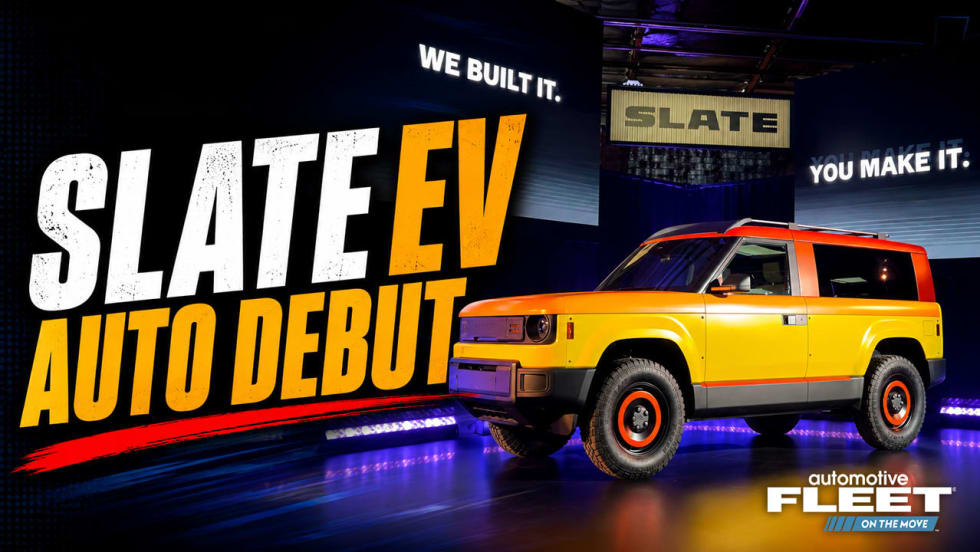
First Look: Slate Auto's Electric Fleet Pickup
Could an affordable, modular EV pickup make electrification more practical for fleets?
Read More →
Slate Debuts Colorful, Unique EV Models
A recent media and client event, studded with electric vehicles dressed up on platforms, planted a new position for the manufacturer in the wider EV market. Fleets will find cost-saving advantages.
Read More →
Slate Electric SUV, Pickup Switchable Model Aims For Light-Duty Fleets
Everything about this EV is counterintuitive and understated, making it stand out from the crowd.
Read More →
Inspiration Mobility Acquires Key Electrada Assets
Inspiration Mobility Group has acquired select assets of Electrada, adding the fleet electrification provider's team, technology, and charging infrastructure development capabilities to its energy management business.
Read More →
Turning Connected Vehicle Data Into Decisions That Matter
Fleet leaders have more data than ever, but turning that data into clear, actionable decisions remains a challenge. This white paper shows how leading organizations are using connected vehicle data to improve safety, reduce costs, and optimize fleet performance. Learn how to turn insight into action across your fleet.
Read More →
Are You Tracking Your Fleet's True Total Cost of Ownership?
Bobit Business Media surveyed 190 fleet professionals and found that while most fleets are tracking costs, fragmented systems and data gaps are keeping true TCO visibility out of reach. With rising pressure to control spend in an increasingly volatile environment, the gap between what fleets think they know and what the data actually shows is wider than you might expect. See how your peers are managing costs today and where the industry still has room to improve.
Read More →