




Trucks, SUVs Boost New-Vehicle Transaction Prices
Retail new-car prices have increased by $165 from November 2013, which is 1.7 percent higher than 2013 and the renewed interest in trucks and SUVs is a large factor, according to Kelley Blue Book.
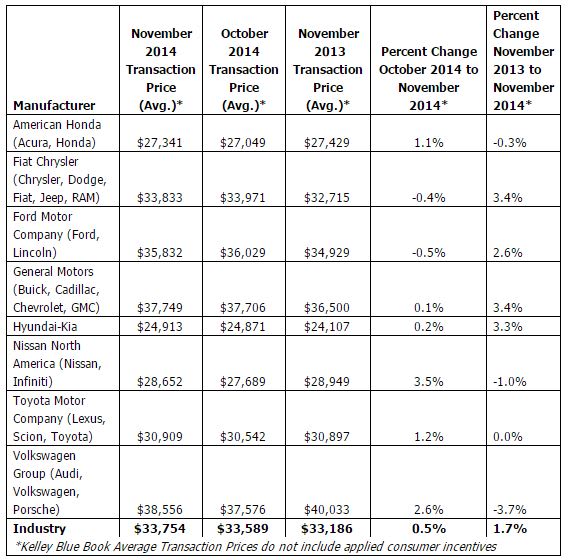
Photo courtesy of Kelley Blue Book.
Retail new-car prices have increased by $165 from November 2013, which is 1.7 percent higher than 2013, and the renewed interest in trucks and SUVs is a large factor, according to Kelley Blue Book.
The new-car transaction price only made a slight increase from last month to 0.5 percent. The vehicles included in this data range from class 1 through 5.
“Rising transaction prices are a reflection of stronger pricing in truck and utility segments,” said Alec Gutierrez, senior analyst for Kelley Blue Book. “Domestic automakers will be the main beneficiaries of this trend, as full-size pickup prices are up by an average of 4.3 percent, with the Big Three making up 94 percent of segment sales.”
Fiat Chrysler transaction pricing was up 3.4 percent on strong Jeep and RAM sales, as well as higher RAM prices. The RAM brand was up 4.7 percent, while the Chrysler 200 helped elevate the Chrysler brand with a 10.2 percent increase. Ford continued making gains with a higher mix of high-end trims of the outgoing F-Series generation. In addition, the refreshed Expedition increased 7.8 percent.
"General Motors also increased 3.4 percent on the Chevrolet and GMC lineup of SUVs and trucks," said Tim Fleming, analyst for Kelley Blue Book. "General Motors' redesigned utility vehicles, including the Chevrolet Suburban, Tahoe, GMC Yukon, Yukon XL and Cadillac Escalade, all reported double-digit transaction price growth compared to this time last year."
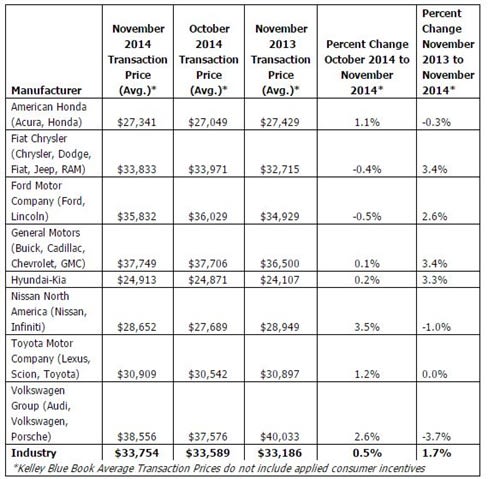
Photo courtesy of Kelley Blue Book.
More Operations

The Next Evolution of Fleet Management: Autonomous Operations
This opening keynote session at the Fleet Forward Conference highlights the future of autonomous driving for fleets.
Read More →
How to Reduce the Total Cost of Risk From Catalytic Converter Theft
A stolen catalytic converter can cost fleets far more in downtime and lost productivity than in repairs. A total-cost-of-risk approach can help fleet managers quantify their exposure and prioritize theft prevention.
Read More →
Personal-Use Charges Rise as Vehicle Values Fall | AF News Recap
Personal-use charges are climbing, wholesale used-vehicle values are declining, and commercial fleet sales growth is slowing. This week, we're breaking down the latest fleet data, plus how Element Fleet Management is helping Waymo prepare for its first Canadian robotaxi market.
Read More →

Here's When You Should Make an Exception to Fleet Policy
Fleet policies are designed to create consistency, but not every driver or situation fits neatly within standard rules.
Read More →
AI-Native or AI-Acquired: What Should Fleet Managers Look for in an AI Platform?
Six questions can help fleet managers look beyond AI marketing claims to evaluate integration, data access, and real-world operational performance.
Read More →
A buyer's guide to fleet management software in 2027
Buying fleet management software in 2027 means looking beyond features and price. As fleet operations, technology and expectations evolve, this guide explores what today’s fleet professionals should consider when choosing a system that can deliver value now and adapt to what comes next.
Read More →
What Will Shape the Next Era of Fleet Management?
EVs, AI, and autonomous vehicles are reshaping fleet management. Discover what’s ahead—and how fleet leaders can prepare for the next era.
Read More →
How Fleets Can Recruit and Train Veterans for Technician Roles
Here's how the technician shortage has affected uptime for fleets, and what to do about it.
Read More →
Avis Budget Group Deploys Neology Toll Management Technology Across Major Brands
Neology’s neoFleet platform will manage toll transactions and toll-authority operations for vehicles across Avis, Budget, Payless, Budget Truck and Zipcar.
Read More →
Fleet Personal-Use Charges Edge Higher in 2026
Nearly eight in 10 surveyed fleets allow personal use of company vehicles, while just over half of respondents report charging employees for the privilege.
Read More →