




Related: What Owner-Operators and Small Fleets Need to Know about ELDs
Truckers Take to the Streets to Protest ELD Rule
Truckers around the country -- including in the nation's capital -- gathered to protest the upcoming ELD mandate, which goes into effect Dec. 18.
by Steven Martinez and David Cullen
October 7, 2017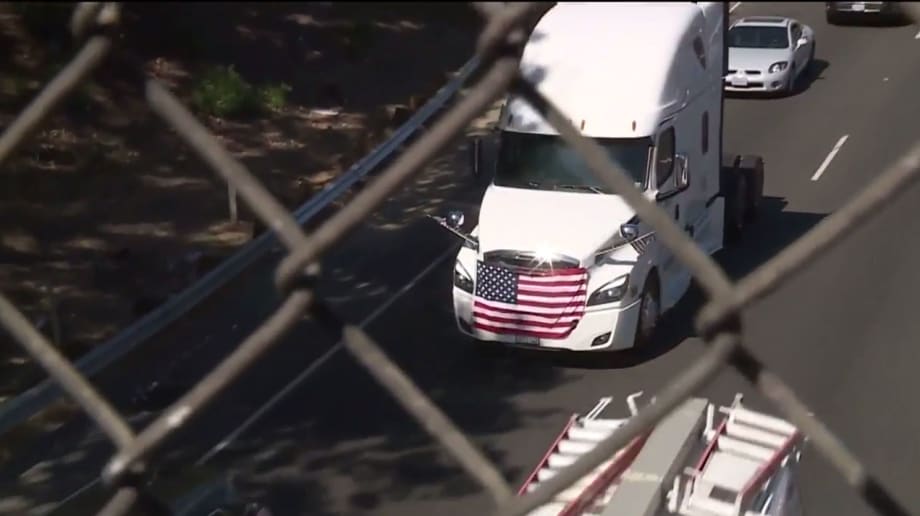
Screen shot, CBS Sacramento video
4 min to read
Screen shot, CBS Sacramento video
Truckers around the country – including in the nation's capital – gathered between Oct. 6-8 to protest the upcoming ELD mandate, which goes into effect Dec. 18.
Some were participating in the ELD or Me protest in Washington, DC, while others took to the streets in Fresno, California, as part of Operation Black and Blue, to protest the implementation of the electronic logging device rule, which has proved controversial among small trucking companies and owner-operators.
In California, a rolling convoy of trucks drove slowly and honked their horns between Yuba City and Fresno, slowing traffic on I-5 and Hwy 99, as part of the protest. The trucks bore signs declaring their opposition to the ELD mandate and other regulations. Some trucks were decorated with American flags.
The California Trucking Association issued a statement noting that it was not affiliated with the protests in the state. "We support truckers' rights to express their opinions on the upcoming implementation of the federal electronic logging device mandate, including their right to protest. We urge the participants to follow the rules of the road and show the motoring public we are an industry committed to safety. We do not condone creating dangerous driving conditions by impeding traffic on busy freeways."
In Washington State, a convoy of trucks took to I-5 in Pierce County, while others parked along the side of the road in Tacoma, and nearly 100 drivers gathered at a rally in Kent, KOMO News reported.
Some truck drivers protested in front of Fresno City Hall to voice concerns over the ELD mandate's effect on their daily work habits, telling local media that the "inflexible" devices would be forcing them to take breaks when they don’t need to, or worse, when they need more time. Independent drivers who need to be on the road as much as possible, and for whom quick turnarounds are key, say the issue comes down to maintaining their livelihood.
With paper logs, drivers were able to add in the extra time they needed to find a suitable parking spot or to account for unavoidable delays at loading docks. To many of the drivers who participated in the protest, ELDs with their cold precision and complete adherence to regulations down to the second can seem out of touch with the human realities on the road.
Operation Black and Blue states on the group’s Facebook page that, “Operation Black and Blue was created expressly for the support and coordination of efforts by truck drivers to help put a stop to the FMCSA, DOT, and ATA. We are against government overreach and over-regulation.” The group has more than 3,500 followers.
Protests or not, Congress will not be rescinding or delaying the ELD rule. Since July, a lone lawmaker, Rep. Brian Babin (R-TX), has twice introduced legislation aimed at either straight-up delaying implementation of the ELD rule or slowing its rollout by preventing funding of the mandate. One of these measures failed to pass and the other has so far not been acted on by a committee.
The H.R. 3282, the ELD Extension Act of 2017, which the congressman introduced in July, would have delayed making the rule effective for two years. So far, it has attracted 55 co-sponsors and has been referred to the House Transportation and Infrastructure Committee— which has yet to take it up.
In early September, Babin crafted an anti-ELD amendment that was offered up for attachment to some unrelated legislation (H.R. 3354, the Make America Secure and Prosperous Appropriations Act of 2018). It was intended to delay the mandate for almost a year by preventing funding of it. On Sept. 6, that rider was voted downon the House floor.
What marked both of these legislative work-arounds as little more than Hail Mary Passes is the reality that every notable trucking stakeholder group except the Owner Operator Independent Drivers Association remains solidly in favor of implementing the ELD rule with no further delay.
What’s more, no companion legislation to delay or defund the ELD mandate has yet to be introduced – nor is it at all likely to be introduced – in the Senate. Even if one is passed, an anti-ELD House bill alone is meaningless.
To be sure, a lot of lobbying firepower remains aimed at keeping the rule as it is. And at keeping its initial effective date what it is: Dec. 18— now just 10 weeks away
The last, best hope to stave off the mandate fizzled back on June 12 when the U.S. Supreme Court denied the Owner-Operator Independent Drivers Association’s petition that it rule on whether the regulation violates the Fourth Amendment right to privacy of truck drivers. So, the avenue for judicial relief has been closed off and Capitol Hill won’t act in time to halt or slow the rule this year, if not ever.
Updated 3 p.m. EDT 10/7 to add more details.
More Telematics
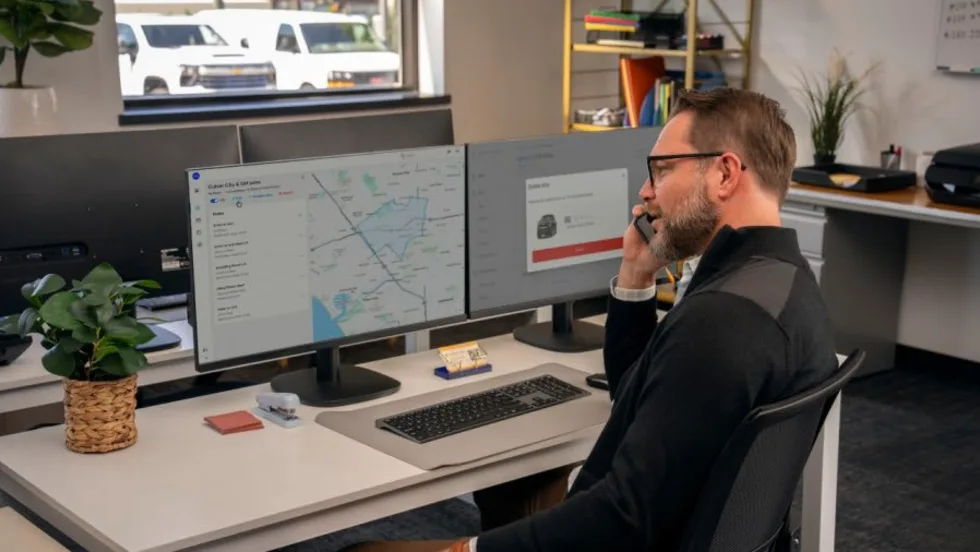
GM Launches OnStar Fleet Intelligence Platform With AI Assistant
The new platform brings vehicle data, order tracking, connected services and fleet analytics into one system, with an AI assistant that can answer fleet questions using natural-language prompts.
Read More →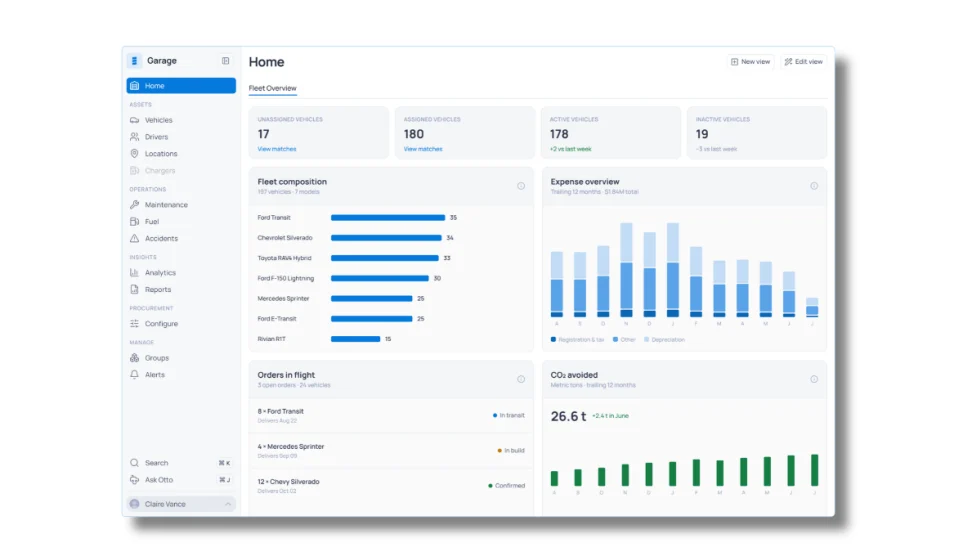
Inspiration Fleet Introduces Garage 2.0 Fleet Intelligence Platform
Fleet managers increasingly have access to data from vehicles, telematics, fuel, charging, and other systems, but those sources don't always communicate with one another. Inspiration Fleet's Garage 2.0 platform brings that information together while letting fleets keep working with different technology and service providers.
Read More →
Inside Inspiration Fleet’s New Platform for Connecting Fleet Data
Inspiration Fleet CTO Chris Getner explains how the new Garage 2.0 platform is designed to connect disparate fleet data and what that could mean for fleet managers in practice.
Read More →
Sponsored•October 1, 2026
Fleet Manager’s Ultimate Playbook: Navigating the New Standard in OEM Connectivity
Rising operating costs, driver safety concerns, and unplanned downtime are putting unprecedented pressure on modern fleets. Discover how fleet managers use embedded OEM connectivity and real-time vehicle data to cut TCO, prevent downtime, and protect drivers without aftermarket telematics hardware.
Read More →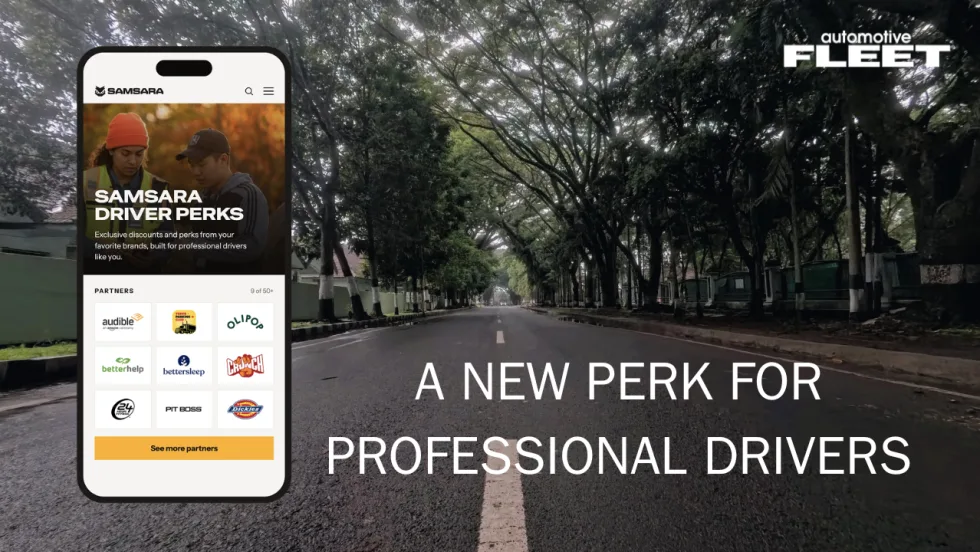
Samsara Driver Perks Adds New Benefit for Corporate Fleet Drivers
The rewards program gives eligible professional drivers access to discounts from more than 50 brands while giving fleets another way to support recruitment, retention, and the driver experience.
Read More →
Inside the Church of Jesus Christ of Latter-day Saints’ Two-Track Telematics Strategy
With 20,000 vehicles and two fundamentally different driver populations, the Church faced a fleet management problem that a single telematics program couldn't solve. How it responded offers a replicable framework for any fleet where one size doesn't fit every driver.
Read More →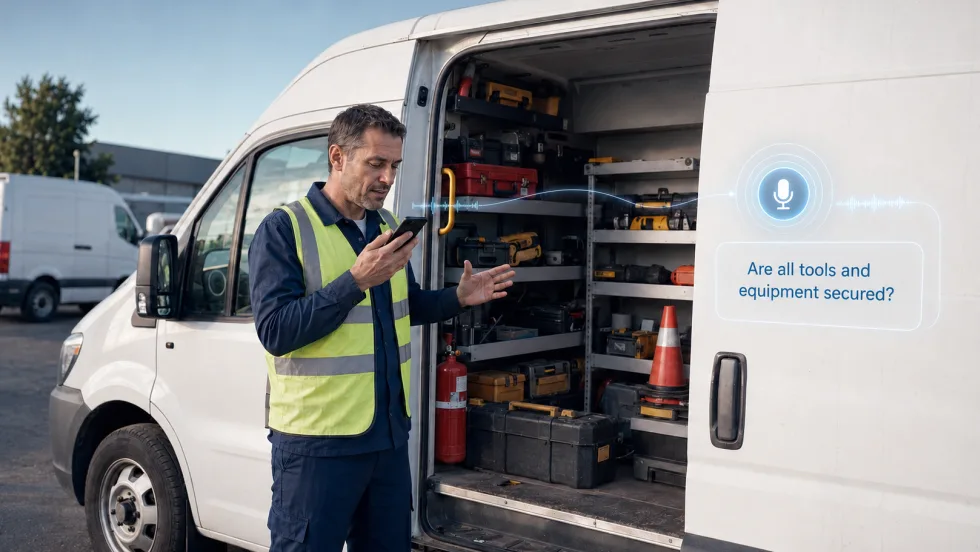
How Conversational AI Can Make Fleet Tasks Easier for Drivers
While most generative AI tools help fleet managers interpret data at their desks, Connex2X is applying voice interaction to tasks behind the wheel.
Read More →
Why Fleets Are Creating Dedicated Fleet Analyst Positions
Are fleet analyst positions the new norm? Listen here to find out.
Read More →
Teletrac Navman Begins Next Chapter as Standalone Private Company
What's new with Teletrac Navman and its new owner?
Read More →
Why Fleets Are Creating Dedicated Fleet Analyst Positions
Telematics, AI, EVs, and connected technologies are generating more fleet data than traditional teams can effectively manage. Reed Jackson explains why dedicated fleet analytics roles are emerging to turn that information into better operational decisions.
Read More →