




Transportation Dept. Seeks to Improve Highway-Rail Crossing Safety
WASHINGTON, D.C. --- Several safety initiatives designed to reduce collisions between motor vehicles and trains will be completed before the end of 2008 as part of the ongoing U.S. Department of Transportation (DOT) Highway-Rail Crossing Safety and Trespass Prevention Action Plan, announced DOT Secretary Mary E. Peters.
WASHINGTON, D.C. --- Several safety initiatives designed to reduce collisions between motor vehicles and trains will be completed before the end of 2008 as part of the ongoing U.S. Department of Transportation (DOT) Highway-Rail Crossing Safety and Trespass Prevention Action Plan, announced DOT Secretary Mary E. Peters.
"Our efforts to improve safety where the rails meet the road are working," Peters said. She noted that from 2004 to 2007, grade crossing accidents and fatalities declined 10.8 percent and 9.1 percent, respectively. However, there were still 2,746 collisions and 338 deaths at America's nearly 227,000 grade crossings last year. "More needs to be done to make crossings safer," she added.
Peters explained the Federal Railroad Administration (FRA) has released the first-ever comprehensive report detailing the challenges associated with the nearly 87,000 private roadways that cross over railroad tracks and which are not subject to the same federal safety standards as public crossings. The report describes and proposes possible courses of action to improve safety at private crossings through development of a national policy or issuance of federal regulations, she said.
In the coming months, the FRA also intends to issue a multi-year research and development plan that includes several projects specifically addressing grade crossing safety issues, Peters said. It will support research into technologies to modernize existing warning devices, improve detection of oncoming trains by motor vehicle drivers, and apply intelligent transportation system solutions, among several other research efforts.
And, by the end of the year, the FRA will issue a revised guidebook to assist states and communities in closing or consolidating unneeded or little used public grade crossings along a rail corridor while improving crossing safety at those that remain open. Peters noted that more than 18,000 crossings have been closed since 2004.
"Grade crossing safety is a shared responsibility and to achieve further improvements everyone needs to do their part," said FRA Administrator Joseph H. Boardman. He stressed the need for motorists, railroads and federal, state and local governments and others to act individually and work together.
Peters said the action plan, originally issued in June 2004, involves the work of several DOT agencies and has completed numerous projects and activities during the past four years. Those include regulations, research, technology development, technical assistance and educational efforts.
More Safety
The Safest Fleets Aren’t the Ones with the Most Technology
You’ve made the telematics investment. Here’s how to capture the other half of its value and build the safest fleet on the road.
Read More →
Hidden in Plain Sight: Fleet Compliance Risks
Fleet compliance isn't just about having policies — it's about consistently enforcing them. This practical guide reveals six hidden compliance risks common in public sector and shared fleet operations and outlines proven strategies to improve visibility, accountability, and audit readiness
Read More →
NETS Sets 2026 Fleet Safety Benchmark Conference for Indianapolis
The Sept. 15–17 program will feature fleet benchmarking data, case studies, emerging technologies, and implementation strategies while running alongside the NSC Safety Congress & Expo.
Read More →
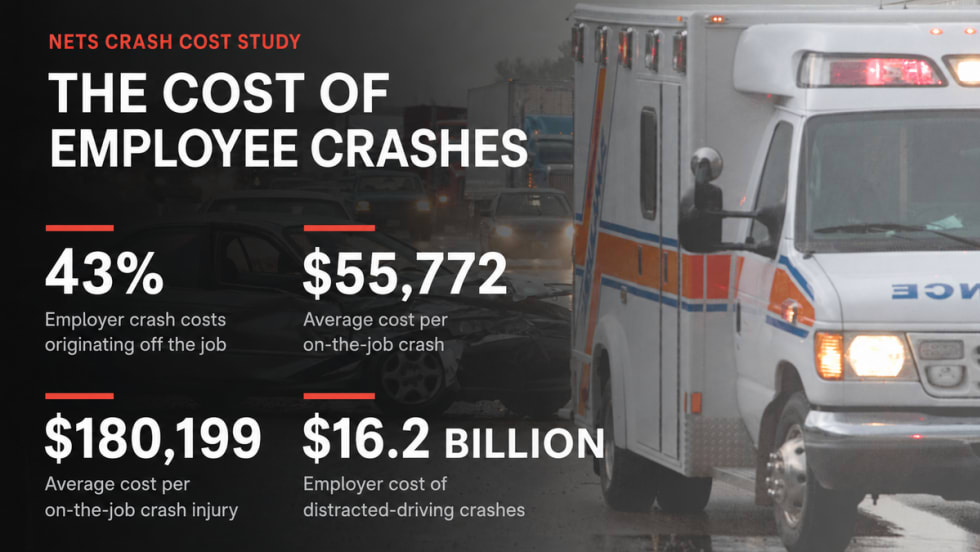
Off-the-Job Crashes Account for 43% of Employers’ $61.7 Billion Crash Burden
NETS quantifies costs dispersed across fleet, risk, HR, and other departments while providing new per-crash benchmarks for employers.
Read More →
Ram Recalls More Than 1.27 Million 1500 Pickups for Seat Belt Anchor Issue
The recall affects certain 2019-2026 Ram 1500 pickups that may have improperly attached second-row seat belt buckle anchors.
Read More →
How Better Visibility Cut Speeding Violations by 48%
Fleet leaders don't need more data, they need clearer visibility into what the data is saying. This case study explores how one utility replaced speeding-event counts with a single metric — miles driven in violation — to strengthen safety and significantly reduce speeding violations.
Read More →
Operation Safe Driver Week: Why the Industry's Oldest Safety Campaign Still Matters to Fleets
A look at how a 2007 enforcement initiative became one of the most consequential weeks on the fleet safety calendar, and what it means for your drivers in 2026.
Read More →
Nexar-Nauto Merger Aims to Give Fleets Better Safety Intelligence Through Larger Driving Dataset
Stefan Heck tells Automotive Fleet that combining more than 10 billion miles of driving history with Nexar's AI models will give fleets deeper insights into driver risk and roadway conditions than either company could provide independently.
Read More →
From Silos to Solutions: Relationship Management for Safer Fleets
From telematics adoption and driver accountability to policy consistency and risk mitigation, this episode breaks down what it really takes to build a safer fleet culture without slowing business down.
Read More →
IIHS Launches First Commercial Vehicle Safety Evaluations
The Insurance Institute for Highway Safety has begun evaluating heavy-duty pickups and cargo vans for driver protection. Which models earned top marks?
Read More →