





Watch This: Market Forces Impacting Pricing and Availability of Commodities Key to the Fleet Industry
Transaction Prices Fall Below MSRP, Finally
The average price for a new vehicle in March fell below sticker for the first time in 20 months, according to KBB.
April 17, 2023
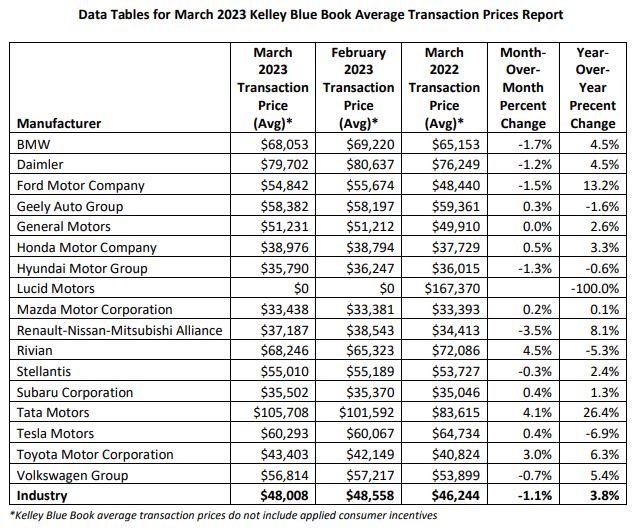
In March 2023, the average transaction price (ATP) of a new vehicle in the U.S. declined to $48,008, a month-over-month decrease of 1.1%, according to Kelley Blue Book.
Photo: Canva/Automotive Fleet
4 min to read
In March 2023, a nearly two-year trend was broken when the average price that Americans paid for a new vehicle fell below the manufacturer’s suggested retail price (MSRP) for the first time in 20 months, according to data released by Kelley Blue Book, a Cox Automotive company.
The average transaction price (ATP) of a new vehicle in the U.S. declined in March 2023 to $48,008, a month-over-month decrease of 1.1% ($550) – from a downwardly revised February reading of $48,558. March transaction prices remained up 3.8% ($1,784) compared to year-ago levels. Meanwhile, auto manufacturers’ incentive spending rose to the highest level in 12 months at 3.2% of the ATP in March, averaging $1,516.
According to Kelley Blue Book calculations, new-vehicle ATPs have been above the average MSRP (also known as the sticker price), for 20 months, but last month brought good news for buyers as that trend finally changed.
In March 2023, transaction prices continued to trend downward and the average price consumers paid fell to $171 below the average sticker. For comparison, a year ago in March 2022, the average ATP was nearly $1,000 over MSRP. Sales volumes were up month over month by 20% and up 8% year over year in March 2023, thanks partly to improved supply, a better mix of lower-priced models, and strong fleet sales.
“The latest transaction data from March reveals new-vehicle prices continued a downward trend through the first quarter of 2023,” said Rebecca Rydzewski, Cox Automotive’s research manager of economic and industry insights. “Both luxury and non-luxury prices were down month over month. We’ve been anticipating transaction price declines, as inventory has been steadily improving and choice has expanded. More vehicles on dealer lots – and on their competitors’ lots – means dealers simply don’t have the pricing power they did six months ago.”
In March 2023, the average price paid for a new non-luxury vehicle was $44,182, a decline of $505 compared to February 2023. Most non-luxury brands (including Chevrolet, Chrysler, Dodge, Ford, Hyundai, Kia, Nissan, and Volkswagen) saw ATP declines between 0.2% to 3.8% month over month in March. This correlates with higher incentives helping to push prices down. Honda and Kia showed the most price strength in the non-luxury market, transacting between 3% and 6% over sticker price.
Strong luxury vehicle sales have been a primary reason for elevated new vehicle prices. This trend continued in March 2023 when luxury vehicle share hit 18.2% of total sales, down slightly from a high of 19.3% in January 2023. The high share of luxury sales continues to push overall industry ATP higher, even though the luxury ATP has declined month over month. For comparison, in March 2018, the luxury share was 14% of the market. Two luxury brands now have average transaction prices over $100,000: Land Rover and Porsche.
Buyers continue to pay over MSRP for new luxury vehicles. In March 2023, the average luxury buyer paid $65,202 for a new vehicle, down just $9 from February 2023. Luxury vehicle ATPs were a mixed bag in March, with entry-level luxury cars, high-end luxury cars, luxury compact SUVs, luxury mid-size SUVs, and luxury subcompact SUVs all showing price declines between 0.5% and 1.4%. Luxury cars and luxury full-size SUVs had price increases between 0.8% and 1.6%.
The average price paid for a new EV increased by $313 (up 0.5%) in March compared to February. According to Kelley Blue Book estimates, the average new EV sold for $58,940 in March. New EV pricing peaked in 2022, decreasing steadily since Q3 of last year.
In February 2023, incentives averaged $1,516, increasing to 3.2% of the average transaction price compared to 3%. However, incentive spending remains at a historically low level. For comparison, two years ago in March 2021, Kelley Blue Book estimates incentives averaged 8.4% of ATP. Luxury cars had the highest incentives in March 2023 at 6.7% of ATP. Meanwhile, vans had the lowest incentives at less than 1% of ATP.
“Incentives and inventory tend to move in tandem – when one moves up, so does the other,” said Rydzewski. “Right now, in-market consumers are finding more inventory, more choice, and dealers more willing to deal, at least with some brands. Yet, even as deals improve, unfortunately, auto loan rates remain very high, ultimately making new-vehicle affordability an issue for many households.”
More Operations

How Fleets Can Recruit and Train Veterans for Technician Roles
Here's how the technician shortage has affected uptime for fleets, and what to do about it.
Read More →
Avis Budget Group Deploys Neology Toll Management Technology Across Major Brands
Neology’s neoFleet platform will manage toll transactions and toll-authority operations for vehicles across Avis, Budget, Payless, Budget Truck and Zipcar.
Read More →
Fleet Personal-Use Charges Edge Higher in 2026
Nearly eight in 10 surveyed fleets allow personal use of company vehicles, while just over half of respondents report charging employees for the privilege.
Read More →
The Future of Fleet + What’s Changing Right Now | AF News Recap
Could developments overseas offer a preview of what’s coming for U.S. fleets? This week, we’re looking at the future of AI, autonomy, and electrification, plus Ford Pro’s new certified pre-owned program, smarter vehicle offboarding, and a new way for fleets to manage toll expenses.
Read More →
How to Handle Vehicle Offboarding
What do fleet managers need to do when a driver leaves?
Read More →
Sponsored•October 1, 2026
Fleet Manager’s Ultimate Playbook: Navigating the New Standard in OEM Connectivity
Rising operating costs, driver safety concerns, and unplanned downtime are putting unprecedented pressure on modern fleets. Discover how fleet managers use embedded OEM connectivity and real-time vehicle data to cut TCO, prevent downtime, and protect drivers without aftermarket telematics hardware.
Read More →
U.S. Bank Adds Verra Mobility Toll Management to Voyager Fleet Platform
The integration allows U.S. Bank Voyager fleet customers to manage toll payments and violations alongside fuel, EV charging and maintenance expenses.
Read More →
ADAS Prevents Crashes. But Repairs Cost More | AF News Recap
ADAS-equipped vehicles may crash less often, but they can cost more when they do. This week, we’re breaking down what that tradeoff means for fleets, plus Subaru’s first Forester Wilderness Hybrid, Nissan’s new e-POWER Rogue, and why Calstart has become Catalyst Mobility.
Read More →
Moventum Fleet Management Names Mark Iorillo Head of Sales
Iorillo brings nearly 20 years of fleet management and sales experience to the role, including previous positions at Element Fleet Management, CEI, Donlen and Ryder.
Read More →
Fleet Has a Talent Pipeline Problem. What Comes Next? | AF News Recap
Where will fleet’s next generation of leaders come from? This week, we’re looking at the industry’s talent pipeline, what certification can add to a fleet career, how to build an award-worthy track record, and the return of Automotive Fleet’s Personal Use Survey.
Read More →