




Toyota to Pay $32.425 Million in Civil Penalties
WASHINGTON - U.S. Transportation Sec. Ray LaHood announced that Toyota Motor Corp. has agreed to pay an additional $32.425 million in civil penalties as the result of two separate investigations into the automaker's handling of auto recalls.
WASHINGTON - U.S. Transportation Sec. Ray LaHood announced that Toyota Motor Corp. has agreed to pay an additional $32.425 million in civil penalties as the result of two separate investigations into the automaker's handling of auto recalls.
Toyota will pay the maximum fines allowable under the law -- $16.375 million in one case and $16.050 million in the other -- in response to the Department of Transportation's assertion that the automaker failed to comply with requirements of the National Traffic and Motor Vehicle Safety Act for reporting safety defects to the National Highway Traffic Safety Administration (NHTSA).
In a released statement, Toyota said it has agreed to pay $32.425 million as part of the settlements, without admitting to any violation of its obligations under the U.S. Safety Act.
"Safety is our top priority and we take our responsibility to protect consumers seriously," said LaHood. "I am pleased that Toyota agreed to pay the maximum possible penalty and I expect Toyota to work cooperatively in the future to ensure consumers' safety."
The first investigation completed Dec. 20 resulted in a $16.375 million fine and involved Toyota's recall of nearly 5 million vehicles with accelerator pedals that can become entrapped by floor mats. As its initial remedy, Toyota recalled 55,000 all-weather floor mats on Sept. 26, 2007. In August 2009, a fatal crash in Santee, Calif., occurred and was believed to be the result of pedal entrapment in a loaner Lexus equipped with an all-weather floor mat intended for another Lexus model. After the fatal crash, NHTSA reviewed crash evidence and other data, and concluded that removing floor mats was insufficient and that there was a need to redesign the accelerator pedal. At NHTSA's urging, Toyota then conducted a recall for 3.8 million Toyota and Lexus vehicles for floor mat entrapment on Oct. 5, 2009. The October recall was expanded on Jan. 27, 2010, to include another 1.1 million vehicles.
In February 2010, NHTSA launched an investigation to determine when Toyota first learned of the pedal entrapment defect and whether the company notified NHTSA in a timely manner. Federal law requires all auto manufacturers to notify NHTSA within five business days of determining that a safety defect exists and to promptly conduct a recall.
According to NHTSA, the investigation led the agency to believe that Toyota had not fulfilled its obligation to report a known safety defect within five days, as is required under the law.
NHTSA said the defects involving pedal entrapment by floor mats and "sticking" accelerator pedals are currently the only two known causes of unintended acceleration in Toyota vehicles, although the agency continues to explore other possible causes. NHTSA has enlisted the expertise of researchers and engineers from the National Academy of Sciences and NASA for a pair of studies that seek to get to the bottom of unintended acceleration.
The second investigation, completed Dec. 20, resulted in a $16.050 million fine. In that case, NHTSA investigated whether Toyota properly notified the agency of a safety defect in several Toyota models that could result in the loss of steering control. In 2004, Toyota conducted a recall in Japan for Hilux trucks with steering relay rods prone to fatigue cracking and breaking, causing the vehicle to lose steering control. At that time, Toyota informed NHTSA that the safety defect was isolated to vehicles in Japan and that the company had not received similar field information within the United States. In 2005, however, Toyota informed NHTSA that the steering relay rod defect was present in several models sold in the U.S. and conducted a recall for nearly 1 million vehicles.
According to NHTSA, in May 2010 the agency was alerted to additional information, including complaints from U.S. consumers, that Toyota had not disclosed when it first notified NHTSA that a U.S. recall was unnecessary.
"Automakers are required to report any safety defects to NHTSA swiftly, and we expect them to do so," said NHTSA Administrator David Strickland. "NHTSA acknowledges Toyota's efforts to make improvements to its safety culture, and our agency will continue to hold all automakers accountable for defects to protect consumers' safety."
"Toyota is pleased to have resolved these legacy issues related to the timeliness of prior recalls dating back to 2005," said Steve St. Angelo, Toyota's chief quality officer for North America. "All 30,000 of our U.S. team members, and the tens of thousands of Americans at dealers and suppliers across the country, have worked very hard over the past year to put these issues behind us and set a new standard of responsiveness to our customers. These agreements are an opportunity to turn the page to an even more constructive relationship with NHTSA and focus even more on listening to our customers and meeting their high expectations for safe and reliable vehicles."
Toyota will pay the maximum in civil penalties for each of the two violations stemming from the pedal entrapment and steering relay rod recalls. The maximum civil penalty established under the National Traffic and Motor Vehicle Safety Act is adjusted for inflation, and was set at $16.050 million at the time of the steering relay rod recall in 2005.
In April, Toyota agreed to pay the maximum penalty of $16.375 million in response to the DOT's assertion that the automaker failed to notify NHTSA within five days of learning of the "sticky pedal" defect. That brings the total civil penalties assessed for Toyota in 2010 to $48.8 million. The fines will be paid into the Treasury Department's General Fund.
According to Toyota, the company has implemented major changes into its safety recall procedures in the past year.
"As we have demonstrated in recent months, our North American operations now have a greater voice in making safety decisions, and we are taking appropriate action whenever any issues emerge," St. Angelo said. "We've substantially strengthened our ability to investigate customer concerns through our rapid-response SMART evaluation process and other measures. And, we are continuing to equip our vehicles with advanced features, including our Star Safety System and Smart Stop Technology, both of which are standard on all new models sold in the U.S."
More Safety
Tips for Driving Safely on Halloween Night
This video features a reminder from the Connecticut Department of Transportation (DOT) and the Connecticut Police Chiefs Association, urging drivers to prioritize safety this Halloween.
Read More →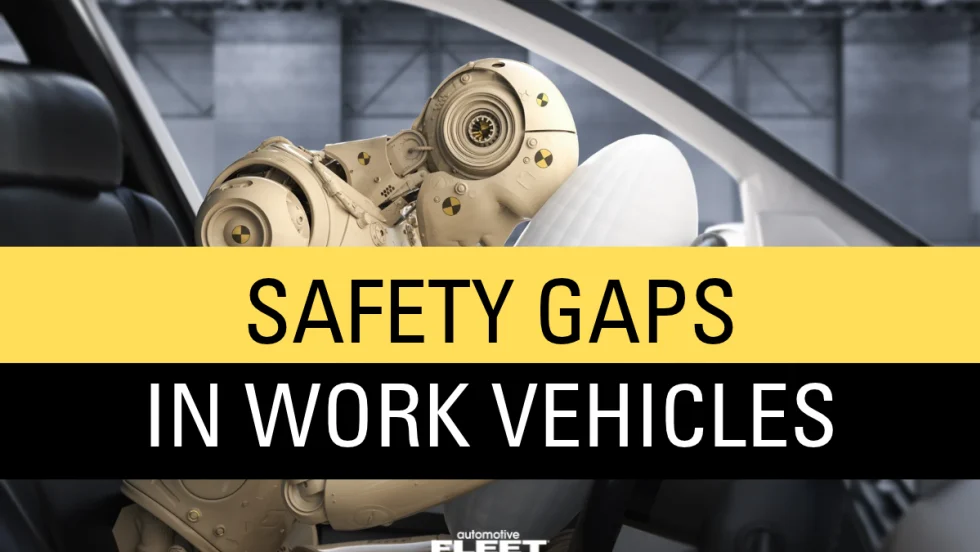
IIHS Crash Avoidance Tests Reveal Safety Gaps in Cargo Vans and Work Trucks
New IIHS crash avoidance ratings show uneven performance among cargo vans and heavy-duty pickups, with most struggling to avoid vehicle-to-vehicle collisions.
Read More →
What’s Next for Fleet? Safety, AI & Industry Recognition | AF News Recap
Could your company's culture be encouraging distracted driving? This week, we're exploring how workplace expectations affect driver safety, what AI, EVs, and autonomous vehicles could mean for the future of fleet management, and how fleet professionals can strengthen their award nominations.
Read More →
Does Your Fleet's Culture Encourage Distracted Driving?
What happens when the people responsible for enforcing safety rules are the ones setting the wrong example? The answer may reveal why some of the biggest risks to fleet drivers have little to do with what's written in the employee handbook.
Read More →
Fleet Manager’s Ultimate Playbook: Navigating the New Standard in OEM Connectivity
Rising operating costs, driver safety concerns, and unplanned downtime are putting unprecedented pressure on modern fleets. Discover how fleet managers use embedded OEM connectivity and real-time vehicle data to cut TCO, prevent downtime, and protect drivers without aftermarket telematics hardware.
Read More →
From Driver Well-Being to EV Charging | AF News Recap
Mental health belongs in the fleet safety conversation. This week, we’re looking at five ways fleets can support employee well-being before a crisis, plus Holman’s expansion in Mexico, new one-day Fleet Forward passes, and why EV charging demand is outpacing infrastructure growth.
Read More →
Nexar-Nauto Merger Aims to Give Fleets Better Safety Intelligence Through Larger Driving Dataset
Stefan Heck tells Automotive Fleet that combining more than 10 billion miles of driving history with Nexar's AI models will give fleets deeper insights into driver risk and roadway conditions than either company could provide independently.
Read More →
Don't Wait for a Crisis: 5 Ways to Build Mental Health Into Your Fleet Safety Program
For Suicide Prevention Month, fleet and safety leaders have an opportunity to put mental health where it belongs: at the center of workplace safety.
Read More →
How Camera Data Can Strengthen a Fleet’s Insurance Renewal
Insights from a commercial insurance carrier and a broker show how fleets can turn video telematic data, driver coaching, and improved claims results into a stronger case at insurance renewal.
Read More →
The Safest Fleets Aren’t the Ones with the Most Technology
You’ve made the telematics investment. Here’s how to capture the other half of its value and build the safest fleet on the road.
Read More →