




Toyota Safety Researchers Launch Five Projects
The new projects, part of a broader five-year program, are aimed at facilitating a safe transition to future mobility.

Photo courtesy of Toyota/CSRC.
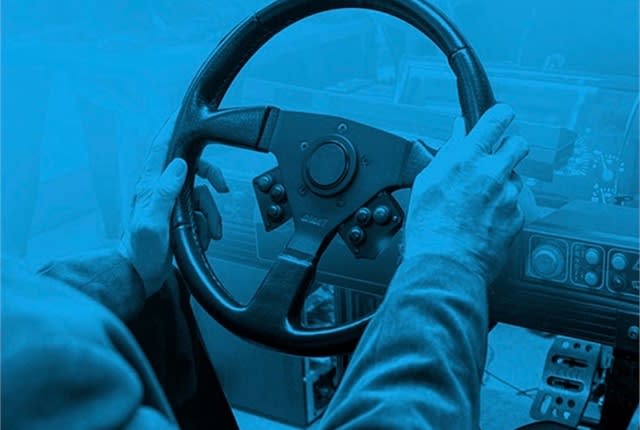
Photo courtesy of Toyota/CSRC.
Toyota’s Collaborative Safety Research Center (CSRC) announced five new research projects focused on better understanding how drivers use and respond to advanced vehicle technologies, including automated driver assistance systems.
The new projects, launched in partnership with five U.S. research institutions, are part of CSRC Next — the center’s new five-year program aimed at facilitating a safe transition to future mobility.
Four of the five research projects will focus on societal acceptance and generate data-driven insights into the use of these technologies. This data can help support their effective integration, foster safer driving behaviors, and offer potential countermeasures to risky driving behavior, according to Toyota.
“The development of advanced vehicle technologies may be progressing faster than the ability of some people to fully understand their capabilities, and it’s important to identify how drivers actually understand and use these emerging systems,” said Chuck Gulash, director of CSRC. “By working with our partner institutions, and openly sharing our insights with the broader automotive, government, NGO, and technology communities, we believe we can help progress society’s acceptance of these new and promising technologies.”
The five research projects will launch in partnership with George Mason University, Rockville Institute, University of Washington, University of Michigan Transportation Research Institute, and San Francisco State University. Data from each project will be shared across the institutions to help speed research, with the results made public to support industry-wide advancement of auto safety.
Launched in May, CSRC Next builds upon the insights gained from the CSRC’s first five years directing $35 million toward safety research into advanced vehicle technologies. CSRC Next also supports ongoing research programs at the Toyota Research Institute (TRI) and Toyota Connected (TC) to help accelerate the development of automated and connected driving technologies and services.
Since its launch in 2011, CSRC has initiated 60 research projects with 26 partner universities, publishing more than 200 papers and presenting at multiple industry conferences.
The project with George Mason University will focus on determining, through neuroergnomic methods, how different factors affect mental model development and evolution of advanced safety technologies. The project with Rockville Institute will involve determining how users develop and maintain mental models as automated vehicle safety technologies become integrated into vehicles.
The project with the University of Washington will develop analytical models that can capture and identify driver performance changes that mitigate risk. The project with the University of Michigan Transportation Research Institute involves creating a set of guidelines that inform development of risky-driving countermeasures. The project with San Francisco University will focus on a form of training that links stimuli to behavioral changes that promote greater driving safety.
More Safety

Nexar-Nauto Merger Aims to Give Fleets Better Safety Intelligence Through Larger Driving Dataset
Stefan Heck tells Automotive Fleet that combining more than 10 billion miles of driving history with Nexar's AI models will give fleets deeper insights into driver risk and roadway conditions than either company could provide independently.
Read More →
Don't Wait for a Crisis: 5 Ways to Build Mental Health Into Your Fleet Safety Program
For Suicide Prevention Month, fleet and safety leaders have an opportunity to put mental health where it belongs: at the center of workplace safety.
Read More →
How Camera Data Can Strengthen a Fleet’s Insurance Renewal
Insights from a commercial insurance carrier and a broker show how fleets can turn video telematic data, driver coaching, and improved claims results into a stronger case at insurance renewal.
Read More →
The Safest Fleets Aren’t the Ones with the Most Technology
You’ve made the telematics investment. Here’s how to capture the other half of its value and build the safest fleet on the road.
Read More →
Hidden in Plain Sight: Fleet Compliance Risks
Fleet compliance isn't just about having policies — it's about consistently enforcing them. This practical guide reveals six hidden compliance risks common in public sector and shared fleet operations and outlines proven strategies to improve visibility, accountability, and audit readiness
Read More →
NETS Sets 2026 Fleet Safety Benchmark Conference for Indianapolis
The Sept. 15–17 program will feature fleet benchmarking data, case studies, emerging technologies, and implementation strategies while running alongside the NSC Safety Congress & Expo.
Read More →
Off-the-Job Crashes Account for 43% of Employers’ $61.7 Billion Crash Burden
NETS quantifies costs dispersed across fleet, risk, HR, and other departments while providing new per-crash benchmarks for employers.
Read More →
Ram Recalls More Than 1.27 Million 1500 Pickups for Seat Belt Anchor Issue
The recall affects certain 2019-2026 Ram 1500 pickups that may have improperly attached second-row seat belt buckle anchors.
Read More →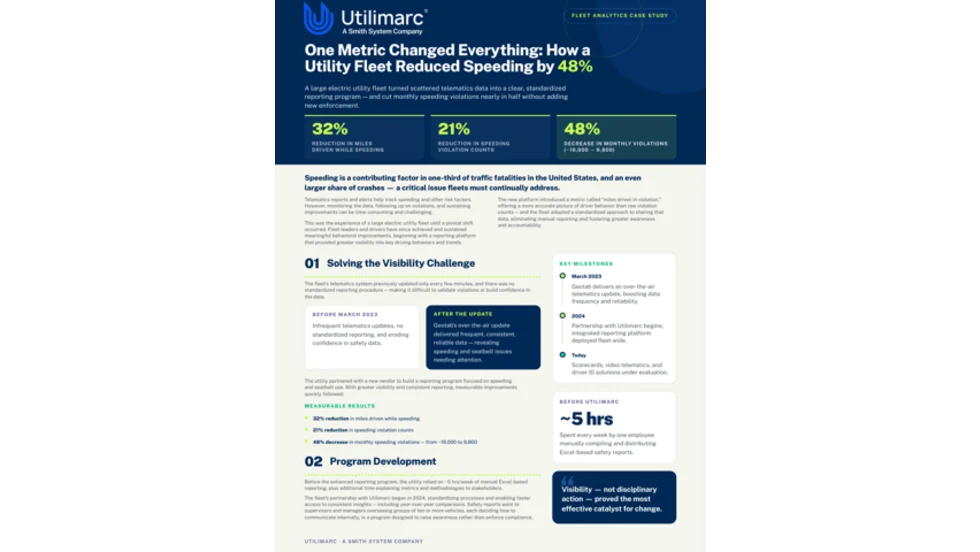
How Better Visibility Cut Speeding Violations by 48%
Fleet leaders don't need more data, they need clearer visibility into what the data is saying. This case study explores how one utility replaced speeding-event counts with a single metric — miles driven in violation — to strengthen safety and significantly reduce speeding violations.
Read More →
Operation Safe Driver Week: Why the Industry's Oldest Safety Campaign Still Matters to Fleets
A look at how a 2007 enforcement initiative became one of the most consequential weeks on the fleet safety calendar, and what it means for your drivers in 2026.
Read More →