




Toyota Recalls MY2003 Sequoia SUVs
TORRANCE, CA - Toyota Motor Sales U.S.A. Inc. is conducting a voluntary safety recall on approximately 50,000 early-2003 Model-Year Toyota Sequoia sport utility vehicles to upgrade program logic in its vehicle stability control (VSC) system.
TORRANCE, CA - Toyota Motor Sales U.S.A. Inc. is conducting a voluntary safety recall on approximately 50,000 early-2003 Model-Year Toyota Sequoia sport utility vehicles to upgrade program logic in its vehicle stability control (VSC) system.
The VSC system can help control a loss of traction in turns as a result of front or rear tire slippage during cornering. In vehicles without the upgrade, the VSC system could, in limited situations, activate at low speed (approximately 9 mph) for a few seconds after acceleration from a stopped position and, as a result, the vehicle may not accelerate as quickly as the driver expects, Toyota said. There have been no reported injuries or accidents as a result of this condition.
Toyota instituted a running production change during the 2003 model year and published a Technical Service Bulletin to address this issue when it was first identified in fall 2003. Since that time, Toyota has been responding to individual owner concerns by replacing the Skid Control Engine Control Unit (ECU) in Sequoias impacted by this condition. Of the approximately 50,000 vehicles included in this recall, approximately half have already been serviced under warranty, Toyota said.
Steve St. Angelo, Toyota chief quality officer for North America, said: "Toyota is committed to investigating customer complaints more aggressively and to responding quickly to issues we identify in our vehicles. As a result, we are voluntarily launching this recall to ensure that as many 2003 Sequoias as possible are serviced to the full satisfaction of our customers."
Starting in late May, Toyota will begin mailing letters to all MY 2003 Sequoia owners included in this recall, including owners of vehicles that have been previously serviced. If a customer has previously paid to replace the Skid Control ECU for this specific condition prior to receiving a letter, Toyota advises that the customer mail a copy of the repair order to the following address for reimbursement consideration: Toyota Motor Sales U.S.A. Inc., Toyota Customer Experience, WC 10, 19001 South Western Avenue, Torrance, CA 90509.
For more information, visit www.toyota.com/recall or call Toyota at (800) 331-4331.
More Safety
Hidden in Plain Sight: Fleet Compliance Risks
Fleet compliance isn't just about having policies — it's about consistently enforcing them. This practical guide reveals six hidden compliance risks common in public sector and shared fleet operations and outlines proven strategies to improve visibility, accountability, and audit readiness
Read More →
NETS Sets 2026 Fleet Safety Benchmark Conference for Indianapolis
The Sept. 15–17 program will feature fleet benchmarking data, case studies, emerging technologies, and implementation strategies while running alongside the NSC Safety Congress & Expo.
Read More →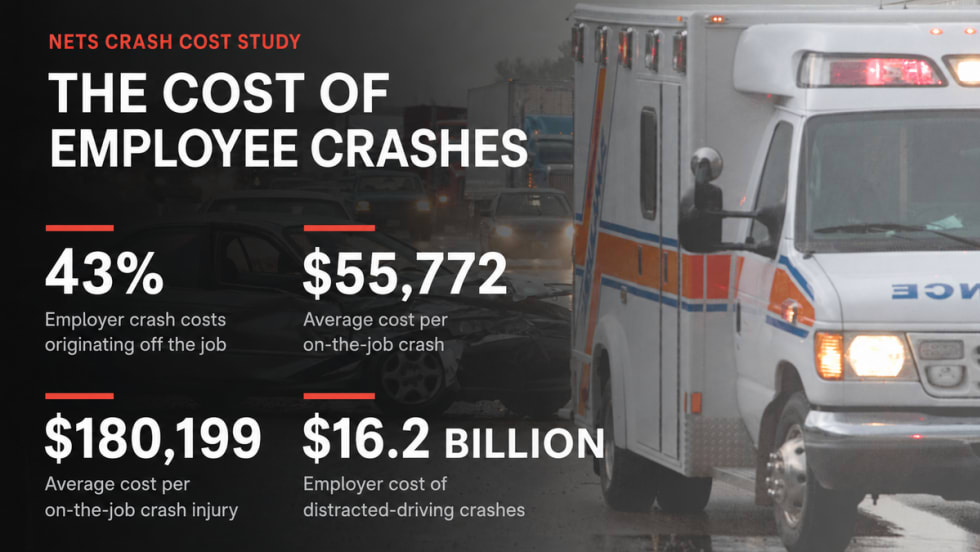
Off-the-Job Crashes Account for 43% of Employers’ $61.7 Billion Crash Burden
NETS quantifies costs dispersed across fleet, risk, HR, and other departments while providing new per-crash benchmarks for employers.
Read More →
Ram Recalls More Than 1.27 Million 1500 Pickups for Seat Belt Anchor Issue
The recall affects certain 2019-2026 Ram 1500 pickups that may have improperly attached second-row seat belt buckle anchors.
Read More →
Top 50 Executive Fleets
It is that time of year again! Time for the 2026 list of the Top 50 Executive Fleets, presented by Automotive Fleet and Volvo as part of its annual Fleet 500. Download now to see this year's list of companies!
Read More →
How Better Visibility Cut Speeding Violations by 48%
Fleet leaders don't need more data, they need clearer visibility into what the data is saying. This case study explores how one utility replaced speeding-event counts with a single metric — miles driven in violation — to strengthen safety and significantly reduce speeding violations.
Read More →
Operation Safe Driver Week: Why the Industry's Oldest Safety Campaign Still Matters to Fleets
A look at how a 2007 enforcement initiative became one of the most consequential weeks on the fleet safety calendar, and what it means for your drivers in 2026.
Read More →
Nexar-Nauto Merger Aims to Give Fleets Better Safety Intelligence Through Larger Driving Dataset
Stefan Heck tells Automotive Fleet that combining more than 10 billion miles of driving history with Nexar's AI models will give fleets deeper insights into driver risk and roadway conditions than either company could provide independently.
Read More →
From Silos to Solutions: Relationship Management for Safer Fleets
From telematics adoption and driver accountability to policy consistency and risk mitigation, this episode breaks down what it really takes to build a safer fleet culture without slowing business down.
Read More →
IIHS Launches First Commercial Vehicle Safety Evaluations
The Insurance Institute for Highway Safety has begun evaluating heavy-duty pickups and cargo vans for driver protection. Which models earned top marks?
Read More →