




Toyota RAV4 EV Features New Technology to Ensure Safety, Crashworthiness
TORRANCE, CA – During development of the 2012 Toyota RAV4 EV, engineers sought to make the electric vehicle just as safe as any other Toyota model on the road. That task meant creating an underbody design ensuring that, in the event of a crash, the high-voltage battery’s energy remains contained and poses no threat to vehicle occupants and first responders.
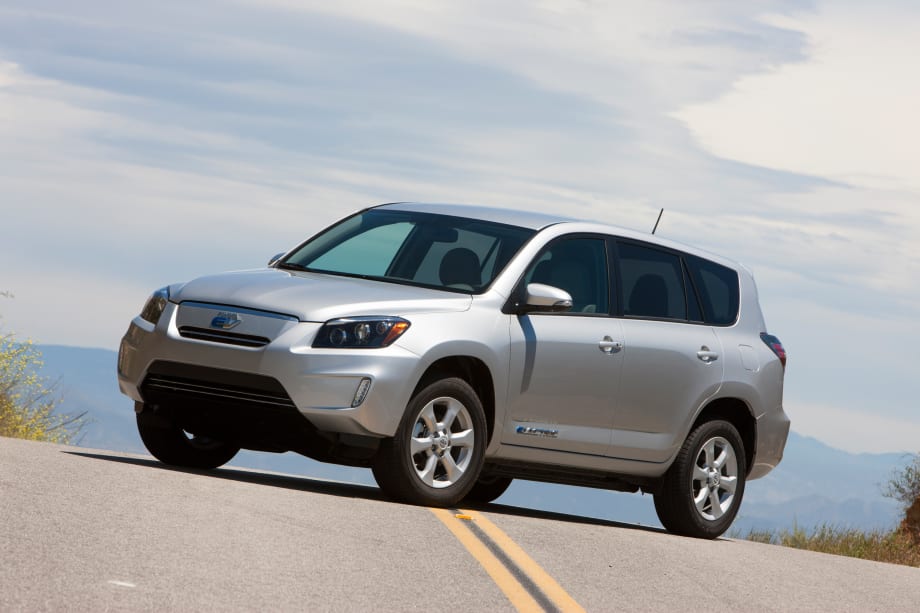
TORRANCE, CA – During development of the 2012 Toyota RAV4 EV, engineers sought to make the electric vehicle just as safe as any other Toyota model on the road. That task meant creating an underbody design ensuring that, in the event of a crash, the high-voltage battery’s energy remains contained and poses no threat to vehicle occupants and first responders.
This endeavor, the focus of a new corporate video, resulted in 13 new patents.
Project team members developed what they call a pyrotechnic safety switch – essentially a small guillotine that breaks the circuit to prevent current from flowing out of the battery after a collision, explained Jesse Buehler, team leader for vehicle safety and crashworthiness at Toyota.
“What that means for the occupant is that within a few milliseconds after impact, all of the current will stop flowing out of the battery,” Buehler explained. “And within a few seconds after impact, you won’t have high voltage anywhere within the vehicle, except for the battery itself.”
To further protect the battery from impact during a collision, the team developed a system in which ramps guide a motor compartment sub-frame downward to isolate the battery.
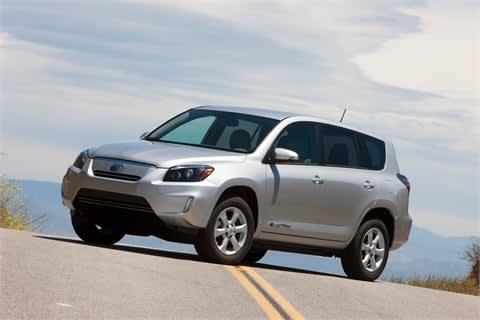
The development project required numerous crash tests, including some that involved flooding different electrical components.
The RAV4 EV is the product of a unique collaboration with Tesla Motors, spurred by Akio Toyoda, president and CEO of Toyota Motor Corp. The RAV4 EV combines a Tesla designed and produced battery and electric powertrain with Toyota’s most popular SUV model.
To view the Toyota video, click here.
Last month, Toyota announced special financing and a customer lease option for the 2012 RAV4 EV. The all-electric RAV4 EV has an EPA-rated range of 103 miles, 78 city miles per gallon equivalent (MPGe), 74 highway MPGe and 76 combined MPGe.
The RAV4 EV went on sale in September through select California dealers, focusing on major metropolitan markets. The vehicle has a manufacturer’s suggested retail price of $49,800, and RAV4 EV customers have the option of a purchase or lease program. Sales volume is planned for approximately 2,600 units through 2014.
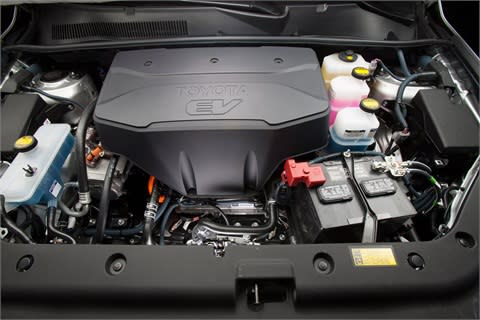
Under the hood of the RAV4 EV
More Safety

Nexar-Nauto Merger Aims to Give Fleets Better Safety Intelligence Through Larger Driving Dataset
Stefan Heck tells Automotive Fleet that combining more than 10 billion miles of driving history with Nexar's AI models will give fleets deeper insights into driver risk and roadway conditions than either company could provide independently.
Read More →
Don't Wait for a Crisis: 5 Ways to Build Mental Health Into Your Fleet Safety Program
For Suicide Prevention Month, fleet and safety leaders have an opportunity to put mental health where it belongs: at the center of workplace safety.
Read More →
How Camera Data Can Strengthen a Fleet’s Insurance Renewal
Insights from a commercial insurance carrier and a broker show how fleets can turn video telematic data, driver coaching, and improved claims results into a stronger case at insurance renewal.
Read More →
The Safest Fleets Aren’t the Ones with the Most Technology
You’ve made the telematics investment. Here’s how to capture the other half of its value and build the safest fleet on the road.
Read More →
Hidden in Plain Sight: Fleet Compliance Risks
Fleet compliance isn't just about having policies — it's about consistently enforcing them. This practical guide reveals six hidden compliance risks common in public sector and shared fleet operations and outlines proven strategies to improve visibility, accountability, and audit readiness
Read More →
NETS Sets 2026 Fleet Safety Benchmark Conference for Indianapolis
The Sept. 15–17 program will feature fleet benchmarking data, case studies, emerging technologies, and implementation strategies while running alongside the NSC Safety Congress & Expo.
Read More →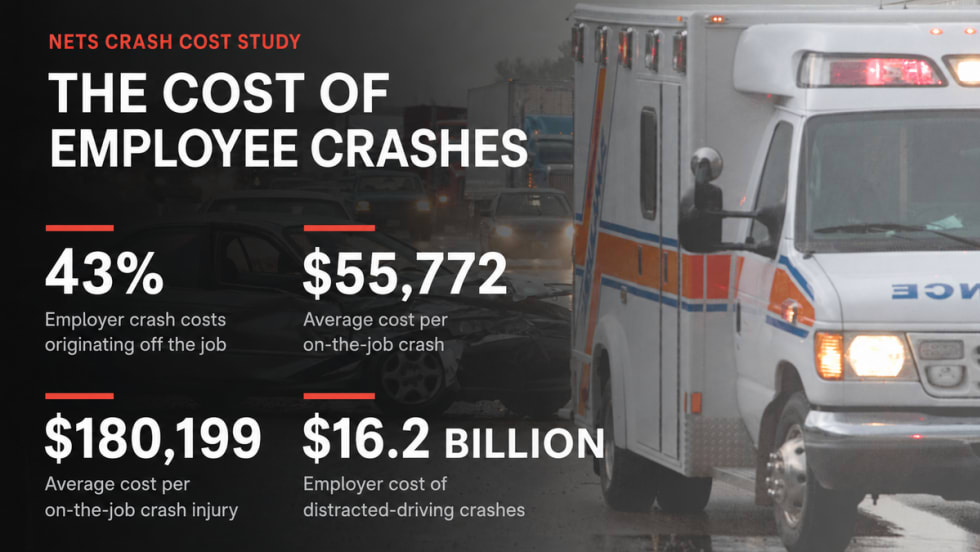
Off-the-Job Crashes Account for 43% of Employers’ $61.7 Billion Crash Burden
NETS quantifies costs dispersed across fleet, risk, HR, and other departments while providing new per-crash benchmarks for employers.
Read More →
Ram Recalls More Than 1.27 Million 1500 Pickups for Seat Belt Anchor Issue
The recall affects certain 2019-2026 Ram 1500 pickups that may have improperly attached second-row seat belt buckle anchors.
Read More →
How Better Visibility Cut Speeding Violations by 48%
Fleet leaders don't need more data, they need clearer visibility into what the data is saying. This case study explores how one utility replaced speeding-event counts with a single metric — miles driven in violation — to strengthen safety and significantly reduce speeding violations.
Read More →
Operation Safe Driver Week: Why the Industry's Oldest Safety Campaign Still Matters to Fleets
A look at how a 2007 enforcement initiative became one of the most consequential weeks on the fleet safety calendar, and what it means for your drivers in 2026.
Read More →