




Toyota Partners With Wake Forest School of Medicine on Safety Research
WINSTON-SALEM, NC – Wake Forest School of Medicine is one of six leading research institutions across the country chosen by Toyota’s Collaborative Safety Research Center (CSRC) to enhance the development, testing and implementation of new automotive safety innovations.
WINSTON-SALEM, NC – Wake Forest School of Medicine is one of six leading research institutions across the country chosen by Toyota’s Collaborative Safety Research Center (CSRC) to enhance the development, testing and implementation of new automotive safety innovations.
Toyota’s CSRC announced the partnerships Sept. 13 at the 2011 Toyota Safety Technology Seminar at the Toyota Technical Center (TTC) in Ann Arbor, Mich. The new projects will research vehicle safety subjects ranging from driver education and collision mitigation to accident reconstruction and enhanced crash data analysis. These initiatives build upon the CSRC’s initial focus of reducing the risk of driver distraction and better protecting the most vulnerable traffic populations, including children, teens, seniors and pedestrians.
"Wake Forest School of Medicine is proud to partner with Toyota to continue working on these important safety innovations for the auto industry," said Edward Abraham, M.D., dean of the medical school. “Our previous collaboration with Toyota provided the groundwork for us to be included in the continuation of this important research that will have real-life benefits in saving lives and preventing or reducing crash injuries."
The Wake Forest School of Medicine research program is two-fold and will work through its Center for Injury Biomechanics (CIB), which investigates injury mechanisms following trauma to develop a greater understanding of human tolerance to injury. The CIB has previously worked with the CSRC’s Total Human Model for Safety (THUMS) technology to develop ways to reduce trauma from head injuries.
The CIB uses a multidisciplinary approach to solving real-world biomechanics problems, combining the biomedical expertise at Wake Forest Baptist Medical Center with Virginia Tech’s college of engineering. Joel Stitzel Jr., Ph.D., a professor of medical engineering at Wake Forest, is the principal investigator for both of the research programs and is working with a cross-disciplinary team of experts from public health sciences and general surgery.
The first aspect of the new research agreement is a one-year partnership that will focus on advanced automatic crash notification. Wake Forest will work to develop vehicle computer systems that not only notify first responders in the event of a collision, but also predict the likelihood and severity of occupant and driver injuries.
The second research aspect involves Toyota’s THUMS technology and will focus on simulation of real-world collision events. This four-and-a-half-year project will combine collision reconstruction data with “finite element modeling” to better understand how to reduce injuries caused by vehicle collisions. The study will compare information about actual collisions with data from THUMS technology, allowing researchers to pinpoint which changes to vehicle design could have prevented the actual injuries suffered by vehicle occupants.
The projects announced Sept. 13 bring the total number of ongoing research programs to 13. In addition to Wake Forest School of Medicine, the new CSRC collaborative safety technology research partners include: Massachusetts Institute of Technology (MIT) AgeLab, Cambridge, Mass.; The Transportation Active Safety Institute, Indiana University/Purdue University (TASI), Indianapolis, Ind.; Virginia Polytechnic Institute and State University (VT), Blacksburg, Va.; Washtenaw Area Transportation Study (WATS), Ann Arbor, Mich.; and Wayne State University, Detroit, Mich.
The CSRC initiative, funded by a $50 million, five-year investment by Toyota, plans to announce additional partners and programs over the next year.
More Safety

What’s Next for Fleet? Safety, AI & Industry Recognition | AF News Recap
Could your company's culture be encouraging distracted driving? This week, we're exploring how workplace expectations affect driver safety, what AI, EVs, and autonomous vehicles could mean for the future of fleet management, and how fleet professionals can strengthen their award nominations.
Read More →
Does Your Fleet's Culture Encourage Distracted Driving?
What happens when the people responsible for enforcing safety rules are the ones setting the wrong example? The answer may reveal why some of the biggest risks to fleet drivers have little to do with what's written in the employee handbook.
Read More →
Fleet Manager’s Ultimate Playbook: Navigating the New Standard in OEM Connectivity
Rising operating costs, driver safety concerns, and unplanned downtime are putting unprecedented pressure on modern fleets. Discover how fleet managers use embedded OEM connectivity and real-time vehicle data to cut TCO, prevent downtime, and protect drivers without aftermarket telematics hardware.
Read More →
From Driver Well-Being to EV Charging | AF News Recap
Mental health belongs in the fleet safety conversation. This week, we’re looking at five ways fleets can support employee well-being before a crisis, plus Holman’s expansion in Mexico, new one-day Fleet Forward passes, and why EV charging demand is outpacing infrastructure growth.
Read More →
Nexar-Nauto Merger Aims to Give Fleets Better Safety Intelligence Through Larger Driving Dataset
Stefan Heck tells Automotive Fleet that combining more than 10 billion miles of driving history with Nexar's AI models will give fleets deeper insights into driver risk and roadway conditions than either company could provide independently.
Read More →
Don't Wait for a Crisis: 5 Ways to Build Mental Health Into Your Fleet Safety Program
For Suicide Prevention Month, fleet and safety leaders have an opportunity to put mental health where it belongs: at the center of workplace safety.
Read More →
How Camera Data Can Strengthen a Fleet’s Insurance Renewal
Insights from a commercial insurance carrier and a broker show how fleets can turn video telematic data, driver coaching, and improved claims results into a stronger case at insurance renewal.
Read More →
The Safest Fleets Aren’t the Ones with the Most Technology
You’ve made the telematics investment. Here’s how to capture the other half of its value and build the safest fleet on the road.
Read More →
Hidden in Plain Sight: Fleet Compliance Risks
Fleet compliance isn't just about having policies — it's about consistently enforcing them. This practical guide reveals six hidden compliance risks common in public sector and shared fleet operations and outlines proven strategies to improve visibility, accountability, and audit readiness
Read More →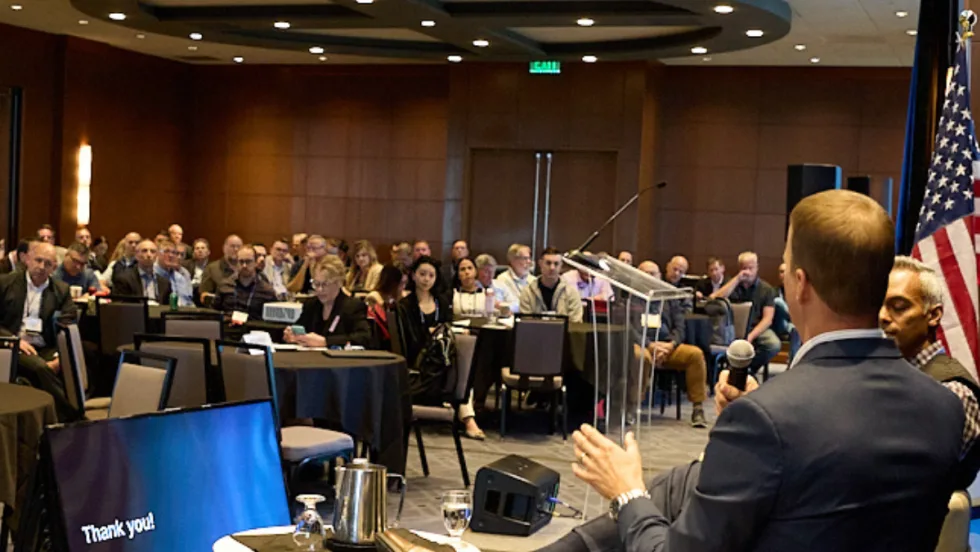
NETS Sets 2026 Fleet Safety Benchmark Conference for Indianapolis
The Sept. 15–17 program will feature fleet benchmarking data, case studies, emerging technologies, and implementation strategies while running alongside the NSC Safety Congress & Expo.
Read More →