




Toyota NS4 Plug-in Hybrid Concept Showcases New Safety Technology
DETROIT -- Toyota Motor Sales U.S.A. last week revealed the NS4 advanced plug-in hybrid concept vehicle at the 2012 North American International Auto Show (NAIAS) in Detroit. The concept car showcased a range of automotive safety technology features, including a new pre-collision system.
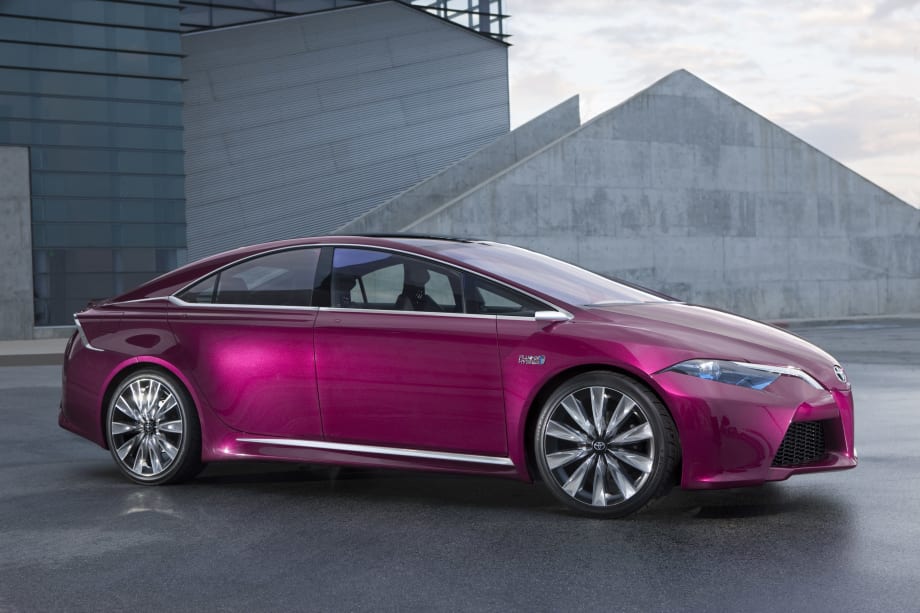
Toyota NS4 plug-in hybrid concept
DETROIT -- Toyota Motor Sales U.S.A. last week revealed the NS4 advanced plug-in hybrid concept vehicle at the 2012 North American International Auto Show (NAIAS) in Detroit. In addition to its fuel efficiency, the concept car showcased a range of automotive safety technology features, including a new pre-collision system.
The dedicated plug-in hybrid car was developed after Toyota challenged its engineers to design a new mid-sized concept for potential global market introduction by 2015.
The NS4 introduces a next-generation pre-collision system (PCS) with lane departure, rear-end and pedestrian collision avoidance technologies. These features are designed to predict collisions under certain circumstances and help avoid them. The PCS uses millimeter-wave radar and stereo cameras mounted on the front of the vehicle to detect and react to lane departure, pedestrians and other vehicles.
Toyota NS4 plug-in hybrid concept
In addition, the system emits near-infrared beams to enhance PCS recognition at night. This driver assistance feature helps to avoid collisions with other vehicles, roadside obstructions, and pedestrians by applying the brakes and manipulating steering.
The current-generation PCS, available in certain Lexus and Toyota vehicles, is designed to identify certain objects directly in the road ahead. If PCS determines that a collision is imminent, the brake assist system is placed in standby mode, a warning is displayed and a buzzer sounds. If PCS determines that a collision is unavoidable, the system still will alert the driver via a warning light, warning display and buzzer, apply the brakes and automatically retract the driver and front passenger seatbelts.
Adaptive driving beam (ADB) headlights help prevent vision-impairing glare to oncoming drivers and pedestrians. Using a camera mounted behind the front grille and partial shielding inside the headlights, this feature allows drivers to maintain near-high beam illumination to improve nighttime visibility.
The pop-up hood structure automatically raises the rear of the hood to increase the space underneath, helping to reduce pedestrian head injuries caused by a collision with the front of the vehicle, within certain speed ranges. This innovation resulted from testing and verification using both conventional crash-test dummies and Toyota’s Total Human Model for Safety (THUMS) virtual model.
Using sub-millimeter wave radar, the blind spot monitor (BSM) is designed to detect a vehicle in the adjacent lane and visually alerts the driver using visual indicators placed in the upper dash.
Four new glass technologies are integrated into the windshield and front triangle, door and rear windows to improve driver visibility, gas mileage and electric driving mode mileage efficiency:
• Hydrophobic coating – Fluorine-coated glass causes rain drops to form into semispherical shapes for improved visibility and rain drop elimination (also used on the roof solar panel)
• Anti-fog film – High-performance resin material with anti-fogging characteristics and increased durability
• High ultraviolet (UV) absorbing inner-layer – Removes 99 percent of harmful UVA and UVB rays
• Anti-solar film with radio-wave transparency – Reduces the internal vehicle temperature and improves electronic device functionality.
Inner and outer rear-view mirrors have been replaced with cameras that provide the driver with a panoramic rearward view. The rearward image -- displayed on a dedicated dashboard-mounted screen above the navigation screen -- provides a wider view than conventional rear-view mirrors. The rearward panoramic camera view, working in combination with the blind spot monitoring (BSM) system, enhances driving visibility.
More Safety

Nexar-Nauto Merger Aims to Give Fleets Better Safety Intelligence Through Larger Driving Dataset
Stefan Heck tells Automotive Fleet that combining more than 10 billion miles of driving history with Nexar's AI models will give fleets deeper insights into driver risk and roadway conditions than either company could provide independently.
Read More →
Don't Wait for a Crisis: 5 Ways to Build Mental Health Into Your Fleet Safety Program
For Suicide Prevention Month, fleet and safety leaders have an opportunity to put mental health where it belongs: at the center of workplace safety.
Read More →
How Camera Data Can Strengthen a Fleet’s Insurance Renewal
Insights from a commercial insurance carrier and a broker show how fleets can turn video telematic data, driver coaching, and improved claims results into a stronger case at insurance renewal.
Read More →
The Safest Fleets Aren’t the Ones with the Most Technology
You’ve made the telematics investment. Here’s how to capture the other half of its value and build the safest fleet on the road.
Read More →
Hidden in Plain Sight: Fleet Compliance Risks
Fleet compliance isn't just about having policies — it's about consistently enforcing them. This practical guide reveals six hidden compliance risks common in public sector and shared fleet operations and outlines proven strategies to improve visibility, accountability, and audit readiness
Read More →
NETS Sets 2026 Fleet Safety Benchmark Conference for Indianapolis
The Sept. 15–17 program will feature fleet benchmarking data, case studies, emerging technologies, and implementation strategies while running alongside the NSC Safety Congress & Expo.
Read More →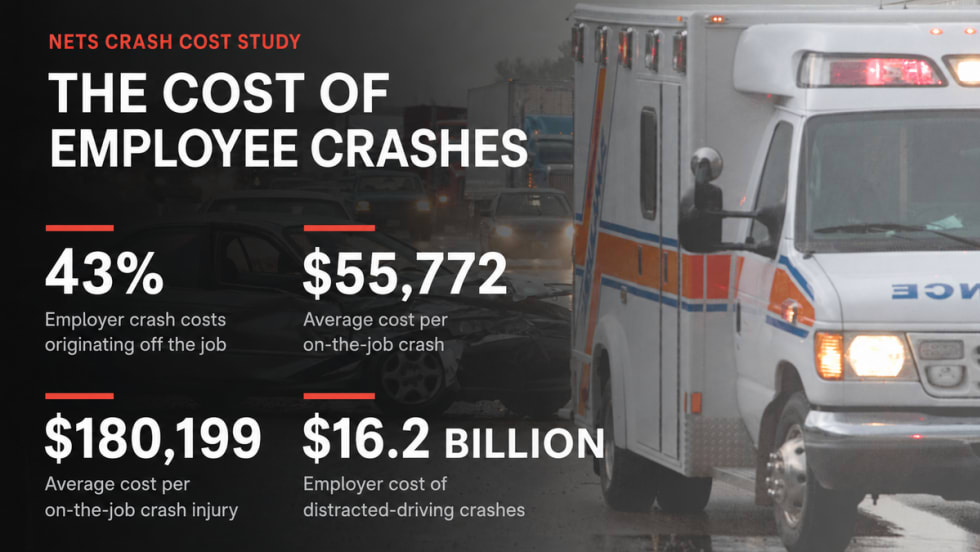
Off-the-Job Crashes Account for 43% of Employers’ $61.7 Billion Crash Burden
NETS quantifies costs dispersed across fleet, risk, HR, and other departments while providing new per-crash benchmarks for employers.
Read More →
Ram Recalls More Than 1.27 Million 1500 Pickups for Seat Belt Anchor Issue
The recall affects certain 2019-2026 Ram 1500 pickups that may have improperly attached second-row seat belt buckle anchors.
Read More →
How Better Visibility Cut Speeding Violations by 48%
Fleet leaders don't need more data, they need clearer visibility into what the data is saying. This case study explores how one utility replaced speeding-event counts with a single metric — miles driven in violation — to strengthen safety and significantly reduce speeding violations.
Read More →
Operation Safe Driver Week: Why the Industry's Oldest Safety Campaign Still Matters to Fleets
A look at how a 2007 enforcement initiative became one of the most consequential weeks on the fleet safety calendar, and what it means for your drivers in 2026.
Read More →