




Toyota and NHTSA Reach Settlement, Automaker to Pay $17.35 Million
WASHINGTON – Toyota Motor Corp. has agreed to pay $17.35 million to settle National Highway Traffic Safety Administration allegations that the automaker failed to report a safety defect to the federal government in a timely manner.
WASHINGTON – Toyota Motor Corp. has agreed to pay $17.35 million, the maximum fine allowable under the law, to settle National Highway Traffic Safety Administration allegations that the automaker failed to report a safety defect to the federal government in a timely manner.
The fine is the single highest civil penalty ever paid to NHTSA for violations stemming from a recall. This fine settles NHTSA claims related to the timeliness of Toyota’s June 2012 Lexus recalls. This recall addressed the potential for accelerator pedal entrapment caused by unsecured or incompatible driver’s-side floor mats in the 2010 model-year Lexus RX 350 and RX 450h.
In a released statement, Toyota stressed that the settlement does not represent an admission to any violation of obligations established in the U.S. Safety Act.
Ray Tanguay, chief quality officer of Toyota North America, added: “Toyota is dedicated to the safety of our customers, and we continue to strengthen our data collection and evaluation process to ensure we are prepared to take swift action to meet customers' needs. We agreed to this settlement in order to avoid a time-consuming dispute and to focus fully on our shared commitment with NHTSA to keep drivers safe.”
Federal law requires all auto manufacturers to notify NHTSA within five business days of determining that a safety defect exists, or that the vehicle doesn’t comply with federal motor vehicle safety standards, and to promptly conduct a recall.
"Every moment of delay has the potential to lead to deaths or injuries on our nation’s highways," said NHTSA Administrator David Strickland.
NHTSA said that in early 2012, the agency’s Office of Defects Investigation began noticing a trend in floor mat pedal entrapment in 2010 model-year Lexus RX 350s. This trend was identified using Vehicle Owner Questionnaires (VOQs) and Early Warning Reporting data.
In May, NHTSA contacted Toyota about the trend. A month later, Toyota advised NHTSA that it was aware of 63 alleged incidents of possible floor mat pedal entrapment in 2010 model-year Lexus RX 350s since 2009. Toyota's own technicians and dealer technicians reported that certain alleged incidents of unwanted acceleration had been caused by floor mat pedal entrapment.
In June, Toyota advised NHTSA of plans to conduct a recall of 154,036 2010 model-year Lexus RX 350 and RX 450h vehicles to address floor mat pedal entrapment.
As part of the new settlement, Toyota Motor Corp. and its U.S.-based subsidiaries agreed to make internal changes to their quality assurance and review of safety-related issues in the U.S.
The last time Toyota faced civil penalties was in 2010, when the automaker agreed to pay $48.8 million as a result of three separate investigations into the handling of auto recalls.
More Safety

How Better Visibility Cut Speeding Violations by 48%
Fleet leaders don't need more data, they need clearer visibility into what the data is saying. This case study explores how one utility replaced speeding-event counts with a single metric — miles driven in violation — to strengthen safety and significantly reduce speeding violations.
Read More →
Operation Safe Driver Week: Why the Industry's Oldest Safety Campaign Still Matters to Fleets
A look at how a 2007 enforcement initiative became one of the most consequential weeks on the fleet safety calendar, and what it means for your drivers in 2026.
Read More →
Nexar-Nauto Merger Aims to Give Fleets Better Safety Intelligence Through Larger Driving Dataset
Stefan Heck tells Automotive Fleet that combining more than 10 billion miles of driving history with Nexar's AI models will give fleets deeper insights into driver risk and roadway conditions than either company could provide independently.
Read More →
From Silos to Solutions: Relationship Management for Safer Fleets
From telematics adoption and driver accountability to policy consistency and risk mitigation, this episode breaks down what it really takes to build a safer fleet culture without slowing business down.
Read More →
IIHS Launches First Commercial Vehicle Safety Evaluations
The Insurance Institute for Highway Safety has begun evaluating heavy-duty pickups and cargo vans for driver protection. Which models earned top marks?
Read More →
Reducing Risk by Eliminating Phone Use Behind the Wheel
Hosted with the cofounder of Lifesaver Mobile, this episode addresses phone use behind the wheel and how to design a driving environment that actually helps prevents accidents.
Read More →
Cameras, Safety and Insurance: From Reactive Claims to Real-Time Prevention (Part 2 of 2)
Part Two: Commercial auto remains one of the most challenging and costly lines of coverage for fleet operators and insurers alike. Continue learning more about how to effectively address these issues from Onur Aksan, Enterprise Business Development Executive, Geotab
Read More →
How 5-Second Telematics Data Is Changing Fleet Safety
This episode connects with Steve Santostasi of Ford Pro and covers how a few seconds of data can make a difference in fleet safety.
Read More →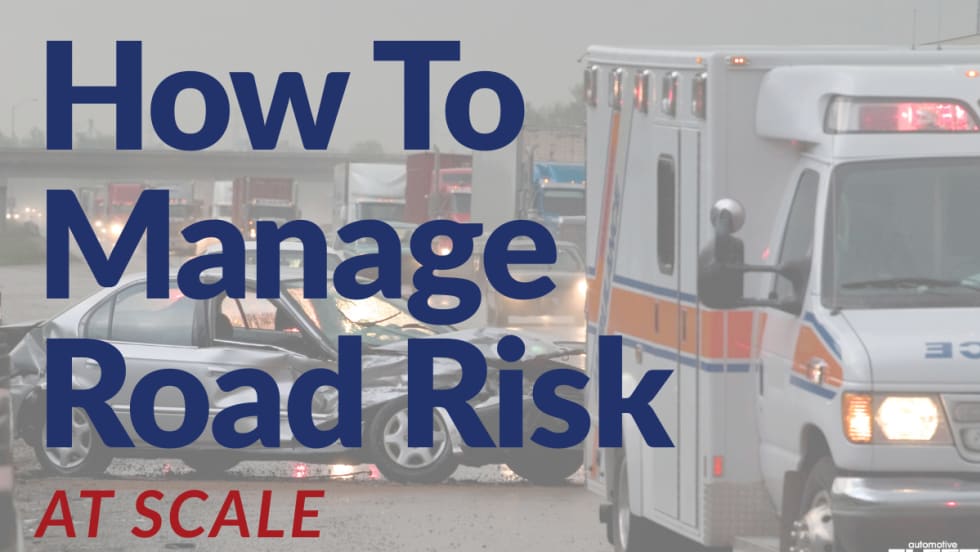
Managing Road Risk at Scale: Why Fleet Safety Needs a Data-Driven Framework
Insights from the FIA Road and Driver Safety Indexes reveal how to manage road risk on a larger scale.
Read More →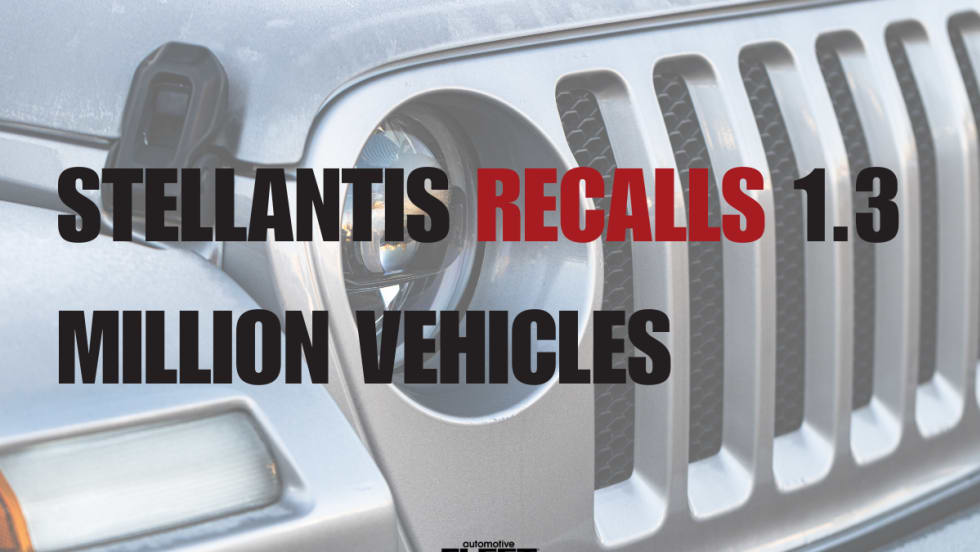
Stellantis Recalls 1.3 Million Jeep Vehicles Worldwide Over Fire Risk
Stellantis is recalling more than 1.3 million Jeep Wrangler and Gladiator models worldwide over a fire risk linked to power steering pump wiring.
Read More →