




Looking for the latest in Disaster Preparation and Response? Check out our guide today with downloadable resources, features, tips, and more!
Tornado Driving: Staying Safe
What is a driver to do in order to prepare for a potential tornado, or worse still, if he or she finds himself driving through a tornado? Experts from FEMA offer the following advice on how to prepare.
by Marianne Matthews
June 3, 2019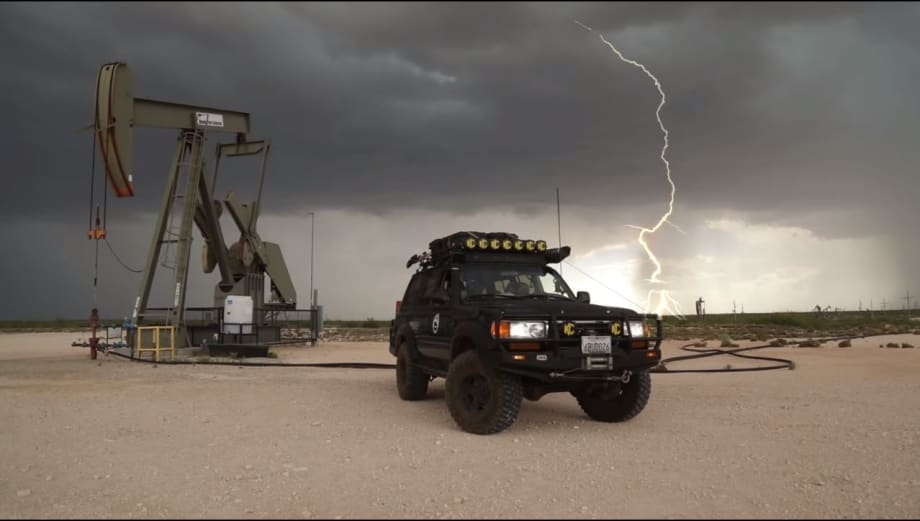
On average, tornado warnings are issued just 13 minutes before the event, but warning times may vary and may be much shorter.
Screenshot via Overland Bound.
3 min to read
Though they can strike in any season, tornadoes occur most often in the spring and summer. Approximately 1,200 tornadoes hit the U.S. every year. While every state is at risk, the majority of these spinning storms happen east of the Rocky Mountains, according to the Federal Emergency Management Agency (FEMA).
Tornadoes can be tricky—with warning signs suddenly appearing. NWS, part of the National Oceanic and Atmospheric Administration (NOAA), issues a tornado warning when a tornado has been sighted or indicated by weather radar.
On average, tornado warnings are issued just 13 minutes before the event, but warning times may vary and may be much shorter.
So what is a driver to do in order to prepare for a potential tornado, or worse still, if he or she finds himself driving through a tornado? Experts from FEMA offer the following advice on how to prepare for, and stay safe, in the event a tornado is headed your way while you are behind the wheel.
Pack a 3-day Kit—Drivers should keep an emergency bag in their vehicles. Make sure it is a “grab and go” kind of satchel—light enough to carry, as you need to leave your vehicle once a tornado is on the way. Kits should include a first aid kit, water, food such as protein bars, a small flashlight, and a pocketknife.
Download an App—There are apps available that can help drivers stay on top of tornado alerts. These are ideal for anyone driving through Tornado Alley, the heart of which includes parts of Texas, Oklahoma, Kansas, Nebraska, eastern Colorado, and South Dakota. One app to look for is known as Tornado Spy.
Don't try to outrun a tornado—Tornados touch down in various locations and change directions rapidly. If you know one is on the way while you are driving, do not try to outrun it; this can be very dangerous. Pull over as soon as you see a building where you can take cover.
Leave the vehicle and seek shelter—Drivers should never stay in their vehicles during a tornado because vehicles can literally leave the ground and fly away. Ideally, you want to find a storm shelter or a basement. But if you can’t locate one of these quickly, take cover in any small interior room and stay far away from windows and anything else that can break or shatter.
Don't go to an underpass—Never take cover in an underpass because it can turn into a wind tunnel and you can be struck by flying debris.
Find a ditch—If you are driving in the middle of the nowhere and there are no buildings in sight where you can take shelter, it is still critical to abandon your vehicle. Get out of the car and take shelter in a ditch. Stay as low as possible and cover your head.
More Safety

What’s Next for Fleet? Safety, AI & Industry Recognition | AF News Recap
Could your company's culture be encouraging distracted driving? This week, we're exploring how workplace expectations affect driver safety, what AI, EVs, and autonomous vehicles could mean for the future of fleet management, and how fleet professionals can strengthen their award nominations.
Read More →
Does Your Fleet's Culture Encourage Distracted Driving?
What happens when the people responsible for enforcing safety rules are the ones setting the wrong example? The answer may reveal why some of the biggest risks to fleet drivers have little to do with what's written in the employee handbook.
Read More →
Sponsored•October 1, 2026
Fleet Manager’s Ultimate Playbook: Navigating the New Standard in OEM Connectivity
Rising operating costs, driver safety concerns, and unplanned downtime are putting unprecedented pressure on modern fleets. Discover how fleet managers use embedded OEM connectivity and real-time vehicle data to cut TCO, prevent downtime, and protect drivers without aftermarket telematics hardware.
Read More →
From Driver Well-Being to EV Charging | AF News Recap
Mental health belongs in the fleet safety conversation. This week, we’re looking at five ways fleets can support employee well-being before a crisis, plus Holman’s expansion in Mexico, new one-day Fleet Forward passes, and why EV charging demand is outpacing infrastructure growth.
Read More →
Nexar-Nauto Merger Aims to Give Fleets Better Safety Intelligence Through Larger Driving Dataset
Stefan Heck tells Automotive Fleet that combining more than 10 billion miles of driving history with Nexar's AI models will give fleets deeper insights into driver risk and roadway conditions than either company could provide independently.
Read More →
Don't Wait for a Crisis: 5 Ways to Build Mental Health Into Your Fleet Safety Program
For Suicide Prevention Month, fleet and safety leaders have an opportunity to put mental health where it belongs: at the center of workplace safety.
Read More →
How Camera Data Can Strengthen a Fleet’s Insurance Renewal
Insights from a commercial insurance carrier and a broker show how fleets can turn video telematic data, driver coaching, and improved claims results into a stronger case at insurance renewal.
Read More →
The Safest Fleets Aren’t the Ones with the Most Technology
You’ve made the telematics investment. Here’s how to capture the other half of its value and build the safest fleet on the road.
Read More →
Sponsored•August 7, 2026
Hidden in Plain Sight: Fleet Compliance Risks
Fleet compliance isn't just about having policies — it's about consistently enforcing them. This practical guide reveals six hidden compliance risks common in public sector and shared fleet operations and outlines proven strategies to improve visibility, accountability, and audit readiness
Read More →
NETS Sets 2026 Fleet Safety Benchmark Conference for Indianapolis
The Sept. 15–17 program will feature fleet benchmarking data, case studies, emerging technologies, and implementation strategies while running alongside the NSC Safety Congress & Expo.
Read More →