




The World's Most Expensive Dummies Save Lives
GOTHENBURG, SWEDEN - The Crash-Test Dummy family does invaluable work in the development of tomorrow's ever-safer cars. The dummies may cost anything up to 1.5 million kronor, and at Volvo Cars there are more than 100 members of this tough family.
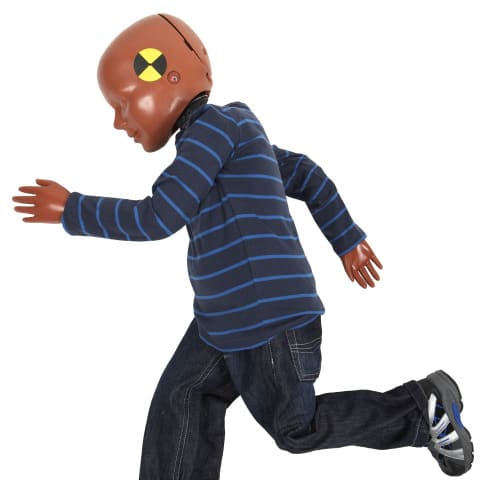
Volvo Crash-Test Dummy
GOTHENBURG, SWEDEN - The Crash-Test Dummy family does invaluable work in the development of tomorrow's ever-safer cars. The dummies may cost anything up to 1.5 million kronor, and at Volvo Cars there are more than 100 members of this tough family.
The crash-test dummy is involved in all research into and development of car safety. It represents the human being in the car and using the dummy, Volvo Cars' safety experts find out how a real human being is affected in a collision.
"It's very difficult to develop crash-test dummies. The aim is to create as close a resemblance to a real human being as possible. At the same time, however, it has to be a tough tool. One highly successful example dates from the 1990s when Swedish researchers developed a crash-test dummy for rear-end collisions. This dummy, which features a very detailed spine, is now used the world over to evaluate whiplash injuries," says Lotta Jakobsson, biomechanics and technical specialist with the Safety Centre at Volvo Cars.
At Volvo Cars, the Crash-Test Dummy family is structured around 19 family members - eight adults and 11 children. The smallest is an infant weighing 3 kilograms.
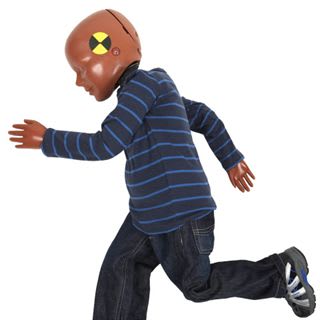
There are family members of different configurations and for different purposes, making a grand total of more than 100 dummies. The family is so large because it is necessary to include both children and adults of different ages, sizes and to cover different collision scenarios.
The first crash-test dummies were developed in the mid-sixties and were fairly simple in their design. Today there are many different types of crash-test dummy - European, American, and individual designs for specific purposes such as frontal, rear, or side collisions.
In order to aid standardization of crash-test dummies the world over, researchers are now working on the development of a standardized side-impact dummy. This work has gone on for more than 10 years and underlines just how advanced a measurement tool a crash-test dummy is.
Crash-test dummies smash into walls every single day without making a fuss and they can undergo about five collisions before it is time for rehabilitation - or recalibration as it is known in technical jargon.
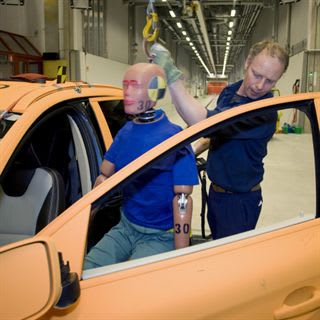
During the calibration process, dummies are inspected and adjusted to prepare them for new tests. Broken parts are replaced and various measurement parameters are tested. It is important that the dummies behave consistently in each and every test, which is why they are calibrated so regularly.
Thanks to the fact that it is possible to repair the dummies and replace parts as needed, they are almost indestructible. The true veterans at the Volvo Cars safety centre are more than 30 years old and have been involved in hundreds of serious collisions.
Every collision is preceded by days of precise preparations as the dummies are set up in a special workshop. There are about 100 measurement points on each dummy, and these are used to register the forces exerted on the dummy's head, neck, spine, chest, hips and legs during the collision sequence.
The information provided by the dummies is stored on computer and each test is followed by an evaluation. This allows the engineers to study in detail how much force the dummy had to withstand and how the forces were distributed during the collision.
Thanks to biomechanical research, the engineers can determine how much physical stress various parts of the human body can withstand before suffering serious injuries.
Today, researchers rely increasingly on virtual crash-test dummies which only exist in computer programs. With virtual dummies, it is easier to alter weight and height and thus make it even more possible to resemble people of various builds.
More Safety
The Safest Fleets Aren’t the Ones with the Most Technology
You’ve made the telematics investment. Here’s how to capture the other half of its value and build the safest fleet on the road.
Read More →
Hidden in Plain Sight: Fleet Compliance Risks
Fleet compliance isn't just about having policies — it's about consistently enforcing them. This practical guide reveals six hidden compliance risks common in public sector and shared fleet operations and outlines proven strategies to improve visibility, accountability, and audit readiness
Read More →
NETS Sets 2026 Fleet Safety Benchmark Conference for Indianapolis
The Sept. 15–17 program will feature fleet benchmarking data, case studies, emerging technologies, and implementation strategies while running alongside the NSC Safety Congress & Expo.
Read More →
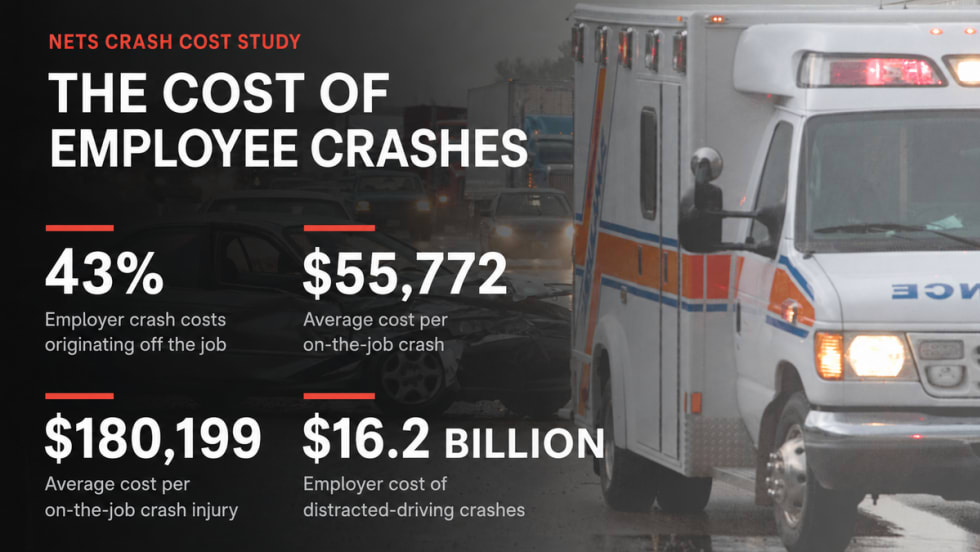
Off-the-Job Crashes Account for 43% of Employers’ $61.7 Billion Crash Burden
NETS quantifies costs dispersed across fleet, risk, HR, and other departments while providing new per-crash benchmarks for employers.
Read More →
Ram Recalls More Than 1.27 Million 1500 Pickups for Seat Belt Anchor Issue
The recall affects certain 2019-2026 Ram 1500 pickups that may have improperly attached second-row seat belt buckle anchors.
Read More →
How Better Visibility Cut Speeding Violations by 48%
Fleet leaders don't need more data, they need clearer visibility into what the data is saying. This case study explores how one utility replaced speeding-event counts with a single metric — miles driven in violation — to strengthen safety and significantly reduce speeding violations.
Read More →
Operation Safe Driver Week: Why the Industry's Oldest Safety Campaign Still Matters to Fleets
A look at how a 2007 enforcement initiative became one of the most consequential weeks on the fleet safety calendar, and what it means for your drivers in 2026.
Read More →
Nexar-Nauto Merger Aims to Give Fleets Better Safety Intelligence Through Larger Driving Dataset
Stefan Heck tells Automotive Fleet that combining more than 10 billion miles of driving history with Nexar's AI models will give fleets deeper insights into driver risk and roadway conditions than either company could provide independently.
Read More →
From Silos to Solutions: Relationship Management for Safer Fleets
From telematics adoption and driver accountability to policy consistency and risk mitigation, this episode breaks down what it really takes to build a safer fleet culture without slowing business down.
Read More →
IIHS Launches First Commercial Vehicle Safety Evaluations
The Insurance Institute for Highway Safety has begun evaluating heavy-duty pickups and cargo vans for driver protection. Which models earned top marks?
Read More →