




The latest vehicles to debut in the 2005 Chrysler Group lineup — the Chrysler 300 and Dodge Magnum — offer a total safety package of engineering and technological advancements and rear-wheel drive technology designed to protect and perform in every season. Many manufacturers of luxury and performance sedans retained rear-wheel drive because of the superior performance and handling characteristics. The RWD configuration of the Chrysler 300 and Dodge Magnum gave designers the freedom and flexibility to create a strong body structure with new dimensions. Advancements in technology enabled Chrysler Group engineers to develop a rear-wheel-drive platform for a large-car with all season capability. Technologies available in the Chrysler 300 and Dodge Magnum such as electronic stability program (ESP), all-speed traction control, and anti-lock brake systems (ABS) have reached new levels of advancement over time. These advancements, combined with improved tire design, provide more overall balance and control of rear-wheel drive vehicles in a variety of surface and weather conditions. Another Chrysler Group safety first with the Chrysler 300 and Dodge Magnum centers on tire technology. A special sealant in the inner liner of the tires fills punctures up to 5 mm to minimize the loss of air pressure and significantly reduce the probability of a roadside stop due to a flat tire. Safety engineers evaluated the Chrysler 300 and Dodge Magnum with tests beyond current government requirements, such as 40-mph front offset and 50-mph rear impact-tests. The 40-mph front impact simulates a high speed vehicle-to-vehicle crash while the 50-mph offset rear-impact test measures fuel system integrity when the vehicle is hit at high speeds on the side nearest the fuel filler tube. To reduce intrusion to the fuel system during a rear impact event, Chrysler Group designed the tire well on an incline so the spare tire rotates away from the tank in a rear impact. In addition, Chrysler Group engineers used the “pole test,” which mimics accidents such as hitting a telephone pole or tree, to evaluate the side air bag sensing system. These types of accidents may be severe because the crash forces are concentrated in a relatively small area of the vehicle. 2005 Chrysler 300 and Dodge Magnum safety and security features: * Advanced air bag system: Enhanced protection for a wider range of occupants, this system is also designed to identify the size of an occupant based primarily on weight for the front passenger seat. * All-Speed Traction Control System: All-Speed Traction Control, enhances mobility and prevents wheel slip when accelerating by operating both the brakes and the Electronic Throttle Control (ETC). * Anti-lock Brake System: Equipped with electronic sensors that help prevent wheel lockup, the ABS system offers improved steering control under extreme braking and/or slippery conditions. * Body Structure: Crush beads and stiffeners engineered into the vehicle body help absorb energy, while preserving the integrity of the passenger compartment. These reinforcements provide additional protection in an offset-type impact. * Constant Force Retractors (CFR): The front seat belts include a mechanical device designed to distribute the force of a seat belt according to the load or force exerted on it. CFRs are engineered to force-limit the belt system, and gradually release seat belt webbing in a controlled manner during a severe crash. * Electronic Stability Program (ESP): This feature aids the driver in maintaining vehicle directional stability, providing oversteer and understeer control to maintain vehicle behavior on road surfaces. * Energy-Absorbing Steering Column: Manual adjust steering columns use two hydroformed coaxial tubes that can move relative to each other to allow the column to move forward and enhanced energy absorption during a crash. The power adjust steering column employs a calibrated bending element which deforms during column stroke for optimal energy management. * Enhanced Accident Response System: In the event of an accident, this system makes it easier for emergency personnel to see and reach the occupants by turning on the interior lighting and unlocking the doors after air bag deployment * Multi-Stage Air Bags: Multi-stage air bags deploy at three different rates depending on the severity of the crash. In lower-severity collisions, the air bag deploys with less force, and the force is increased during more severe collisions. * Pretensioners: During a collision, the impact sensors initiate the front seat belt pretensioners to immediately remove slack from the seat belts thereby reducing the forward movement of the occupant’s head and torso. * Self-Sealing Tires: A special sealant in the inner liner of the tires fills punctures up to 0.19 inches to minimize the loss of air pressure and significantly reduce the probability of a roadside stop due to a flat tire. * Side Curtain Air Bags: The side curtain extends head protection to all outboard passengers.
The All-New 2005 Chrysler 300 and Dodge Magnum Offer State-of-the-Industry Performance and Crash Protection
The latest vehicles to debut in the 2005 Chrysler Group lineup — the Chrysler 300 and Dodge Magnum — offer a total safety package of engineering and technological advancements and rear-wheel drive technology designed to protect and perform in every season.
More Operations

How NOV Uses Telematics to Improve Fleet Safety Across 160 Locations
James Victory of NOV discusses how the company manages fleet safety, maintenance, and telematics across more than 150 locations supporting oilfield operations throughout the U.S.
Read More →
Fleet Meets: Steven Santostasi
This edition of the Fleet Meets series features Steven Santostasi, the current TSP channel manager for Ford Pro.
Read More →
Why Fleet Managers Are Replacing Departmental Vehicles with Shared Motor Pools
Departmentally assigned vehicles often create hidden costs through underutilization, poor visibility, and increased administrative burden. This white paper explores how shared motor pool strategies help fleets reduce costs, improve accountability, and optimize vehicle utilization.
Read More →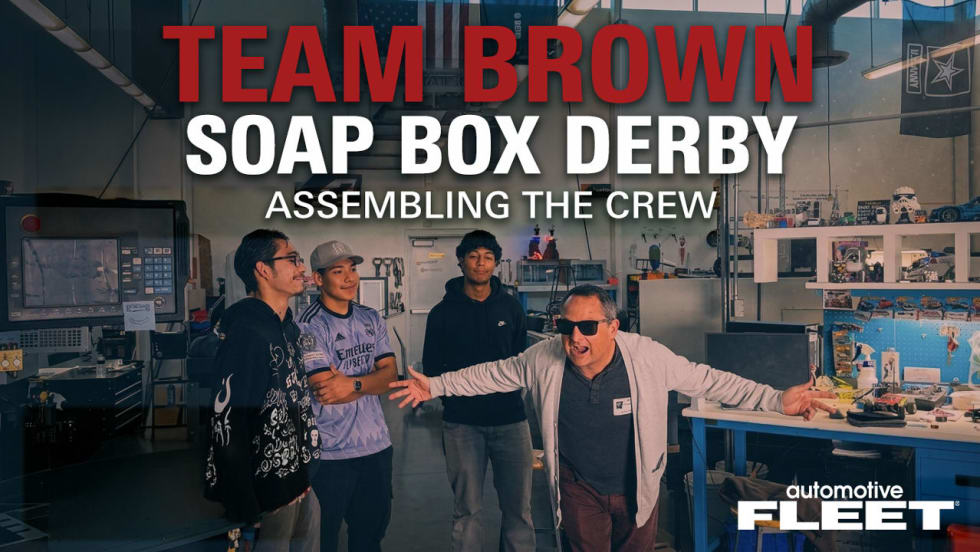
Soap Box Derby Challenge: Assembling the Crew
Meet Gabriel, Matthew, and Angel — the team helping bring this soap box derby build to life.
Read More →
BBL Fleet Acquires Velcor Leasing Corporation
BBL Fleet expanded its footprint in the fleet management industry with the acquisition of Velcor Leasing Corporation of Madison through a stock purchase agreement finalized Feb. 27, 2026.
Read More →
Lytx Introduces New AI Fleet Technologies at Protect 2026
The company introduced new AI-driven fleet safety and operations technologies during its annual user conference.
Read More →
Fleet Costs Are Rising: Here’s How Leaders Are Responding
Fleet leaders are under pressure to reduce costs, adapt to economic uncertainty, and make smarter decisions. See how peers across North America are responding with real data, proven strategies, and forward-looking insights. Download the 2026 Market Pulse Report to benchmark your strategy and uncover where you can gain an edge.
Read More →
From Waffle House to AI: Fleet Trends You Need to Know
In this AF news recap, host Faith Howell covers how Waffle House stepped up during disaster response and new AI tech on the market.
Read More →
Fleet Operations in the Age of AI: Navigating Ethical and Legal Challenges
AI is no longer a future concept for fleets—it’s already embedded in the tools, data, and decisions that operators rely on every day. In this episode of the Fleet Forward Podcast, recorded live at Fleet Forward, industry leaders take the conversation beyond hype to examine what responsible AI adoption really looks like in fleet operations.
Read More →
Factory Installed vs. Aftermarket: Choosing the Right Telematics Path & Managing the Data
As fleets rethink how they capture, manage, and act on vehicle data, telematics is at a major inflection point. In this episode of the Fleet Forward Podcast, we dive deep into one of the most pressing questions facing fleet leaders today: Should you rely on OEM factory-installed connectivity, aftermarket devices, or a hybrid of both?
Read More →